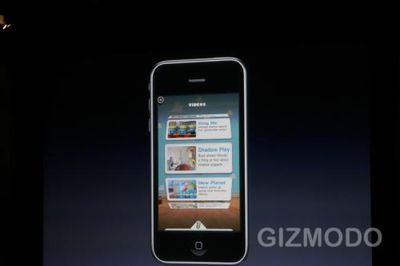
Another major feature that Apple introduced with iPhone 4 was the introduction of their new "iAd" mobile ad service. Apple promises more interactive in-app ads for advertisers and to be deployed by developers in their (presumably free) apps. The ads will be created in HTML5 and allow for interactive media and games without leaving the application themselves.
Apple will be selling and hosting ads and giving developers 60% of the revenue. Jobs admitted they were still learning and referenced Google's acquisition of AdMob:
"We do not have any plans to become a worldwide ad agency. We tried to buy a company called AdMob, and Google came in and snatched them from us. We bought Quattro instead. They're teaching us and we're learning as fast as we can."
During the Q&A, Jobs stated that developers were free to use other ad networks if desired.
Alongside Apple's media event today to introduce some of the features for its upcoming iPhone OS 4, Apple has posted iPhone SDK 4 Beta to its developer site to offer developers the tools necessary to implement the new features. Apple has also posted a number of developer pages highlighting changes in the new version of the operating system.
Apple notes that there are over 1,500 new APIs available in iPhone OS 4, including access to the Calendar application, in-app SMS, access to photos and videos in users' Photos libraries, full control over video playback and capture, mapping improvements, and incorporation of Quick Look functionality for previewing documents. Also included is Apple's "Accelerate" functionality, which provides access to a iPhone-optimized complex mathematical functions such as vector and matrix factorization, array multiplication, and computation of simultaneous linear equations.
Other major features we've covered are summarized below:
At its 'Sneak Peek Into the Future' media event today, Apple announced several major feature additions, including multitasking and an in-app ad network, to iPhone OS 4.0 for release this summer.
The most significant new feature of iPhone OS 4.0 highlighted by Jobs is multitasking, which recent rumors had indicated might be coming. Apple had not previously implemented this feature out of concern for battery life and overall performance, although Jobs said that the company had found a way to implement multi-tasking without these negative effects.
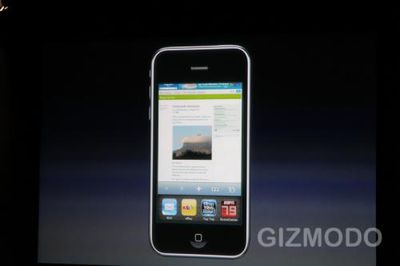
Providing a demonstration of multitasking, Jobs showed a pop-up tray at the bottom of the iPhone's screen - which is triggered by double-clicking the home button - with the icons of all currently-running apps displayed. Clicking on the desired app opens it without closing the other apps. Scott Forstall, SVP of iPhone Software, described the multitasking feature in more detail, claiming that the company "distilled the services" that third-party apps need to run in the background, and these services are available as APIs to developers.
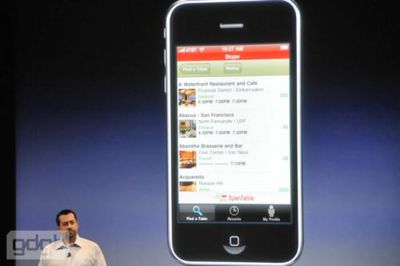
The seven multitasking APIs now available to developers are: background audio, voice over IP (VOIP), background location, push notifications, local notifications, task completion, and fast app switching. Demos highlighting the new APIs used Pandora, Skype, TomTom, and Loopt. Incoming notifications can be shown just below the status bar or in a pop-up dialogue on the home or lock screen.
While the iPhone 3GS and late 2009 32 GB and 64 GB third-generation iPod touch will be fully-compatible with iPhone OS 4.0, earlier models of the devices will not support all of the features announced today. Notably even the iPhone 3G and second-generation iPod touch will not support multitasking. iPhone OS 4.0 will also come to the iPad in the fall.
Apple today is holding its iPhone OS 4.0 media preview event where it is expected to show off the next-generation operating system for its multi-touch portable devices and begin offering developers tools to build applications for the new operating system.
The event is scheduled to kick off at Apple's Cupertino headquarters at 10:00 AM Pacific Time / 1:00 PM Eastern Time, or just about one hour from now. Apple will not be providing live video or audio coverage of the event, and thus observers will have to rely primarily on text and photo updates coming out of the event. Apple will likely post a video recording of the event later today for full analysis.
Event Updates - Audience is seated and music is playing. - Steve Jobs on stage, talking about iPad success. Quoting reviews. - 450,000 iPads sold so far, up from 300,000 on the first day. Best Buy is out of stock, and we're making them as fast as we can. - iBooks: 250,000 books downloaded on first day, now up to 600,000. - iPad apps: 1 million on first day, now up to 3.5 million. - App Store: over 4 billion apps sold, with over 185,000 apps available in the store, 3,500 iPad apps. - Jobs quickly showing off a number of iPad apps. - Moving on to iPhone. - JD Power satisfaction award for three years in a row. 64% share of mobile browser usage. - Over 50 million iPhones sold. Add in iPod touches and we're over 85 million total. - Today is preview of iPhone OS 4.0. Shipping this summer with developer preview today. Over 1,500 new APIs. - Devs now have access to calendar, camera data, Quick Look, SMS within apps, etc. - Over 100 new user features: playlist creation, 5x digital zoom for camera, tap-to-focus for video, Photos app has Places support, home screen wallpapers, spellcheck enhancements, etc. - We'll highlight seven of the features today - Feature #1: Multitasking. We won't be first, but we'll be best. Now demoing. Double-clicking home button pulls up a "dock" showing currently-running apps.
- Scott Forstall on stage to explain how they accomplished this while preserving battery life and performance. - Apple has provided seven multitasking services to developers to assist with the functionality - Service #1: Background audio streaming. Demo from Pandora founder Tim Westergren. Claims it took them one day to implement background streaming. Showing Pandora continuing to play while browsing in Safari, on lock screen, etc. - Service #2: VoIP. Can now leave Skype app while still running. Can even see calls come in with status bar on the lock screen. Demoing with Skype's David Ponsford.
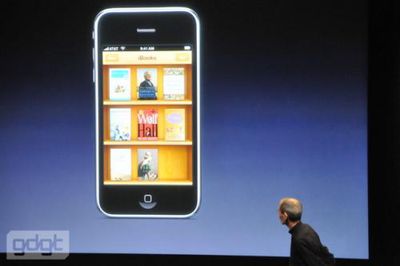
- Service #3: Background location. GPS apps like TomTom can continue in the background while you exit the app to listen to music. Audio cues overlay other audio. Also a second class of this service uses cell towers for apps like Loopt. For privacy purposes, status bar indicator lets you know if any app (foreground or background) is requesting location. Can also fine-tune approvals for location tracking on an app-by-app basis. - Service #4: Push notifications. 10 billion push notifications served in past 9 months. - Service #5: Local notifications. Rather than requiring third-party server to push notifications, iPhone itself can push within the phone. TV Guide application given as example. - Service #6: Task completion. For apps like Flickr where a photo upload make take awhile, you can now leave the application and task will continue - Service #7: Fast app switching. Application state stored and preserved instantly, freeing up resources when switching. - Now back to Steve for more on iPhone OS 4.0's new features. - Feature #2: Folders. With people downloading more and more apps, we need better organization. Drag and drop apps onto one another to create folders. Automatically names folder based on app categories, but user-editable. Icon becomes a "multi-icon". - Also demonstrating changing home screen wallpaper. - Folders now allow you to see 2,000 apps on your device, up from 180. - Feature #3: Enhanced email. Unified inbox, multiple Exchange accounts, fast inbox switching, threaded views, open attachments with App Store app. - Feature #4: iBooks for iPhone OS. Same as for iPad, same iBookstore. Showing of Winnie the Pooh.
- Buy books once and read them anywhere. Wireless syncing of content and bookmarks. - Feature #5: Enterprise. Better email encryption, APIs for better encryption inside apps, wireless app distribution, mobile device management, multiple Exchange accounts, SSL VPN support. - Feature #6: Game Center. We have over 50,000 gaming titles already. Game Center brings social aspect...challenge friends, leaderboards, achievements - Feature #7: iAd. Free apps are great, and we want to help developers make the money they need to survive. Most mobile advertising sucks, and we want to help them keep free apps free. On the desktop, search is where advertising is at. But on a phone, users are in dedicated apps. - Users spend 30 minutes a day in apps. Say an ad every 3 minutes...10 ads per day. We'll be at 100 million devices soon, so that's 1 billion ad opportunities per day. - Apple wants more interaction and emotion than typical mobile ads. Interactive ads currently take you out of the app, but with iAd in the OS itself, you won't have to leave the app. Users are more likely to click since there is no penalty. - Apple will sell and host ads, giving developers industry-standard 60% of revenue. - Demoing Toy Story 3 ad. Everything is done in HTML5. Click an ad and it takes over the screen. Explore the ad...sound clips, video, in-ad purchases, even mini-games. It all plays back right there.
- Now demoing a Nike ad with video. Make your own shoes with Nike ID...link to app in the ad. Store locator right there with Google Maps pop-up. - Now a faux Target ad allowing user "build" a dorm room. - That's the demo. Very easy for ad agencies and devs to make the ads, and users are more likely to use them because they stay in the app. - Jobs reviewing new features, all available in developer preview today. - Public release in summer for iPhone 3GS and 3rd-generation iPod touch. iPhone 3G and 2nd-generation iPod touch will run many of the new features, but not all. Multitasking will be one of the ones that won't be supported on those. Original iPhone and 1st-generation iPod touch apparently left out. iPhone OS 4.0 coming to iPad in the fall. - End of presentation, with a short break before Q&A.
Q&A - Q: How will multitasking affect AT&T network demands? A: Jobs says not sure that's accurate...background data usage will be minimal. Data intensive tasks are things like video that require user attention. - Q: Wireless app distribution is possible for all users? A: Jobs says no. Forstall clarifies that it is enterprise-only, requiring signed certificates. - Q: How will Game Center social network affect Ngmoco and OpenFeint? A: Forstall notes that developers have asked for a unified network, and that's why Apple is providing it. - Q: Will there be an ad approval process for iAd like the App Store? A: Jobs says that there will some boundaries, but hoping that nothing more than a "light touch" will be necessary. - Q: Any changes to Apple's stance on Flash/Java? A: Jobs says no. - Q: Any development tools required for iAds? A: No, with HTML5, they can use whatever tools they want. - Q: No background APIs for things like monitoring Twitter in background? A: We think Twitter and related services work much better with push notifications. - Q: Why no widgets on iPad? A: We just shipped it on Saturday, and we rested on Sunday. Everything is possible. - Further discussion of market for iAd and how users' attention isn't occupied by apps on computers. But on phone things are different. Apple not looking to become worldwide ad agency. Tried to buy AdMob but Google snatched it, so Apple bought Quattro, a smaller but great company. We're learning as fast as we can from them. - Talking about iPhone OS 4.0 compatibility for older devices. Earlier hardware just can't support some of the features like multitasking. - Q: What are you doing to address distracted driving? A: Jobs says that they've done more than most, with hands-free calling and integrated displays and controls for cars. - Q: Any chance of running unsigned applications like on Android? A: Jobs says that because of that ability, there is a porn store for Android, and that's not a place we want to go. - Q: Any surprises on reactions to iPad? A: Jobs says they "still have butterflies" about it. Reaction has been great...a profound game changer. Schiller is surprised by the quality of the applications coming out already. Jobs says that competitors would be hoping for 3500 apps in the first year, and the iPad has that in a week. Building on the base of 85 million existing iPhone OS users helps. - Q: With so much in the App Store, how can developers get their apps discovered? A: Jobs says that the App Store is not part of iPhone OS, and so the server-side stuff can be enhanced constantly. They've added the Genius feature and a lot of third-party sites have sprung up to feature and recommend apps. Game Center will also help the viral spread of apps. And gifting. - Q: Are you concerned that multitasking and other new features not compatible with older devices will alienate existing customers? Will it encourage them to upgrade? A: The growth curve for these products has been very steep, so most of the devices out there are the newer models. The older models will get some great new feature, but will be missing some like multitasking. If they upgrade because of that, fantastic. - Q: How do you close apps when multitasking? A: You don't have to. Jobs says that if you see task manager, you blew it. Users shouldn't have to think about it.
In an interview with The A.V. Club (via MacDailyNews), actor Justin Long reveals that Apple may have discontinued its series of "Get a Mac" ads featuring Long and John Hodgman in their respective roles as "Mac" and "PC".
AVC: what's the status on those Apple commercials?
JL: You know, I think they might be done. In fact, I heard from John, I think they're going to move on. I can't say definitively, which is sad, because not only am I going to miss doing them, but also working with John. I've become very close with him, and he's one of my dearest, greatest friends. It was so much fun to go do that job, because there's not a lot to it for me. A lot of it is just keeping myself entertained between takes, and there's no one I'd rather do it with than John.
The news may not be a tremendous surprise, as Apple has not released any new commercials featuring Long and Hodgman since a series of three ads targeting the launch of Windows 7 debuted last October. Long's comments suggest, however, that that series may have come to an end rather than simply being on hiatus. Apple's "Get a Mac" campaign launched in 2006 and has received a number of awards, including AdweekMedia's Campaign of the Decade.
In a brief note, DigiTimes reports that Apple appears to planning to launch a smaller version of the iPad as soon as the first quarter of next year, bringing a sub-$400 price tag to a device carrying a display of 5-7 inches.
Apple is reportedly scheduling a smaller 5- to 7-inch version of the iPad that is expected to launch as soon as the first quarter of 2011, according to Digitimes Research senior analyst Mingchi Kuo.
Kuo, citing talks with upstream component sources, said Apple's smaller-size iPad will be priced below US$400 and will target the highly-portable mobile device market and consumers that focus mainly on reading and do not have a high demand for text input.
Reports of a tablet of that general size have been floating around for some time now, with an analyst claiming in August 2009 that Apple had developed a prototype carrying a 6-inch screen. A subsequent report claimed that Apple might be the cause of a major shortage of 7-inch touchscreens in the supplier market. Finally, in late December, a report surfaced claiming that Apple would be introducing a 7-inch tablet the following month.
While many of these reports indicated that a 6- to 7-inch device could be coming as part of, if not as the entirety of, Apple's tablet launch, the iPad debuted with a larger 9.7-inch screen in line with most other reports. Today's report reveals, however, that rumors of a tablet between that of the iPhone/iPod touch and iPad sizes are not dead and that we may hear more in the future.
Patent holding company Wi-LAN today announced that it has filed suit against Apple and more than two dozen other companies, claiming infringement of one of its patents related to Bluetooth technology.
In its filing, WiLAN claims that these companies have infringed and continue to infringe WiLAN's U.S. Patent No. 5,515,369 by making and/or selling various products enabled with Bluetooth technology including cellular handsets and personal notebook computers.
Wi-LAN is regarded in the industry as a patent troll, a former manufacturing company that has given up on producing devices to focus on extracting licensing fees and filing lawsuits related to its intellectual property. Wi-LAN's suit was filed in the Marshall Division of the U.S. District Court for the Eastern District of Texas, a court popular in patent litigation for its willingness to move quickly and its typically plantiff-friendly judgments.
Meanwhile, 9 to 5 Mac notes that Apple has hired former Chief Intellectual Property Counsel for Sun Microsystems Noreen Krall to a Senior Director position overseeing Intellectual Property and Litigation.
Apple is currently embroiled in legal battles with Nokia and Kodak over intellectual property issues, and recently went on the offensive against Android handset maker HTC, so it is certainly a busy time for Apple on the patent front.
Australian Macworld reports that it has received information claiming that Apple is set to release updated MacBook Pros and possibly MacBook Airs next Tuesday. The unidentified source of the claim is said to be "familiar with Apple product cycles and inventory levels".
The source said that an update to every MacBook Pro model was expected on Tuesday, 13 April, but was unsure about the MacBook Air. The source was also unsure of any further information regarding a local date for the iPad release, but agrees that 24 April is likely.
An update to Apple's MacBook Pro line has been expected for several months now, with several claims of imminent or "next Tuesday" releases having been made with no results. A report earlier this week indicated that new models are expected sometime this month after having been delayed slightly due to shortages of Intel's latest mobile processors.
On April 8th, Apple will be hosting a media event detailing iPhone 4.0. News sites across the web will cover every announcement in detail.
Some readers prefer watching the keynote themselves without knowing the outcome. Unfortunately, there is no live video feed for the keynote. Instead, Apple will likely post a recorded QuickTime stream a few hours after the keynote ends.
For those individuals, we've posted this news story, which will be updated with the link to the presentation once it becomes available from Apple. No other news stories or announcements will be displayed alongside this story.
You can also subscribe to our notification list which will send out an email when the keynote is posted online. The mailing list will only be used for notifications for these spoiler free announcements and you may unsubscribe at any time.
Notify me of Keynote Stream
Apple can take several hours to post the feed. The mailing list can also take up to a couple of hours to send out all the emails. Be patient. Or keep checking this page. Video Posted: Watch keynote in QuickTime
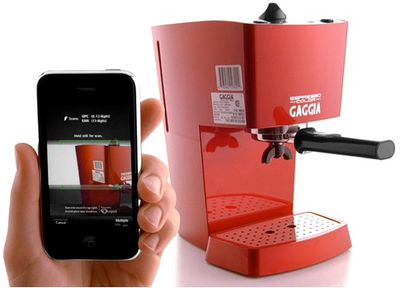
Apple is continuing its rapid-fire release of new iPhone commercials, this time posting one entitled 'Shopper' to its iPhone ad gallery. The new ad again uses a narrative style to feature iPhone applications, demonstrating how an iPhone user could research espresso machines, ask for opinions from family and friends, and check prices.
The commercial first features Safari, showing the mobile web browser accessing the iPhone-formatted version of ProductWiki to research various espresso machines before the narrator uses the Messages application to send MMS messages to his wife's sister for opinions on color. After settling on a model, the narrator scans the barcode on the item using RedLaser ($1.99) to run a price check for other stores. Finding another store with a cheaper price, the narrator is linked directly to the Maps application for directions.
Advertising firm Chitika earlier this week rolled out a running tally calculating the number of iPads accessing the Internet via the device's Safari browser based on unique hits to its network of advertisements. According to current tallies, over 500,000 iPads have now been sold.
In a blog post, Chitika researcher Dan Ruby notes that the company's numbers have been registering significantly lower than official and estimated sales numbers, a phenomenon Ruby has attributed to some users not accessing the Internet. For example, by midday Monday, Chitika had registered nearly 270,000 iPads on its network, while Apple had already announced "over 300,000" iPads sold on Saturday with more sales obviously rolling in Sunday and early Monday. We've even heard that Apple may have sold over 750,000 iPads already.
We've also learned that the WiFi iPad may not be seen as primarily an Internet surfing device. With estimates of over 300,000 iPads sold on release day and perhaps as many as 700,000 sold over the weekend, that only around 40% are showing up on the Internet may imply that people are buying the iPad for the apps, and spending most of their browsing time in the App Store.
While Chitika's methods may offer only a crude approximation of iPad sales, they do provide an interesting glimpse into the device's market growth. Beyond overall sales numbers, the report also provides data on new iPads appearing each day and breaks down sales and percentages by state.
Demonstration of iPad User Guide utilizing 'AdLib' framework
Done21 reports on the curious discovery of a new Web-based framework used in the iPad that allows web pages to behave in ways much more akin to native applications than previously observed. The framework, dubbed 'AdLib' by the report's author after the name of the file containing the code, was first noticed in action when navigating to Apple's iPad User Guide using the iPad's mobile version of Safari. It allows the user guide, which is simply a web page, to be offered in a split-pane view with scrollbars and with a native app-like feel.
What's particularly interesting is that it does something that shouldn't really be possible in Mobile Webkit: It includes scrolling panes that can be manipulated with a single finger, complete with the signature iPhone OS "scroll bars" and elastic transitions. If you have ever worked with Safari on the iPhone, you know that having scrolling boxes of content is sort of possible, but requires a special two-finger gesture to scroll.
Curiosity got the best of me, so I loaded the page in Safari on my laptop (and changed Safari's user agent to mimic the iPad) and got to work with the developer tools. After extracting the JavaScript and de-minifying it, my suspicions were confirmed. Apple was manually reading the touch events, calculating the inertia of the scrolling, and manually drawing the scroll bars. It was incredible that it worked so smoothly in the browser.
The framework, which weighs in at about 4,300 lines of code, permits Mobile Safari to display the native-like user guide simply using HTML, CSS, JavaScript, the basic web technologies supported by the iPhone and iPad. It appears similar in some respects to the PastryKit framework described by John Gruber last December, although AdLib appears to be a more advanced version that incorporates iPad-specific references.
It remains to be seen whether Apple will release the custom API for use by third-developers, but despite an absence of documentation, the report notes that the framework is "extremely well thought out and complete" and could be of significant utility to developers.
Update: For those interested in the actual code, a commented version has been discovered on Apple's developer site.
A convention calendar (PDF) hosted on a Japan-focused site for the San Francisco Convention and Visitors Bureau reveals scheduled dates for Apple's Worldwide Developers Conference (WWDC) for 2010 through 2015. While the list carries a "last update" stamp of May 2009 and lists incorrect dates for Macworld 2011, listings for many other future conventions do appear to be accurate and thus the listings for WWDC may represent tentative schedules for future years.
Tentative WWDC Dates: 2010: June 27th - July 2nd 2011: June 5th - June 10th 2012: June 10th - June 15th 2013: June 9th - June 14th 2014: June 1st - June 6th 2015: June 7th - June 12th
The 2010 dates match closely to speculation based on a "Corporate Event" listing for Moscone West in the June 28th - July 2nd timeframe. While that entry has since been removed from the Moscone Center's calendar, similar entries have accurately represented WWDC dates in previous years.
WWDC 2009 was held from June 8th - 12th, and Apple announced the schedule in late March, suggesting that we may soon see an official announcement of dates for the 2010 conference.
Apple announced on Monday that it had sold over 300,000 iPads on the first day of sales. MacRumors has since heard from a believable source that Apple has already hit over 750,000 in sales.
Just two weeks after Apple introduced the iPad at a special media event, research firm iSuppli estimated the component costs for the entry-level 16 GB Wi-Fi iPad at about $219, compared to its retail price of $499. iSuppli's estimates offered some indication of a healthy profit margin for Apple on the device, although numerous other expenses such as research and development, marketing, and licensing were not included in the study.
Now that the iPad has been released in the United States, Bloomberg BusinessWeek reports that iSuppli has been able to actually tear the device apart to generate a revised estimate of nearly $260 for the entry-level model's component costs. The $40 increase over earlier estimates is due to several factors, including the use of more chips than originally thought.
Once it took one apart, iSuppli found more silicon chips than it had expected powering interactions with the iPad's 9.7-inch screen. Apple uses three chips to control the iPad's touchscreen, for example. "Because of the sheer scale of this device, we're seeing more here than we expected to," says Rassweiler.
The most significant single price bump, however, appears to be the iPad's touchscreen, which checks in as a $95 part and up $15 from the company's earlier estimates.
iSuppli last week predicted that the iPad could sell 7.1 million units worldwide in 2010, increasing to 14.4 million in 2011 and 20.1 million in 2012. The estimate, which the company calls "conservative", is based on a belief that compelling new applications will rapidly come to the iPad while features are added and price points decline over time.
MediaMemo reports on an interesting confluence of events involving the mobile advertising industry, noting how Apple's media event tomorrow could help Google in its bid to gain regulatory approval for its acquisition of AdMob.
Late last month, a report surfaced claiming that Apple was set to introduce a mobile advertising system dubbed "iAd" on April 7th, which is today. With Monday's announcement of an iPhone OS 4.0 media event scheduled for tomorrow, rumors from MediaMemo's sources and others have unsurprisingly shifted the iAd introduction to that date.
Apple is likely to introduce its mobile ad platform Thursday at its iPhone developer event, say sources familiar with the company's plans.
Apple's iAd platform is expected to be based on its January acquisition of ad firm Quattro Wireless. That purchase came relatively soon after Google's announcement that it had agreed to purchase AdMob, which Apple had also reportedly considered purchasing.
Insiders have reported that Google's pursuit of AdMob was primarily a ploy to keep the ad company out of Apple's hands, with Google offering a 25% premium over Apple's offer in order to seal the deal. While the technique succeeded and Apple was forced to move on to Quattro in its bid to snap up a major mobile advertising industry player, Google's AdMob acquisition has been held up by regulatory scrutiny from the U.S. Federal Trade Commission (FTC), and a Wall Street Journal report (subscription required) today indicates that the FTC is gearing up to formally oppose the acquisition on antitrust grounds.
As a result of the FTC's scrutiny of the Google-AdMob deal, Google has reportedly been playing up Apple's moves in the mobile advertising space in hopes of convincing regulators that healthy competition will continue to exist in the marketplace even if the acquisition is approved. MediaMemo notes:
Last month, when MediaPost wrote a story speculating about Apple's mobile ad plans -- the publication dubbed the platform "iAd," but I'm not sure that Apple intends to go with that name -- Google sent reporters an email link to the story. "If true, it would be more evidence of how competitive and quickly-evolving the mobile ad space is," wrote Adam Kovacevich, a manager at the company's public affairs group.
Consequently, an "iAd" introduction by Apple tomorrow could be a significant weapon for Google to have in its arsenal as it continues to seek approval for its deal with AdMob.
In a bit of good news for iPad-toting air travelers in the United States, the Transportation Security Administration (TSA) yesterday clarified that travelers should not normally have to remove their iPads from carry-on baggage or cases when passing through security screening checkpoints at airports.
Addressing the topic of netbooks, e-readers, and tablets such as the iPad, "Blogger Bob" notes the following:
Electronic items smaller than the standard sized laptop should not need to be removed from your bag or their cases. It's that simple.
As is always the case, TSA personnel can request that any items be removed from bags or cases if they are unable to obtain a clear x-ray picture or have other reason to conduct a secondary screening, but in general users can keep their iPads in their carry-ons.
TSA policies require notebook computers and other similarly-sized electronics to be removed from cases and bags and be passed through x-ray machines on their own in order to allow screeners a clear view of the devices.
In a brief article, the Associated Press reports that Verizon CEO Ivan Seidenberg yesterday revealed that his company has explicitly told Apple that it would like to carry the iPhone on its network.
Verizon CEO Ivan Seidenberg says the company has told Apple that it wants to carry the iPhone. But he declined to say when -- or even if -- the popular smart phone will be available for Verizon Wireless customers.
The topic of the iPhone on Verizon in the U.S. has been popular ever since the device's exclusive release on AT&T's network, and the company has repeatedly mentioned its interest in bringing the popular device to its network. Seidenberg noted last October that the decision was "exclusively in Apple's court", but today's report seems to the first time he has publicly admitted that Verizon has directly asked Apple for the rights to the iPhone. The company has claimed that it is prepared to handle the network traffic should it be permitted to offer the iPhone.
Interest in a Verizon iPhone spiked again late last month after a Wall Street Journal report claiming that a Verizon-compatible iPhone is in the works.