Apple Shelved Two Mac Pro Models, Including an Intel-Based One - MacRumors
Skip to Content

Apple Shelved Two Mac Pro Models, Including an Intel-Based One

Apple developed two Mac Pro models in recent years that never made it to market, according to Bloomberg's Mark Gurman.
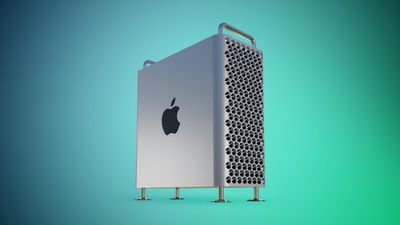
Mac Pro Feature Teal
In his latest "Power On" newsletter, Gurman revealed that Apple internally developed two unreleased Mac Pro projects codenamed J170 and J190 before ultimately discontinuing the machine altogether.

As for new Mac Pro hardware, there were two additional models developed by Apple that never saw the light of day: J170 and J190. The former was a new Intel Corp. Mac Pro (yes, even when Apple was making its own silicon) to address certain uses. The latter was an M3 Ultra version that was supposed to launch alongside the M3 Ultra Mac Studio in early 2025.

J170 was apparently a new Intel-based Mac Pro, which is notable because Apple had already completed its transition to Apple silicon by the time the project was in active development. Gurman did not specify what "certain uses" the Intel model was meant to address, but its existence suggests Apple explored keeping an x86 option alive for specific professional workflows even years into the Apple silicon era.

J190, meanwhile, was said to be an M3 Ultra-equipped Mac Pro that was supposed to launch alongside the M3 Ultra Mac Studio in early 2025, but Apple shelved it before release. It would have paired the same chip found in that ‌Mac Studio‌ with the Mac Pro's unique-to-the-lineup PCIe expansion slots.

Neither model shipped, and Apple discontinued the Mac Pro entirely this year, ending its 20-year run. The Mac Pro had been left on the aging M2 Ultra chip from 2023 while the ‌Mac Studio‌ continued to receive refreshes, and it was priced roughly double that of a similarly configured ‌Mac Studio‌ despite offering essentially the same performance.

The J170 and J190 cancellations add to a growing list of shelved Mac Pro plans. Apple had also developed "Extreme" chip variants, processors with twice the CPU and GPU cores of Apple's Ultra chips, for a future Mac Pro before winding down those projects over cost and demand concerns.

Gurman said he does not expect Apple to bring back the Mac Pro "anytime soon — if ever." Apple is instead expected to refresh the ‌Mac Studio‌ with M5 Ultra chips as early as this fall.

Buyer's Guide: Mac Pro (Don't Buy)
Related Forum: Mac Pro

Popular Stories

New Intel Logo

Report: Apple Agreed to Intel Chips Amid White House Tariff Talks

Monday July 13, 2026 2:54 am PDT by
Apple faced pressure from the White House to use Intel's chipmaking plants while it was negotiating relief from semiconductor tariffs last summer, reports The Wall Street Journal ($). In August 2025, Apple CEO Tim Cook was in Washington to lobby the Trump administration to drop its proposed 100 percent tariff on semiconductor imports – a levy that would have raised costs across Apple's...

Apple Event Logo

Apple to Release These 20 New Products Across Rest of 2026 and 2027

Sunday June 21, 2026 7:42 am PDT by
Apple's annual WWDC developers conference is in the rearview mirror, but there is still a lot to look forward to over the next year and beyond. In his Power On newsletter today, Bloomberg's Mark Gurman listed around 20 products that he expects Apple to release across the remainder of 2026 and 2027. Now that the more intelligent and personal version of Siri has finally arrived in beta, a...
Apple M5 Pro M5 Max chips

Apple's OLED 'MacBook Ultra' Will Stick With M5 Pro and M5 Max Chips

Friday June 26, 2026 8:35 am PDT by
Apple's upcoming high-end MacBook model featuring an OLED touchscreen display will use the company's current M5 Pro and M5 Max chips, according to Bloomberg's Mark Gurman. The new, top-of-the-line device will launch "between late this year and early next year," Gurman said, adopting the existing high-end Apple silicon chips rather than next-generation M6 versions. Like the MacBook Pro, the...

Top Rated Comments

sw1tcher Avatar
16 hours ago at 06:53 am

Gurman did not specify what "certain uses" the Intel model was meant to address
I'm thinking

- Upgradable CPU
- Upgradable GPU
- Upgradable RAM
- Upgradable storage
Score: 19 Votes (Like | Disagree)
Edgecrusherr Avatar
16 hours ago at 07:11 am
Since the article didn't mention this, below are some use cases I can think of for why they would have release one more Intel Mac. The problem is that the market for these are small, relative to the overall consumer market that Apple focuses on, which is probably why Apple likely got to the prototype stage, but scrapped it. BTW, this would've been similar to how re-introduced a variant of the PowerMac G4, that was OS 9 bootable, AFTER the G5 was released, for people who still needed to boot OS 9).


* Expansion cards that only have Intel system drivers (there's a lot of audio card, storage controllers, and Scientific instrumentation that can't be used on Apple Silicon).
* Memory needs over 192GB (the last Intel Mac Pro could do 1.5TB).
* Intel virtualization.
* Any software and processes that cannot run in the Apple hypervisor, and required direct execution on an Intel system (anything that needs AVX, for example).
* Anything that needs to run on and was written for specific GPUs, particularly compute.
* For anyone who has a very expensive high-end license that doesn't apply to a newer version, specifically apps that would also not run as well or at all on Apple Silicon.
* Anyone who's using apps that won't run properly and Apple Silicon and I no longer getting updates.
Score: 10 Votes (Like | Disagree)
Basic75 Avatar
15 hours ago at 07:49 am

The simple truth, from Apple’s perspective, is that the Mac Pro was simply too niche to continue developing and marketing.
The interesting "what if" is "what if Apple didn't mess up the 2013 Mac Pro", because that's probably when the exodus started making it even more niche than it already was.
Score: 5 Votes (Like | Disagree)
16 hours ago at 07:20 am

Since the article didn't mention this, below are some use cases I can think of for why they would have release one more Intel Mac. The problem is that the market for these are small, relative to the overall consumer market that Apple focuses on, which is probably why Apple likely got to the prototype stage, but scrapped it. BTW, this would've been similar to how re-introduced a variant of the PowerMac G4, that was OS 9 bootable, AFTER the G5 was released, for people who still needed to boot OS 9).


* Expansion cards that only have Intel system drivers (there's a lot of audio card, storage controllers, and Scientific instrumentation that can't be used on Apple Silicon).
* Memory needs over 192GB (the last Intel Mac Pro could do 1.5TB).
* Intel virtualization.
* Any software and processes that cannot run in the Apple hypervisor, and required direct execution on an Intel system (anything that needs AVX, for example).
* Anything that needs to run on and was written for specific GPUs, particularly compute.
* For anyone who has a very expensive high-end license that doesn't apply to a newer version, specifically apps that would also not run as well or at all on Apple Silicon.
* Anyone who's using apps that won't run properly and Apple Silicon and I no longer getting updates.

Exactly. Apple Silicon left those users behind. I agree that it's not a huge amount of users, and they have niche needs, but those I know moved over to Windows because they needed an Intel-compatible solution that worked well (and felt Apple had abandoned them). I get that Apple wants its profits, but it lost users who had been on the Mac since the late 1980s. This machine might have extended that (who knows for how long, though).
Score: 5 Votes (Like | Disagree)
16 hours ago at 07:17 am
This fits the public perception we have that there was pretty clearly a power struggle within Apple over the Mac Pro, and the people who wanted it gone clearly won.

I really want to know who developed that Intel Mac Pro, and who was the driving force behind its cancellation.

I have a feeling Tim Cook had no strong feelings either way, and let his lieutenants fight it out and bring him their decision.

Either that, or his only question was to make a financial case for it. It seems engineering/marketing created a machine with no financial case.

Hope we get a book about this and the rest of Cook's tenure some day soon.
Score: 5 Votes (Like | Disagree)
17 hours ago at 06:32 am
A very interesting “what might have been.”
Score: 5 Votes (Like | Disagree)