Skip to Content

iPhone 18 Pro Could Feature Teleconverter Alongside Variable Aperture

Apple's rumored new variable aperture camera system for this year's iPhone 18 Pro models has reached the sampling stage, according to a new claim from a Chinese leaker.
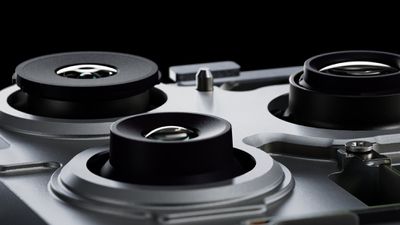
iphone 17 cameras zoom
Posting on Weibo today, the account known as "Smart Pikachu" said the feature had entered late-stage engineering samples, while a teleconverter is also "under evaluation" for the device. The iPhone 18 Pro and iPhone 18 Pro Max are expected to launch in September 2026.

A variable aperture on the iPhone 18 Pro could improve exposure control, particularly for video. By reducing light optically, it could help maintain natural motion blur and smoother exposure in bright conditions.

Apple supply chain analyst Ming-Chi Kuo said in December 2024 that the main rear camera on both iPhone 18 Pro models will offer variable aperture, which would be a first for the iPhone. A more recent report from October 2025 said Apple was moving ahead with plans to bring the technology to next-generation iPhones and was discussing components with suppliers.

Today's teleconverter claim, meanwhile, is a new and unusual one. In typical DSLR cameras, teleconverters are optical elements that can be added to lenses to increase effective focal length and improve zoom reach, though at the cost of light intake. It's unclear how this would apply to a smartphone, but if Apple were to introduce a teleconverter-style optical system, it would likely end up reducing the amount of light reaching the sensor. In that sense, a variable aperture could theoretically give Apple more flexibility in managing exposure alongside its computational photography.

Apple's overall iPhone 18 Pro design will already be locked in at this stage in the development cycle. What Apple tends to continue doing at this point is evaluate specific features like camera modules. Apple may well be running parallel tests without committing any one feature to mass production, so there's still leeway for things to change.

In this case, Apple is likely using the late-stage engineering samples to check the optical performance and reliability, as well as to gauge how easy the camera system is to mass produce, so it could always still drop the feature if it fails to meet Apple's quality standards. Variable aperture was in fact rumored for at least one iPhone 17 model, but it failed to materialize.

Smart Pikachu is known for providing accurate details about Android products in advance of launch, but in terms of Apple rumors, they are a relative newcomer on the Chinese supply chain rumor scene, so these claims warrant caution. The leaker recently claimed that the upcoming iPhone 17e will feature a Dynamic Island and a downclocked A19 chip.

Note: article updated to clarify possible variable aperture benefits.
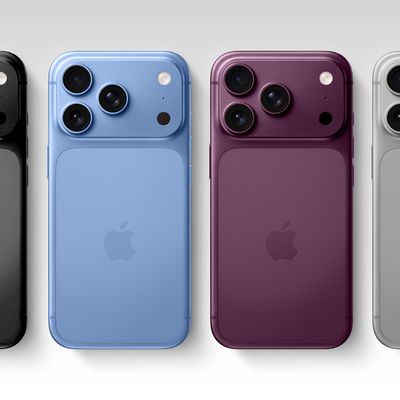
Related Roundup: iPhone 18
Related Forum: iPhone

Popular Stories

Apple Event Logo

Apple Released Seven New Products Today

Wednesday March 11, 2026 7:05 am PDT by
Starting today, the seven new Apple products that were announced last week are available at Apple Stores and beginning to arrive to customers. The colorful MacBook Neo and all of the other new products are on display at most Apple Store locations around the world starting today. Apple Stores have inventory of the new products for both walk-in customers and Apple Store pickup, but...
Apple 50 Years of Thinking Different

Apple Announces 50th Anniversary Plans

Thursday March 12, 2026 6:10 am PDT by
Apple today announced that it will celebrate the company's 50th anniversary over the coming weeks, but it has yet to reveal any specific plans. Apple was founded on April 1, 1976, so the company will turn 50 on April 1, 2026. "While Apple is known for looking forward, this milestone offers a special moment to reflect on the journey that has brought the company here, to celebrate the...
iOS 27 Mock Quick

10+ New Features Coming in iOS 27

Friday March 13, 2026 2:13 pm PDT by
We're only three months away from Apple's WWDC 2026 event, which will see the company unveil iOS 27. With the fully revamped version of Siri possibly delayed until September, iOS 27 is shaping up to be the update we wanted iOS 26 to be. There will be new Apple Intelligence features, updates for the iPhone Fold, and more, with the latest rumors summarized below. Foldable iPhone Features...

Top Rated Comments

6 weeks ago
If all the things promised by articles on MacRumors, by claimed to be reliable-ish rumor sources, had come true my iPhone would right now be half its size, unfold into a 55" display, have a three week battery and 10Gbps satellite connection for free and with negative lag, and be able to take perfectly clear photos of atoms on the surface of the moon.
Score: 11 Votes (Like | Disagree)
6 weeks ago

and offering new depth of field options beyond computational photography.
No...

and a variable aperture could help offset the light loss by opening wider when engaged.
... and no. This is not how it works.

The iPhone camera's aperture is already wide open. You can reduce the amount of light hitting the lens, but you can't increase it more than it already is. A variable aperture will not give you new depth of field options other than making everything sharp to infinity - which is pretty much already the case on such a small sensor. If you want shallower depth of field without computational photography, you need a bigger sensor or a much longer lens (or both).

And variable aperture definitely won't offset teleconverter losses, again because it is already wide open, so a teleconverter on the current iphone camera would result in light loss, and a variable aperture would only allow you to lose more light.

A variable aperture WILL allow the iPhone to stop using shutter speed to control exposure in video which is very welcome. But everything described in this article is complete BS. Apple aren't breaking the laws of physics.
Score: 7 Votes (Like | Disagree)
6 weeks ago
OK initially I crapped on the idea of a variable aperture bc I thought it was limited but after a little digging there actually 5 really good reasons to use a variable aperture.

1) Video Exposure

* The Issue: This is the "Pro" reason. To get natural-looking motion blur in video, you want your shutter speed to be double your frame rate (e.g., shooting at 24fps requires a 1/48s shutter).
* The Problem: In bright sunlight, a wide-open f/1.8 lens lets in so much light that the phone is forced to use a shutter speed of 1/4000s just to keep the image from blowing out. This makes video look "jittery" and hyper-sharp.
* The Fix: By closing the physical aperture, the phone can block enough light to keep that slower, "cinematic" shutter speed without needing an external ND filter clipped onto the back.

2) Macro Mode

* The Issue: On current iPhones, if you take a photo of a flower or a piece of jewelry, the "plane of focus" is so thin that the center of the flower might be sharp, but the petals are already blurry.
* The Fix: A mechanical aperture allows you to "stop down" to f/4.0 or f/5.6 to increase the depth of field, ensuring the entire subject is sharp. This is arguably the most practical use for a variable aperture on a small sensor.

3) Optical Softness

* The Issue: In the race for better low-light performance, phone manufacturers have pushed apertures wider and wider (down to f/1.4or f/1.6).
* The Trade-off: Lenses are rarely at their sharpest when they are wide open. They often suffer from "fringing" or corner softness.
* The Fix: In broad daylight, when you have plenty of light, the phone can stop down to a "sweet spot" (like f/2.8). This physically cuts out the distorted light hitting the edges of the lens, resulting in a cleaner, sharper image across the whole frame compared to a fixed wide-open lens.

4) Portrait Mode

* The Issue: The biggest struggle for Portrait Mode is distinguishing fine details (like stray hairs or the clear space in eyeglass frames) from the background.
* The Hardware Trick: With a variable aperture, the iPhone can rapidly snap two photos—one at f/1.4 (wide open) and one at f/8.0 (stopped down).
* The "Comparison" Map: By comparing these two frames, the processor can see exactly which pixels changed blurriness and which stayed sharp. This creates a much more precise "depth map" than just using two separate lenses, because the perspective doesn't shift—only the focus fall-off does. This leads to much cleaner cutouts around difficult edges.

5) Spatial Video

* The Issue: Currently, if you switch between the Main lens (f/1.8) and the Telephoto lens (f/2.8), the natural background blur looks different.
* The Fix: By using a variable aperture, Apple can "stop down" the main lens to match the natural optical characteristics of the telephoto lens. This makes Spatial Video look much more realistic because the two "eyes" of the camera finally have matching depths of field.

6) Bonus

Interestingly, recent patents suggest Apple might not use "blades" like a traditional camera. They are looking at a flexible, motorized membrane that can shrink or grow.

Why? Traditional blades create a hexagon shape when closed, which looks "busy" in the background. A membrane stays perfectly circular, giving you that "creamy" DSLR-style bokeh even when the aperture is partially closed.

Kudos to gemini for the info.
Score: 5 Votes (Like | Disagree)
6 weeks ago

Just what I always wanted.... MORE GIMMICKS!!!! MORE ACCESSORIES!!! MORE $$$$$$$

Camera control was a flop, lets continue pretending the iPhone can replace a real camera...
Honestly, the best camera is always the one you have with you.

But instead of making Vision Pros, AI pins and Doorbells, Apple should just make a proper point-and-shoot camera, or an iOS mirrorless camera. That is a product they could actually sell and it would be a real camera. Xiaomi are already doing it.


Attachment Image
Score: 3 Votes (Like | Disagree)
PixelPanics Avatar
6 weeks ago
This is promising! Can’t wait.
Score: 3 Votes (Like | Disagree)
macsince2008 Avatar
6 weeks ago
This could change everything! It could be the best iPhone Apple has ever made. Wow teleconverter (and other technical jargon) could make the iPhone X look-alike seem like the best of the best. I hope it uses Apple Intelligence too!
Score: 3 Votes (Like | Disagree)