Apple recently announced that Chase will become the new issuer of the Apple Card in approximately 24 months, lining up with early 2028.
Currently, the Apple Card is issued by Goldman Sachs, but the investment banking firm is winding down its consumer lending business following significant financial losses and other issues over the years. Apple reportedly let Goldman Sachs out of the Apple Card contract that was supposed to run until 2030, and it has now turned to Chase, a large U.S. banking chain owned by the massive financial institution J.P. Morgan.
What does the move from Goldman Sachs to Chase mean for Apple Card users? Apple says cardholders can continue to use the Apple Card as they normally do, complete with existing perks such as up to 3% Daily Cash cashback, no fees beyond interest on overdue balances, the ability to open an Apple Card savings account, the ability to pay for Apple products in monthly installments, and more.
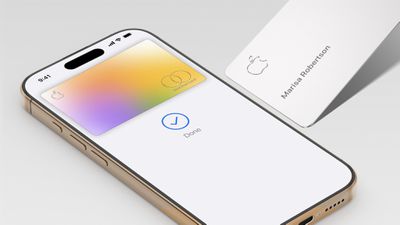
Apple's credit card launched in 2019, and it remains available in the U.S. only. The digital card can be managed in the iPhone's Wallet app, and there is also a physical, titanium Apple Card available for use at businesses that do not accept Apple Pay. With the physical card, however, you can only earn 1% Daily Cash on purchases.
Once the transition is complete, Apple Card balances for open accounts will be with Chase, and this will be reflected on each cardholder's credit report.
Goldman Sachs will continue to provide customer service to Apple Card users in the interim.
Mastercard will remain the Apple Card's payment network.
Apple said additional details regarding the transition will be shared with all Apple Card users as the transition date approaches, so there is no other specific information yet. It sounds like the Apple Card experience will remain the same over the next 24 months, but there could be some changes beyond that to be announced later.