Faster mmWave 5G Still Limited to U.S. iPhone 16 Models - MacRumors
Skip to Content

Faster mmWave 5G Still Limited to U.S. iPhone 16 Models

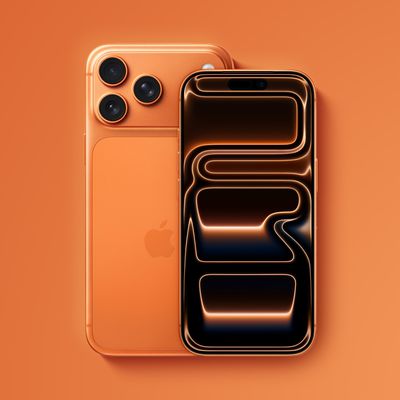
Apple today introduced the new iPhone 16, ‌iPhone 16‌ Plus, ‌iPhone 16‌ Pro, and ‌iPhone 16‌ Pro Max models, but the update has not expanded mmWave 5G to countries outside of the United States. All four ‌iPhone 16‌ models offer mmWave 5G in the U.S., but other countries are still limited to sub-6GHz 5G.
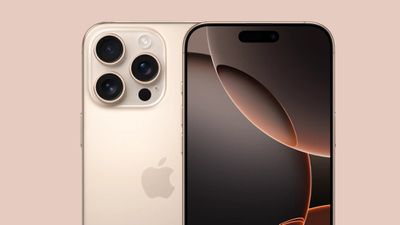
iphone 16 pro max
mmWave 5G has been a United States exclusive since 5G technology first debuted in the iPhone 12 as an upgrade for LTE. Apple hasn't rolled out mmWave 5G in other countries because other countries largely have yet to widely adopt the faster speeds. There are mmWave networks in countries like Australia, China, and Japan, but it is not a standard that has been fully embraced. In Australia, for example, mmWave is only available in select areas of major cities like Melbourne and Sydney.

While mmWave technology offers the fastest 5G speeds, it is limited to urban areas due to its short range and inability to penetrate obstacles. Sub-6GHz 5G is much more widespread, even in the United States, because it can also be used in rural and suburban areas.

It is worth noting that Apple replaced the mmWave antenna on the ‌iPhone 16‌ models in the United States with the Camera Control button. There is no obvious mmWave cutout anymore, with the antenna instead built into the iPhone's frame.

Other countries do not have a mmWave antenna at all, and instead have a physical SIM slot, a feature that no longer exists in the U.S.

Related Roundup: iPhone 16
Related Forum: iPhone

Top Rated Comments

smithrh Avatar
20 months ago
This is a very very niche technology that has an extremely limited rollout.

No one should have FOMO over this.
Score: 12 Votes (Like | Disagree)
Dr McKay Avatar
20 months ago
I get this in my home town without mmwave I think I'll survive.


Attachment Image
Score: 6 Votes (Like | Disagree)
arthurgd3 Avatar
20 months ago
mmWave 5G is completely overhyped and mostly pointless since it has such a limited scenario where it works well. sub6 5G as I have with T-Mobile here in the US, there are places where I am comfortably getting over 1Gbps down on my Pixel 8 Pro and about 150Mbps up so it isn't slow by any means.
Score: 5 Votes (Like | Disagree)
suchnerve Avatar
20 months ago
Chicken and egg situation.

mmWave’s range should be thought of as being like really good Wi-Fi, rather than being compared to sub-6 cellular. Its several hundred feet of propagation distance is plenty for achieving broad urban coverage, if actually deployed on all existing sites.

Most of mmWave’s perceived coverage issues are just because it isn’t fully deployed. Of course the connection is gonna drop if not all the sites around you have it.

It’s all worth it for the congestion resistance. mmWave has so much capacity that it’s nearly impossible to congest to the point of unusability. You could be in a dense crowd of people all using their phones, and mmWave would still work just fine.
Score: 4 Votes (Like | Disagree)
20 months ago
I’m in London and I get reliably faster speeds with 4G than with 5G. And much better battery life. I’ve been using my 15 Pro for about a year with 5G mostly turned off. Had to turn it on in NYC though!
Score: 4 Votes (Like | Disagree)
JPack Avatar
20 months ago
mmWave isn't needed even for stadiums in Asia. This can solved by installing more mid-band base stations.

In general, mmW isn't commercially viable, which is why you don't see it deployed to any scale outside the U.S. The U.S. only adopted mmW because of geopolitical reasons, not technical.

According to Apple, mid-band 5G can deliver up to 3.5 Gbps while mmW up to 4 Gbps. So who needs mmW?
Score: 3 Votes (Like | Disagree)