Google Maps iOS App Will Soon Let You Pay for Parking and Transit Rides
Google has just rolled out a new pay for parking feature in the U.S. that lets Android users pay for street parking and mass transit fares right from within Google Maps, without having to come in contact with a parking meter or ticket machine.
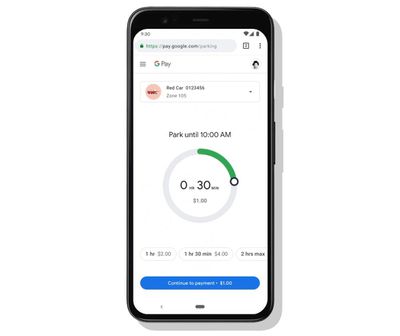
These days, people are upping their hand sanitizing game and avoiding touching public surfaces as much as possible. Thanks to an integration with parking solutions providers Passport and ParkMobile, you can now easily pay your meter right from driving navigation in Maps, and avoid touching the meter altogether.
According to Google, users will get a "Pay for Parking" button in the driving navigation interface when they're nearing their destination, and when they arrive they can enter a meter number, input the amount of time they want to park for, and then hit "Pay" to use Google Pay. If users need to extend the time they need to park for, they can easily extend your parking session with just a few taps.
Google says it is also expanding the ability to pay for transit fares from Maps for over 80 transit agencies around the world, meaning users will be be able to plan their trip, buy their fare, and start riding without needing to switch between apps.
When you get transit directions, you'll see the option to pay with your phone with the credit or debit cards already linked to your Google Pay account. And in places like the San Francisco Bay Area, you'll also be able to buy a digital Clipper card directly from Google Maps.
Once you've purchased your fare, all you need to do is tap your phone on the reader or show your digital ticket to breeze on board.
Pay for parking is rolling out now in the U.S. on Android in over 400 cities, and Google says the same features will soon be coming to iPhone owners who use Google Maps – presumably via Apple Pay integration.
Popular Stories
Bloomberg's Mark Gurman has high expectations for Apple's first foldable iPhone.
In his Power On newsletter today, he said the foldable iPhone will be "the most significant overhaul in the iPhone's history."
"iPhone 4, iPhone 6 and iPhone X were clearly a big deal, but this is a whole new design," he said.
Like Samsung's Galaxy Z Fold 7, the foldable iPhone will reportedly open up like ...
March has been an incredibly busy month for Apple, with the company unveiling more than 10 new products and accessories. We said hello to the MacBook Neo at the start of the month, and we bid farewell to the Mac Pro at the end of it.
Nevertheless, there is still a lot more to come this year.
Beyond the usual annual updates to iPhones and Apple Watches, Apple's all-new smart home hub is...
Apple is expected to release two new iPhone apps this year, including an Apple Business app and a Siri app with chatbot-like functionality.
With the Apple Business app, employees at businesses using the new Apple Business platform will be able to install apps for work, view contact information for colleagues, and request support. Apple Business is launching on April 14, and it replaces Apple ...
Popular Stories
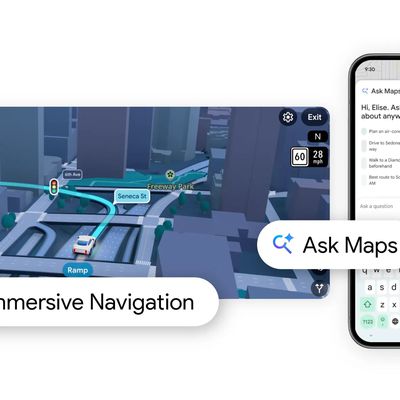
Google today added Gemini AI to Google Maps, enabling a new Ask Maps feature. Gemini in maps can answer complex, real-world questions that Google says "a map could never answer before."
There is a new Ask Maps button where Google Maps users can get answers to specific questions like "is there a public tennis court with lights on that I can play at tonight?" Google says that finding...
Bloomberg's Mark Gurman has high expectations for Apple's first foldable iPhone.
In his Power On newsletter today, he said the foldable iPhone will be "the most significant overhaul in the iPhone's history."
"iPhone 4, iPhone 6 and iPhone X were clearly a big deal, but this is a whole new design," he said.
Like Samsung's Galaxy Z Fold 7, the foldable iPhone will reportedly open up like ...
March has been an incredibly busy month for Apple, with the company unveiling more than 10 new products and accessories. We said hello to the MacBook Neo at the start of the month, and we bid farewell to the Mac Pro at the end of it.
Nevertheless, there is still a lot more to come this year.
Beyond the usual annual updates to iPhones and Apple Watches, Apple's all-new smart home hub is...