HomePod Mini Supports Low-Power Thread Networking Technology - MacRumors
Skip to Content

HomePod Mini Supports Low-Power Thread Networking Technology

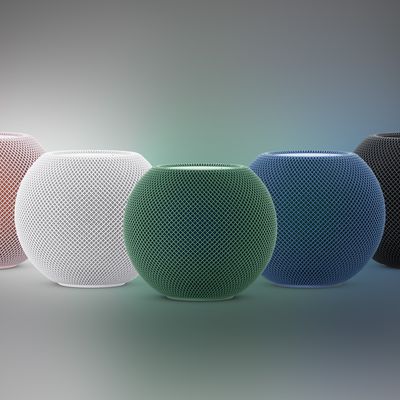
As disclosed on the specs page for Apple's new HomePod mini, the diminutive speaker is Apple's first to support Thread networking technology.
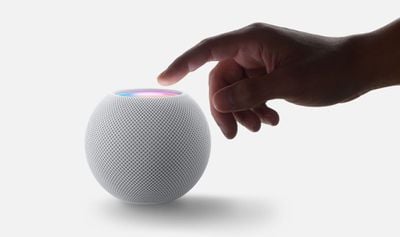
homepod mini hand
Thread is a low-power IP-based networking technology for connecting Internet of Things (IoT) devices, offering a secure, mesh-based system that makes it easy to build an ecosystem of devices.

While Thread is essentially agnostic to the application layers that run on top of it, it can support multiple layers and may play a role in Project Connected Home over IP, the alliance of Apple, Amazon, Google, and other companies that is seeking to make it simpler to build devices compatible with multiple ecosystems such as Siri, Alexa, and Google Assistant.

For the time being, however, Apple says in a footnote that ‌HomePod mini‌'s Thread support is limited to HomeKit devices, so the technology can't yet be leveraged cross-platform and it remains to be seen how Apple will embrace Thread going forward.

Apple is a noted supporter of the Thread project, with longtime Apple engineer Stuart Cheshire, who developed the Rendezvous/Bonjour zero-configuration standard nearly 20 years ago, serves as a director of Thread Group.

Apple's ‌HomePod mini‌ will be available for pre-order starting November 6, and it will officially launch on November 16.
Related Roundup: HomePod mini

Popular Stories

homepod apple tv nearly ready

Apple Retail Stores Preparing for New Home Product Launches

Sunday August 23, 2026 12:20 pm PDT by
Bloomberg's Mark Gurman reports that Apple is reorganizing parts of its brick-and-mortar stores this fall to make room for new home products. Writing in his latest Power On newsletter, Gurman says the teams responsible for store layouts are preparing changes to the "Avenues," or the perimeter walls in Apple's newer stores, where accessories like HomePod, Apple TV, AirPods, and Beats are...

Home Hub Command Center with Dome Base Feature

Apple Smart Home Display Still Coming This Year

Tuesday August 25, 2026 8:19 am PDT by
Apple remains on track to launch its first smart home device with a screen before the end of the year, according to Bloomberg's Mark Gurman. Gurman reiterated that the device will use facial recognition to determine who is standing in front of it and serve up personalized content for that individual user. The description lines up with code found in macOS Tahoe 26.7 earlier this week, which...
iPhone Handoff Feature

iOS 27 Introduces New 'iPhone Handoff' Feature

Wednesday September 2, 2026 12:35 pm PDT by
Apple has added a new "iPhone Handoff" feature to iOS 27 that will allow you to switch between two iPhones while using the same phone number on each device. This functionality was briefly mentioned during the WWDC 2026 keynote in June, on a slide that listed hundreds of new features coming in iOS 27 and corresponding software updates, but Apple never shared any further details at the time. ...

Top Rated Comments

PickUrPoison Avatar
77 months ago

Still with an ugly cable!
Just order the nuclear-powered option then 🤷‍♂️
Score: 16 Votes (Like | Disagree)
Doctor Q Avatar
77 months ago

Should have been waterproof and wireless.
Given how well Apple has hidden the power cord in photos and videos, people are going to assume it's battery operated.
Score: 10 Votes (Like | Disagree)
carrrrrlos Avatar
77 months ago
This is super cute, my puppy is going to love chewing on it.
Score: 10 Votes (Like | Disagree)
bobjonesco Avatar
77 months ago

This is super cute, my puppy is going to love chewing on it.
My cat said he couldn't wait knocking this off the book shelves. Told me to get two.
Score: 8 Votes (Like | Disagree)
ipedro Avatar
77 months ago
I’ve been saying since Apple discontinued Airport that Apple was heading towards a future where a WiFi router based home network was irrelevant.

Today, Apple implemented two of those necessary pieces. Thread networks devices without the need for a central “home network” and 5G provides speed and bandwidth not only matching that of a WiFi network but exceeding it.

The future of home networks is no home networks. Every device just talks to each other directly and where feasible and necessary, devices connect to the internet via their own embedded 5G chip.

June 2019:

If we look closely at Apple's hardware releases in the last several years, it's possible to interpret their strategy and understand why Apple got out of the router game.

The answer is that each Apple device is its own piece of a mesh network. Every Apple device recognizes Apple devices around it and seamlessly creates a network of all devices logged into the same Apple ID and known Apple ID's.

The reliability of transferring files via AirDrop has gotten to a point where it really does just work. iCloud puts storage in the cloud where any device can access it, even outside of a traditional local network. Printers connect directly to each device, without having to configure them manually. These functions constitute the majority of uses for a home network.

The obvious piece that's missing is of course internet access. iPhones connect to the internet directly via LTE and can even get other devices online like Macs and iPads. But LTE data is expensive and Macs and AppleTVs consume large amounts of data. This is where 5G will come in. Speeds are expected to exceed terrestrial internet and available bandwidth will enable ISP's to charge the same for wireless data as they do for traditional internet — with the added benefit that it's much cheaper to deploy 5G infrastructure than it is optical cabling under city streets and on poles.

Some people will probably say that this isn't viable for offices. Commercial networks were never AirPort's focus. IT departments didn't buy a bunch of AirPort to build networks. It was always primarily a consumer device. We have to see this from a consumer perspective and so for consumers, a direct internet connection via a 5G chip built into each device makes far more sense than configuring WiFi networks at home.

Mesh networks are experiencing a bit of a moment now but I don't think that will last as 5G is deployed and people start relying on their future iPhone's 5G connection when data prices drop to the price of traditional home internet prices. Apple wasn't looking at the short term when they decided to abandon AirPort. They're thinking ahead. I fully expect Macs and even AppleTV's to come with built in 5G chips in the coming years and for Watches and iPads to come with cellular chips standard.
Score: 8 Votes (Like | Disagree)
77 months ago
Great to hear that after so many years Stuart Cheshire is still at Apple working on innovative network technology. As a network nerd I absolutely love his work and his talks at WWDC and IETF meetings.
Score: 6 Votes (Like | Disagree)