iOS 12.1 Extends Battery-Related Performance Management Feature to iPhone 8, iPhone 8 Plus, and iPhone X

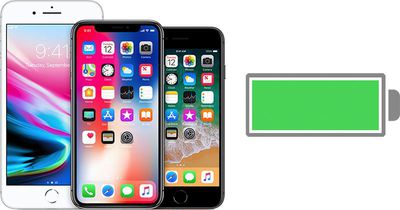
Apple on Tuesday released iOS 12.1 following six weeks of beta testing. As mentioned in the release notes, the software update extends Apple's performance management feature to the iPhone 8, iPhone 8 Plus, and iPhone X.
iphone x battery
From the release notes:

Adds a performance management feature to prevent the device from unexpectedly shutting down, including the option to disable this feature if an unexpected shutdown occurs, for iPhone X, iPhone 8 and iPhone 8 Plus.

Apple has reflected this change on its iPhone Battery and Performance website, noting that performance management "may be less noticeable" on those iPhone models due to their "more advanced hardware and software design."

The performance management system was first enabled in iOS 10.2.1, but it was limited to the iPhone 6, iPhone 6 Plus, iPhone 6s, iPhone 6s Plus, iPhone SE, iPhone 7, and iPhone 7 Plus until yesterday's release of iOS 12.1.

Last December, Apple did mention that the design of the iPhone 8, iPhone 8 Plus, and iPhone X allows for a "different" performance management system that "more precisely" prevents unexpected shutdowns, but prior to iOS 12.1, no performance management feature of this kind had been enabled on the trio of iPhones:

iPhone 8 and later use a more advanced hardware and software design that provides a more accurate estimation of both power needs and the battery's power capability to maximize overall system performance. This allows a different performance management system that more precisely allows iOS to anticipate and avoid an unexpected shutdown. As a result, the impacts of performance management may be less noticeable on iPhone 8 and later. Over time, the rechargeable batteries in all iPhone models will diminish in their capacity and peak performance and will eventually need to be replaced.

Why is Apple slowing down some iPhone models if necessary?

From our January 2018 article What to Know About Apple Slowing Down iPhones to Prevent Unexpected Shutdowns:

iPhones, like many other consumer electronics, are powered by lithium-ion batteries, which have a limited lifespan. As the battery in your iPhone ages, its ability to hold a charge slowly diminishes.

A chemically aging battery can also have increased impedance, reducing its ability to provide a sudden burst of power when demanded by other components in an iPhone, such as the CPU and GPU. A battery's impedance will also temporarily increase when it has a low charge and/or in cold temperatures.

A battery with a high enough impedance may be unable to provide power quickly enough to the iPhone when needed, and Apple safeguards components against the drop in voltage by shutting down the device.

Apple recognized that iPhones unexpectedly shutting down on users is not a good experience, and starting with iOS 10.2.1, it quietly implemented a power management feature to prevent these shutdowns. The update was released in January 2017, and a month later, Apple said it saw a major reduction in shutdowns.

The performance management feature can be disabled if desired in the Settings app, under the Battery Health menu. At this time, the feature does not appear to extend to the new iPhone XS, iPhone XS Max, or iPhone XR.
Related Forum: iPhone

Popular Stories

iPhone Top Left Hole Punch Face ID Feature Purple

iPhone 18 Pro Launching Later This Year With These 12 New Features

Thursday January 15, 2026 10:56 am PST by
While the iPhone 18 Pro and iPhone 18 Pro Max are not expected to launch for another eight months, there are already plenty of rumors about the devices. Below, we have recapped 12 features rumored for the iPhone 18 Pro models, as of January 2026: The same overall design is expected, with 6.3-inch and 6.9-inch display sizes, and a "plateau" housing three rear cameras Under-screen Face ID...
Apple MacBook Pro M4 hero

These 5 Apple Products Will Reportedly Be Upgraded With OLED Displays

Friday January 16, 2026 7:07 pm PST by
Apple plans to upgrade the iPad mini, MacBook Pro, iPad Air, iMac, and MacBook Air with OLED displays between 2026 and 2028, according to DigiTimes. Bloomberg's Mark Gurman previously reported that the iPad mini and MacBook Pro will receive an OLED display as early as this year, but he does not expect the MacBook Air to adopt the technology until 2028 at the earliest. A new iPad Air is...
2024 iPhone Boxes Feature

Apple Adjusts Trade-In Values for iPhones, Macs, and More

Thursday January 15, 2026 11:19 am PST by
Apple today updated its trade-in values for select iPhone, iPad, Mac, and Apple Watch models. Trade-ins can be completed on Apple's website, or at an Apple Store. The charts below provide an overview of Apple's current and previous trade-in values in the United States, according to the company's website. Most of the values declined slightly, but some of the Mac values increased. iPhone ...
Apple Wallet ID Illinois

Apple Plans to Expand iPhone Driver's Licenses to These 7 U.S. States

Friday January 16, 2026 12:12 pm PST by
In select U.S. states, residents can add their driver's license or state ID to the Apple Wallet app on the iPhone and Apple Watch, and then use it to display proof of identity or age at select airports and businesses, and in select apps. The feature is currently available in 13 U.S. states and Puerto Rico, and it is expected to launch in at least seven more in the future. To set up the...
iPhone Top Left Hole Punch Face ID Feature Purple

New Leak Reveals iPhone 18 Pro Display Sizes, Under-Screen Face ID, and More

Wednesday January 14, 2026 7:09 am PST by
While the iPhone 18 Pro models are still around eight months away, a leaker has shared some alleged details about the devices. In a post on Chinese social media platform Weibo this week, the account Digital Chat Station said the iPhone 18 Pro and iPhone 18 Pro Max will have the same 6.3-inch and 6.9-inch display sizes as the iPhone 17 Pro and iPhone 17 Pro Max. Consistent with previous...

Top Rated Comments

1144557 Avatar
94 months ago
I'd be fine with it if the battery lasted more than a single year before needing it. In fairness it's probably only a small group where the battery is bad enough to need throttling but even so, for the price of the phone the batteries should have better longevity.
Blame battery tech not Apple. Apple didn't invent lithium-ion batteries. They simply chemically degrade over time due to charge and discharge cycles. No devices (not just smartphones) are immune from battery degradation. Same reason your cordless dustbuster/stick vac battery wont hold a charge after a certain amount of time; it has nothing to do with the device the battery is in but number or charge/discharge cycles.

Seems like a problem that could have been solved if Apple bothered to ship their phones with an appropriately sized battery...
Huh? What does battery capacity have to do with number recharge cycles and chemical degradation of a lithium-ion battery? ALL batteries degrade over time.


"The lithium-ion battery works on ion movement between the positive and negative electrodes. In theory such a mechanism should work forever, but cycling, elevated temperature and aging decrease the performance over time. Manufacturers take a conservative approach and specify the life of Li-ion in most consumer products as being between 300 and 500 discharge/charge cycles."

Temperature 40% charge 100% charge
0°C 98% (after 1 year) 94% (after 1 year)
25°C 96% (after 1 year) 80% (after 1 year)
40°C 85% (after 1 year) 65% (after 1 year)
60°C 75% (after 1 year) 60% (after 3 months)

So charge cycles and ambient temperature make a HUGE difference in life of a battery. And since no one keeps their devices at 0°C (freezing point) and factoring most charge the battery to 100% each time, a 20% degradation after 1 year per the chart is proven by science. It's not simply "Apple said"
Score: 19 Votes (Like | Disagree)
NexusUser Avatar
94 months ago
Seems like a problem that could have been solved if Apple bothered to ship their phones with an appropriately sized battery...
Score: 16 Votes (Like | Disagree)
neliason Avatar
94 months ago
Apple’s management of batteries across devices is odd. Why doesn’t iPad have a low power mode? More importantly why doesn’t iPad have a battery health report? These are important features for all devices and not just the one’s Apple decides to surreptitiously tinker with.
Score: 13 Votes (Like | Disagree)
gnipgnop Avatar
94 months ago
Why doesn’t iPad have a low power mode?.
Because the overall size of the battery plays a role in whether or not it can supply the proper voltage under certain conditions. The iPad battery does not have the same constraints as the smaller iPhone batteries.
Score: 11 Votes (Like | Disagree)
BulkSlash Avatar
94 months ago
Totally fine with me. Better than a phone becoming unusable, but of course they've should've been disclosing it and allowing users to toggle it on and off from the beginning.
I'd be fine with it if the battery lasted more than a single year before needing it. In fairness it's probably only a small group where the battery is bad enough to need throttling but even so, for the price of the phone the batteries should have better longevity.
Score: 9 Votes (Like | Disagree)
Nicksd84 Avatar
94 months ago
Totally fine with me. Better than a phone becoming unusable, but of course they've should've been disclosing it and allowing users to toggle it on and off from the beginning.
Score: 8 Votes (Like | Disagree)