Apple Reportedly Working Towards Mass Production of Thinner and Brighter Micro-LED Displays

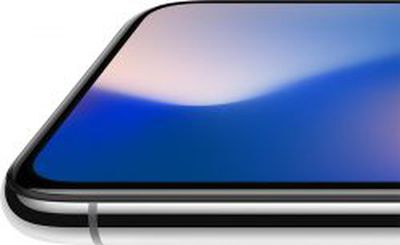
iphone x oledApple is collaborating with its Taiwanese supplier TSMC to solve manufacturing issues preventing volume production of micro-LED display panels, according to DigiTimes.

Apple is reportedly collaborating with Taiwan Semiconductor Manufacturing Company (TSMC) to develop applications based on silicon-based backplanes (silicon wafers) aiming to sidestep the bottleneck that entails with the mass transfer of LED chips, indicated the sources.

Once micro-LED displays can be mass produced both reliably and affordably, the panels could be used in future Apple devices. Apple's use of micro-LED would likely begin in 2019 at the earliest, possibly starting with the Apple Watch, should it choose to proceed with the technology after trial production.

In the meantime, the report claims Apple has downsized its micro-LED research and development team at its laboratory in northern Taiwan.

The downsizing doesn't necessarily mean that Apple has delayed or given up development of the next-generation display technology. In addition to its work with TSMC, it's possible that Apple has shifted the bulk of its micro-LED research back to its headquarters in the United States.

Apple's interest in micro-LED was first reported in late 2015, when it was discovered that the iPhone maker opened a secretive laboratory in Taoyuan, Taiwan to research display technologies like OLED and micro-LED for future devices. OLED is currently used in the Apple Watch and iPhone X.

Apple acquired micro-LED display maker LuxVue Technology in 2014, and some of its employees may be part of Apple's micro-LED research team, in addition to former employees of AU Optronics and Qualcomm subsidiary SolLink.

Micro-LED displays have many of the same advantages as OLED displays have over LCDs, including improved color accuracy, improved contrast ratio, faster response times, and true blacks given both have self-lit pixels, but they can be even thinner, much brighter, and more energy efficient than OLED.

Micro-LED displays also have inorganic gallium nitride-based LEDs, which have a longer lifespan than the organic compound used in OLED displays.
Popular Stories

iphone 17 models

No iPhone 18 Launch This Year, Reports Suggest

Thursday January 1, 2026 8:43 am PST by
Apple is not expected to release a standard iPhone 18 model this year, according to a growing number of reports that suggest the company is planning a significant change to its long-standing annual iPhone launch cycle. Despite the immense success of the iPhone 17 in 2025, the iPhone 18 is not expected to arrive until the spring of 2027, leaving the iPhone 17 in the lineup as the latest...
duolingo ad live activity

Duolingo Used iPhone's Dynamic Island to Display Ads, Violating Apple Design Guidelines

Friday January 2, 2026 1:36 pm PST by
Language learning app Duolingo has apparently been using the iPhone's Live Activity feature to display ads on the Lock Screen and the Dynamic Island, which violates Apple's design guidelines. According to multiple reports on Reddit, the Duolingo app has been displaying an ad for a "Super offer," which is Duolingo's paid subscription option. Apple's guidelines for Live Activity state that...
Clicks Communicator Feature

'Clicks Communicator' Unveiled — Will You Carry This With Your iPhone?

Friday January 2, 2026 6:35 am PST by
The company behind the BlackBerry-like Clicks Keyboard accessory for the iPhone today unveiled a new Android 16 smartphone called the Clicks Communicator. The purpose-built device is designed to be used as a second phone alongside your iPhone, with the intended focus being communication over content consumption. It runs a custom Android launcher that offers a curated selection of messaging...
Low Cost MacBook Feature A18 Pro

Low-Price 12.9-Inch MacBook With A18 Pro Chip Reportedly Launching Early This Year

Friday January 2, 2026 9:08 am PST by
Apple plans to introduce a 12.9-inch MacBook in spring 2026, according to TrendForce. In a press release this week, the Taiwanese research firm said this MacBook will be aimed at the entry-level to mid-range market, with "competitive pricing." TrendForce did not share any further details about this MacBook, but the information that it shared lines up with several rumors about a more...
Low Cost A18 Pro MacBook Feature Pink

Apple's 2026 Low-Cost A18 Pro MacBook: What We Know So Far

Friday January 2, 2026 4:33 pm PST by
Apple is planning to release a low-cost MacBook in 2026, which will apparently compete with more affordable Chromebooks and Windows PCs. Apple's most affordable Mac right now is the $999 MacBook Air, and the upcoming low-cost MacBook is expected to be cheaper. Here's what we know about the low-cost MacBook so far. Size Rumors suggest the low-cost MacBook will have a display that's around 13 ...
Apple Fitness Plus hero

Apple Announces New Fitness+ Workout Programs, Strava Challenge, and More

Friday January 2, 2026 6:43 am PST by
Apple today announced a number of updates to Apple Fitness+ and activity with the Apple Watch. The key announcements include: New Year limited-edition award: Users can win the award by closing all three Activity Rings for seven days in a row in January. "Quit Quitting" Strava challenge: Available in Strava throughout January, users who log 12 workouts anytime in the month will win an ...
govee floor lamp

CES 2026: Govee Announces New Matter-Connected Ceiling and Floor Lights

Sunday January 4, 2026 5:00 am PST by
Govee today introduced three new HomeKit-compatible lighting products, including the Govee Floor Lamp 3, the Govee Ceiling Light Ultra, and the Govee Sky Ceiling Light. The Govee Floor Lamp 3 is the successor to the Floor Lamp 2, and it offers Matter integration with the option to connect to HomeKit. The Floor Lamp 3 offers an upgraded LuminBlend+ lighting system that can reproduce 281...

Top Rated Comments

djcerla Avatar
106 months ago
Micro-LED displays have many of the same advantages as OLED displays have over LCDs, including improved color accuracy, improved contrast ratio, faster response times, and true blacks given both have self-lit pixels, but they can be even thinner, much brighter, and more energy efficient than OLED.

And, most importantly, you are no longer in Samsung's hands.
Score: 22 Votes (Like | Disagree)
djcerla Avatar
106 months ago
the iPhone X seems to be merely catching up to what the competition offers. .
The iPhone X is the most innovative and high performance Smartphone display that we have ever tested.

http://www.displaymate.com/iPhoneX_ShootOut_1a.htm
Score: 17 Votes (Like | Disagree)
Blackstick Avatar
106 months ago
They're paying Samsung over $100 per iPhone X... you know they want to get off that bus asap.
Score: 17 Votes (Like | Disagree)
Strelok Avatar
106 months ago
True blacks huh ? Isn't that what say also said about OLED?

One day we will get this right ... Hopefully the shift to U.S will mean no delays..

I say "hopefully" because it doesn't really matter where Apple makes their stuff, they can't escape.
What do you mean said? OLED has true blacks considering the pixels turn off completely.
Score: 15 Votes (Like | Disagree)
KENESS Avatar
106 months ago
Would be nice to see Apple gain a competitive edge with the iPhone display tech again, as the iPhone X seems to be merely catching up to what the competition offers. Regardless, I'll be looking forward to this when I upgrade in 2020...
By most reviews, the iPhone X display surpasses the competition.

On another note, it is hard for Apple to be on the bleeding edge of technological advances, for certain types of advances, because of the volume they need to be able to produce. It's easier to put the latest tech into a product when you will only be making 500k or 1mil of something. (Even those aren't "small" numbers...) But when you look at the iPhone, which can sell 50 million in a single quarter (iPhone 7 is my example here) you can quickly run up against a wall.

So to some degree, the constant complaints about Apple not having the latest tech in the iPhone is not really fair, when NOBODY can produce enough of that whatever it is part at the quantities iPhones require. The technology and the manufacturing issues have to be worked out and more refined before you can go and buy 50-100 million of something. :)
Score: 14 Votes (Like | Disagree)
Mathias Denichi Avatar
106 months ago
Micro-led! Is this a phone for ants?!
Score: 13 Votes (Like | Disagree)