Apple Developing 'Apple Neural Engine' Chip to Power AI in iOS Devices
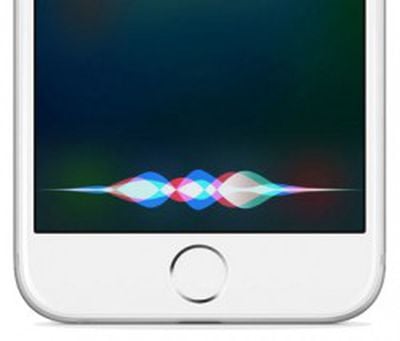 Apple is developing a dedicated processor that will be used to handle AI-related tasks like facial and speech recognition in its products, reports Bloomberg. Citing a source with knowledge of Apple's plans, the site says the chip is known internally as the "Apple Neural Engine."
Apple plans to use the chip, which would work alongside the standard processor and the graphics chip, to add more advanced artificial intelligence capabilities into its devices and to offload demanding AI processing tasks that can impact battery life.
An AI-enabled processor would help Cupertino, California-based Apple integrate more advanced capabilities into devices, particularly cars that drive themselves and gadgets that run augmented reality, the technology that superimposes graphics and other information onto a person's view of the world.
The chip could potentially handle tasks like facial recognition in the photos application, parts of speech recognition, and power the predictive keyboard in the iPhone and iPad. Apple may also allow developers to access the chip to power AI-related features in third-party apps.
An AI chip would not be the first chip that handles dedicated tasks in the iPhone. Starting with the iPhone 5s in 2013, Apple devices have included a motion coprocessor used to collect and store sensor data. The motion coprocessor allows the iPhone and iPad to continually track movement and other sensor data without using significant battery. It also powers features like the always-on "Hey Siri" capability built into modern iPhones.
Apple has already tested prototypes of future iPhones with the AI chip, but it is unclear if such a chip is ready for a debut in the iPhone 8. Going forward, should development on the chip continue, Apple is said to be planning to integrate it into many of its devices.
Popular Stories
The all-new MacBook Neo has been such a hit that Apple is facing a "massive dilemma," according to Taiwan-based tech columnist and former Bloomberg reporter Tim Culpan.
In the iPhone 16 Pro models, the A18 Pro chip has a 6-core GPU. During the chip manufacturing process, however, sometimes a CPU or GPU core can turn out to be faulty. Rather than discarding the leftover A18 Pro chips with...
As we wait for WWDC to kick off next Monday, Apple today announced the winners of its annual Apple Design Awards, recognizing apps and games for their innovation, ingenuity, and technical achievement.
The 2025 Apple Design Award winners are listed below, with one app and one game selected per category:
Delight and Fun - CapWords (App) and Balatro (Game)
Innovation - Play (App) and PBJ -...
NASA has shared three incredible photos shot on the iPhone 17 Pro Max by astronauts during the Artemis II mission to the Moon.
Shot on iPhone 17 Pro Max (Wiseman)
In February, NASA announced that the iPhone had been fully qualified for extended use in orbit, with reports indicating that each of the four crew members aboard the Orion are equipped with an iPhone 17 Pro Max for personal photos...
Popular Stories
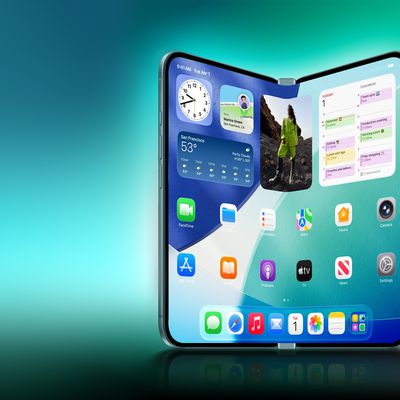
Apple reportedly plans to unveil its long-awaited foldable iPhone in September, and Bloomberg's Mark Gurman has revealed the device's supposed price range.
Apple's foldable iPhone is rumored to be named iPhone Ultra
In a report this week, Gurman said the foldable iPhone is expected to "cross the $2,000 threshold" in the U.S., although it is unclear if he is referring to the starting price or...
Apple plans to release an updated iPhone Air and a lower-end iPhone 18e early next year, according to the latest word from Bloomberg's Mark Gurman.
In a report this week, he said Apple plans to unveil the two devices in spring 2027, alongside a standard iPhone 18. If so, Apple will likely announce the trio of devices in March or April next year. It is unclear if there will be a live-streamed ...
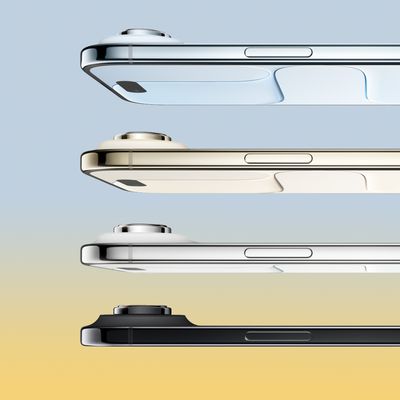
Apple is in the middle of a three-year plan to "reinvent" the look and feel of the iPhone, according to Bloomberg's Mark Gurman.
In a report this week, Gurman said the plan is as follows:September 2025: The redesigned iPhone 17 Pro models and an all-new iPhone Air (✅)
September 2026: A foldable iPhone
September 2027: A special 20th-anniversary iPhoneThe report said this iPhone roadmap has...