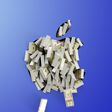
Apple Sues Qualcomm for $1 Billion in Unpaid Royalty Rebates [Updated]

Following an FTC complaint alleging Qualcomm engaged in anticompetitive patent licensing practices, Apple has filed a lawsuit against Qualcomm claiming the company has charged unfair royalties for "technologies they have nothing to do with."

qualcomm_logo
According to a statement Apple shared with several news sites, Qualcomm "reinforces its dominance" through exclusionary tactics and high patent licensing fees. Apple's full statement is below:

"For many years Qualcomm has unfairly insisted on charging royalties for technologies they have nothing to do with. The more Apple innovates with unique features such as TouchID, advanced displays, and cameras, to name just a few, the more money Qualcomm collects for no reason and the more expensive it becomes for Apple to fund these innovations. Qualcomm built its business on older, legacy, standards but reinforces its dominance through exclusionary tactics and excessive royalties. Despite being just one of over a dozen companies who contributed to basic cellular standards, Qualcomm insists on charging Apple at least five times more in payments than all the other cellular patent licensors we have agreements with combined.

To protect this business scheme Qualcomm has taken increasingly radical steps, most recently withholding nearly $1B in payments from Apple as retaliation for responding truthfully to law enforcement agencies investigating them.

Apple believes deeply in innovation and we have always been willing to pay fair and reasonable rates for patents we use. We are extremely disappointed in the way Qualcomm is conducting its business with us and unfortunately after years of disagreement over what constitutes a fair and reasonable royalty we have no choice left but to turn to the courts."

In the lawsuit, filed in a federal district court in the Southern District of California, Apple accuses Qualcomm of using its position as the supplier of a key iPhone component to drive up patent licensing fees.

Qualcomm supplies the LTE modems used in Apple's line of iPhones, and up until 2016, the company was Apple's sole supplier. The iPhone 7 and the iPhone 7 Plus use modems from both Qualcomm and Intel.

Qualcomm reportedly forced Apple to use its LTE chips exclusively in iOS devices and pay a percentage of the total average selling price of an iPhone for access to Qualcomm patents.

Qualcomm is supposed to provide Apple with quarterly rebates, but has failed to do so for the past year because of Apple's participation in an antitrust investigation against Qualcomm in South Korea. That investigation led to an $850+ million fine against Qualcomm for anticompetitive licensing practices.

Apple is seeking $1 billion in rebate payments that have been withheld.

Earlier this week, the United States Federal Trade Commission filed a lawsuit against Qualcomm that focused in part on Apple and Qualcomm's licensing deals. According to the FTC, Qualcomm imposes "onerous and anticompetitive supply and licensing terms" on its smartphone partners by abusing its patent portfolio.

Qualcomm has said it has "grave concerns" about the lack of evidence supporting the FTC's allegations and has promised to defend itself in federal court.

Update 1/25: Apple has also filed two lawsuits against Qualcomm in Beijing. The first, which seeks 1 billion yuan ($145.32 million) in damages accuses Qualcomm of abusing its clout in the chip industry. The second claims Qualcomm has not fulfilled promises to license standard essential patents fairly.
Popular Stories

maxresdefault

Apple Shows Off a Key Reason to Upgrade to the iPhone 17

Saturday February 7, 2026 9:26 am PST by
Apple today shared an ad that shows how the upgraded Center Stage front camera on the latest iPhones improves the process of taking a group selfie. "Watch how the new front facing camera on iPhone 17 Pro takes group selfies that automatically expand and rotate as more people come into frame," says Apple. While the ad is focused on the iPhone 17 Pro and iPhone 17 Pro Max, the regular iPhone...
m5 macbook pro deal

Why You Shouldn't Buy the Next MacBook Pro

Tuesday February 10, 2026 4:27 pm PST by
Apple is planning to launch new MacBook Pro models as soon as early March, but if you can, this is one generation you should skip because there's something much better in the works. We're waiting on 14-inch and 16-inch MacBook Pro models with M5 Pro and M5 Max chips, with few changes other than the processor upgrade. There won't be any tweaks to the design or the display, but later this...
iOS 26

Apple Releases iOS 26.3 and iPadOS 26.3

Wednesday February 11, 2026 10:07 am PST by
Apple today released iOS 26.3 and iPadOS 26.3, the latest updates to the iOS 26 and iPadOS 26 operating systems that came out in September. The new software comes almost two months after Apple released iOS 26.2 and iPadOS 26.2. The new software can be downloaded on eligible iPhones and iPads over-the-air by going to Settings > General > Software Update. According to Apple's release notes, ...
apple wallet drivers license feature iPhone 15 pro

Apple Says These 7 U.S. States Plan to Offer iPhone Driver's Licenses

Monday February 9, 2026 6:24 am PST by
In select U.S. states, residents can add their driver's license or state ID to the Apple Wallet app on the iPhone and Apple Watch, and then use it to display proof of identity or age at select airports and businesses, and in select apps. The feature is currently available in 13 U.S. states and Puerto Rico, and it is expected to launch in at least seven more in the future. To set up the...
Apple Logo Zoomed

Apple Expected to Launch These 10+ Products Over the Coming Months

Tuesday February 10, 2026 6:33 am PST by
It has been a slow start to 2026 for Apple product launches, with only a new AirTag and a special Apple Watch band released so far. We are still waiting for MacBook Pro models with M5 Pro and M5 Max chips, the iPhone 17e, a lower-cost MacBook with an iPhone chip, long-rumored updates to the Apple TV and HomePod mini, and much more. Apple is expected to release/update the following products...

Top Rated Comments

Kaibelf Avatar
118 months ago
Lol, Apple, hustling till it's last breath. Get a life
Get a life? Any person or company worth its salt should expect a contract to be honored. If the payments are due, then they should be paid, period. Maybe your word is mud, but to normal people a deal is a deal.
Score: 34 Votes (Like | Disagree)

118 months ago
I hope these bullies get a comeuppance!
Both companies are bullies.
Score: 24 Votes (Like | Disagree)
Orlandoech Avatar
118 months ago
Good on Apple for taking a stand.
Funny how when Apple sues someone, people like you say "Good for Apple", then when people/companies sue Apple it's "frivolous case".
Score: 23 Votes (Like | Disagree)
118 months ago
That's purposefully misleading.
Qualcomm is not charging Apple royalties for Apple's own technologies.
Well, they are to an extent. Qualcomm is getting royalties based on the selling price. The more non-Qualcomm tech they put into the iPhone, potentially driving up the price, the more Qualcomm receives, even though the cost of their components in the phone is likely decreasing.
Score: 19 Votes (Like | Disagree)
118 months ago
That's purposefully misleading.
Qualcomm is not charging Apple royalties for Apple's own technologies.
If their royalties are based on a percentage of the phone, they actually are.

If I introduce a new phone and the only difference is has a bigger screen for example, why should any patent company get more $$$ for the exact same chip used?
Score: 16 Votes (Like | Disagree)
kdarling Avatar
118 months ago
RE: charging royalties by price of phone.

This is actually not unusual for patent royalties; they can be a percentage of a company's revenue. More to the point, it's EXTREMELY common for cellular SEPs (standard-essential patents).

This was done partly in order to encourage lower prices on phones, to get more phones into the hands of the public. (In essence, companies with bigger profits subsidize cheaper phones, where $2 profit on a $40 phone cannot possibly pay full royalties.) And it worked. In a fairly short period, billions on the planet had phones.

Guess who took advantage of that huge infrastructure and market that they had no part in creating? Yep, Apple, who has made many billions in profit even after paying royalties.

--

Besides the fact that percentage of price is the normal contract for these kind of FRAND patents, here are two important notes that people need to know:

1. Royalty as a percentage of sales was specifically allowed by the DOJ. I tracked down the original approval document back when this was originally questioned:


2. Just as with taxes, Apple cleverly avoided paying full royalties anyway, by lowering the "price of the phone". Insiders claim that Apple only pays Qualcomm a percentage of the price Apple pays for each iPhone AT THE FOXCONN FACTORY, which was around $250 last time I checked on this a few years ago.... NOT on what Apple themselves resell the phone for later on, which is of course hundreds of dollars higher.

So all that whining about poor Apple "paying extra for their technology" amounts to a few dimes per device... and is nothing compared to how much Apple gouges its own customers.

For instance, Apple charges its customers hundreds of dollars for extra storage which only costs Apple a few dollars. Yet Apple only pays Qualcomm a few cents more because the percentage is based on Apple's Foxconn cost, not their final customer profit.

Attachment Image
Score: 14 Votes (Like | Disagree)