Apple's share of the smartphone market in Asia has risen significantly since the launch of the iPhone 6 and iPhone 6 Plus in September, according to market research firm Counterpoint (via The Wall Street Journal). The biggest market share gains for the iPhone came in Japan, China, and South Korea, with the iPhone seeing a 33% market share during November in the latter country. This only trailed rival and South Korean company Samsung, which had a 46% market share after holding a 60% market share.
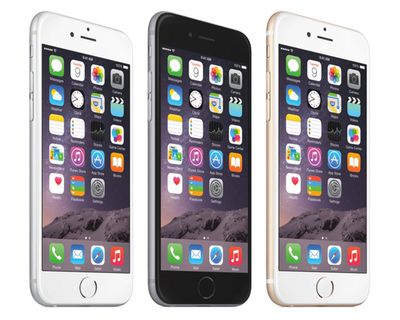
iphone6-stock

“No foreign brand has gone beyond the 20% market share mark in the history of Korea’s smartphone industry,” said Tom Kang, research director for mobile devices at Counterpoint. “It has always been dominated by the global smartphone leader, Samsung. But iPhone 6 and 6 Plus have made a difference here, denting the competition’s phablet sales.”

Apple's market share in Japan grew to 51% in November, holding a commanding lead over second place Sony which holds 17% market share. In China, Apple held a 12% market share in the smartphone market, which is third place behind Lenovo's 13% market share and upstart manufacturer Xiaomi, which commanded a 18% market share.

In November, data from AppLovin showed that the iPhone 6 Plus was popular with Asian customers, as Japan, Vietnam, China, and the Philippines showed an adoption rate of over 35% for the larger device. Overall, strong sales for the iPhone 6 and iPhone 6 Plus led to smartphone market share growth for Apple across the world, with analysts attributing the growth to the redesigned bodies and larger screens of both devices.

Related Forum: iPhone

Top Rated Comments

thekeyring Avatar
144 months ago
Better marketing often beats a better product.

Luckily Apple has both.
Score: 8 Votes (Like | Disagree)
wesley96 Avatar
144 months ago
I was unaware that people purchased phones based on some sort of nationalism.:rolleyes: But if what you say is true, what does that say about us Americans? I mean, it's not like we buy Apple exclusively because they're the "home company". Samsung's marketing definitely worked here, and according to this forum, Apple's product was better.

It could be as simple as more Korean people like iPhones now that they have sizes that are more attractive to the market.
Speaking as a Korean here, nationalism has driven sales of local brands in the past and is still valid to certain extent even now. But it's also the case of brand familiarity, especially for the older generations. They're familiar with Samsung and LG, and have the perception that they make good products. So even me being a stalwart Apple fan, I just recommend Samsung to relatives who are not familiar with Apple.

Meanwhile, the younger generations are familiar with Apple and the so-called iPhone Shock that happened back in 2009 when iPhone officially launched here. This demographic had embraced it quite well. But since then, the screen being more or less the same size had an effect of eroding the market share, moving away to large screen size offerings from the local brands. What we've seen back last November would be more or less those people returning.
Score: 3 Votes (Like | Disagree)
taptic Avatar
144 months ago
I'm not in Asia, but I have never seen such a sharp rise in the next generation iPhone as I have with the 6. Usually it seems to take longer before I see so many of the latest in the wild.
Score: 3 Votes (Like | Disagree)
MattJessop Avatar
144 months ago
Anecdotal, but being in Shanghai recently, at least 1 third of the people I saw all had 6 pluses. Worth noting that the smallest phone size I saw was still around 5 inches, even with the older generations. Crazy.



Score: 3 Votes (Like | Disagree)
ryuok Avatar
144 months ago
We have small eyes, so the bigger screens definitely help. ;)
Score: 1 Votes (Like | Disagree)
fallenjt Avatar
144 months ago
Better marketing often beats a better product.

Tell that to the Korean. They turned away from their home company's products.
Score: 1 Votes (Like | Disagree)

Popular Stories

Apple Logo Black

Apple Just Made Its Second-Biggest Acquisition Ever After Beats

Thursday January 29, 2026 10:07 am PST by
Apple today confirmed to Reuters that it has acquired Q.ai, an Israeli startup that is working on artificial intelligence technology for audio. Apple paid close to $2 billion for Q.ai, according to sources cited by the Financial Times. That would make this Apple's second-biggest acquisition ever, after it paid $3 billion for the popular headphone and audio brand Beats in 2014. Q.ai has...
imac video apple feature

Apple Unveils First New Products of 2026

Monday January 26, 2026 1:55 pm PST by
Apple today introduced its first two physical products of 2026: a second-generation AirTag and the Black Unity Connection Braided Solo Loop for the Apple Watch. Read our coverage of each announcement to learn more:Apple Unveils New AirTag With Longer Range, Louder Speaker, and More Apple Introduces New Black Unity Apple Watch BandBoth the new AirTag and the Black Unity Connection Braided...
iPhone 5s

iPhone 5s Gets New Software Update 13 Years After Launch

Monday January 26, 2026 3:56 pm PST by
Alongside iOS 26.2.1, Apple today released an updated version of iOS 12 for devices that are still running that operating system update, eight years after the software was first released. iOS 12.5.8 is available for the iPhone 5s and the iPhone 6, meaning Apple is continuing to support these devices for 13 and 12 years after launch, respectively. The iPhone 5s came out in September 2013,...
Apple Creator Studio

Apple's Next Launch is Today

Tuesday January 27, 2026 2:39 pm PST by
Update: Apple Creator Studio is now available. Apple Creator Studio launches this Wednesday, January 28. The all-in-one subscription provides access to the Final Cut Pro, Logic Pro, Pixelmator Pro, Motion, Compressor, and MainStage apps, with U.S. pricing set at $12.99 per month or $129 per year. A subscription to Apple Creator Studio also unlocks "intelligent features" and "premium...
apple silicon 1 feature

Apple Responds to Skyrocketing RAM and Storage Chip Prices

Thursday January 29, 2026 2:40 pm PST by
On an earnings call with equity analysts today, Apple CEO Tim Cook responded to fast-rising RAM and SSD storage chip prices in the supply chain. Prices for RAM and NAND storage chips are surging lately due to high demand from companies building out AI servers, resulting in supply constraints. Cook said that rising memory chip prices had a "minimal impact" on Apple's gross margin in the...