Key Claim of Apple's 'Rubber Banding' Patent Used Against Samsung Confirmed
Apple's "rubber banding" patent (U.S. No. 7,469,381) has been under heavy scrutiny in recent months, with a number of claims found invalid in two different rulings.
The patent, which pertains to the ability for content displayed on iOS devices to "bounce back" when a user scrolls to the top or the bottom of a page, is significant because it is one that was successfully used by Apple against Samsung in the ongoing legal dispute that saw Apple awarded with more than a billion dollars.
According to FOSS Patents, Apple has scored a major victory in regards to the '381 patent, having just received notice that the United States Patent and Trademark Office (USPTO) will issue a reexamination certificate that confirms the formerly invalidated claim 19, which was the portion of the patent used against Samsung. In April, three other claims were also confirmed.
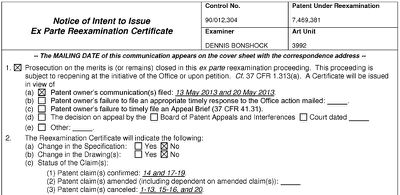
As a result of this new reexamination certificate, claim 19 will enjoy an enhanced presumption of validity against the invalidity theories the patent office evaluated. Instead of invalidation in mid–2017 or later, this patent has now been confirmed in mid–2013.
Apple would presumably have liked to salvage even more claims than the seven claims the patent office is now going to confirm, but claim 19 is the one that matters in the dispute with Samsung, and it’s now stronger than ever.
Samsung has, at multiple points in time, attempted to have the rubber banding patent declared invalid and has also attempted to use the question of the patent’s validity as a reason to delay the November trial that will redetermine a portion of the damages that Samsung must pay to Apple after the original $1 billion ruling was partially thrown out due to jury error.
With the new reexamination certificate, it is unlikely that Samsung will be able to delay or avoid the November trial that will levy additional damages against the company.
Popular Stories
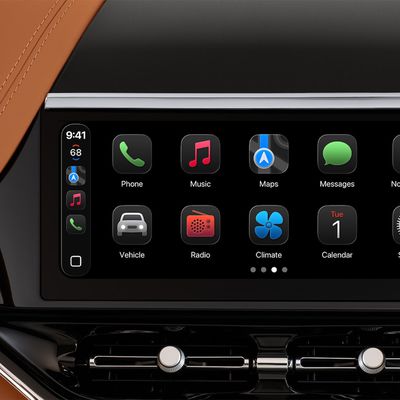
Last year, Apple launched CarPlay Ultra, the long-awaited next-generation version of its CarPlay software system for vehicles. Nearly a year later, CarPlay Ultra is still limited to Aston Martin's latest luxury vehicles, but that should change fairly soon.
In May 2025, Apple said many other vehicle brands planned to offer CarPlay Ultra, including Hyundai, Kia, and Genesis.
CarPlay Ultra...
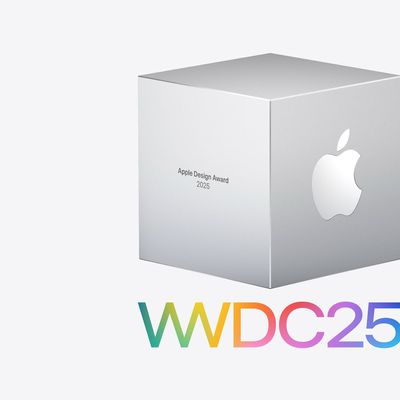
As we wait for WWDC to kick off next Monday, Apple today announced the winners of its annual Apple Design Awards, recognizing apps and games for their innovation, ingenuity, and technical achievement.
The 2025 Apple Design Award winners are listed below, with one app and one game selected per category:
Delight and Fun - CapWords (App) and Balatro (Game)
Innovation - Play (App) and PBJ -...
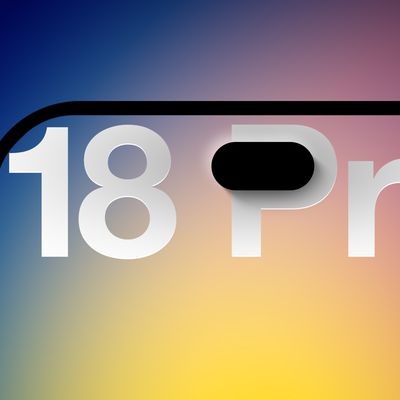
Apple's iPhone development roadmap runs several years into the future and the company is continually working with suppliers on several successive iPhone models at the same time, which is why we often get rumored features months ahead of launch. The iPhone 18 series is no different, and we already have a good idea of what to expect for the iPhone 18 Pro and iPhone 18 Pro Max.
One thing worth...
Popular Stories
Last year, Apple launched CarPlay Ultra, the long-awaited next-generation version of its CarPlay software system for vehicles. Nearly a year later, CarPlay Ultra is still limited to Aston Martin's latest luxury vehicles, but that should change fairly soon.
In May 2025, Apple said many other vehicle brands planned to offer CarPlay Ultra, including Hyundai, Kia, and Genesis.
CarPlay Ultra...
As we wait for WWDC to kick off next Monday, Apple today announced the winners of its annual Apple Design Awards, recognizing apps and games for their innovation, ingenuity, and technical achievement.
The 2025 Apple Design Award winners are listed below, with one app and one game selected per category:
Delight and Fun - CapWords (App) and Balatro (Game)
Innovation - Play (App) and PBJ -...
Apple's iPhone development roadmap runs several years into the future and the company is continually working with suppliers on several successive iPhone models at the same time, which is why we often get rumored features months ahead of launch. The iPhone 18 series is no different, and we already have a good idea of what to expect for the iPhone 18 Pro and iPhone 18 Pro Max.
One thing worth...