MacGuardians (German) report from CeBit that IBM's PowerPC 970 will debut at up to 1.8GHz as originally expected. (IBM's Microprocessor Forum presentation in October 2002 indicated initial speeds for the PowerPC 970 ranging from 1.4GHz - 1.8GHz.)
The 2.5GHz models described in an IBM press release more recently are reportedly for the subsequent generation of 970's, but will apparently utilize the 0.13 Micron Process, contrary to ZDNet's report.
Update:
Translation provided by Escher:
Surprisingly, we found out that the PPC presentation announced in advance [of CeBIT] was cancelled. When we asked, we learned that the expected processor (2.3 to 2.5 Ghz) was actually the generation after the next [i.e. post initial 970], and that we should thus not expect an introduction [of the 2+ Ghz iron] anytime soon. According to IBM, "current" PPC 970 processors (still produced with a .13 micronc process, which applies to the upcoming 2.3/2.5 Ghz processor as well), clocking up to 1.8 Ghz, could be used by Apple in the future. As always, however, it has been impossible to optain more detailed information.
Thursday October 22, 2026 11:01 am PDT by Juli Clover
Apple has temporarily removed Keynote, Pages, and Numbers from the App Store, just after releasing an update that added iPhone Duo support and a new Intelligent Assistant.
It is not clear if the apps were removed intentionally, or if it is a bug. Apple has not said when the apps will be reinstated, but if it was in error, they should return soon.
Update: The Mac versions are back without...
Friday October 23, 2026 7:11 am PDT by Joe Rossignol
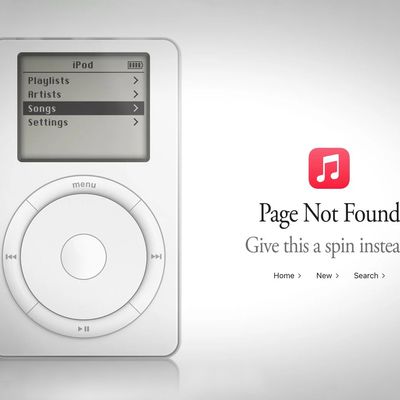
Apple Music has a 404 page easter egg on the web: a functional iPod that appears when you load a page that does not exist, such as music.apple.com/macrumors.
"Page Not Found," says Apple. "Give this a spin instead."
Apple is clever with this. If you navigate to music.apple.com/ipod instead, the page says "Looking for something?" instead of "Page Not Found."
The easter egg is only...
Friday October 23, 2026 11:05 am PDT by Juli Clover
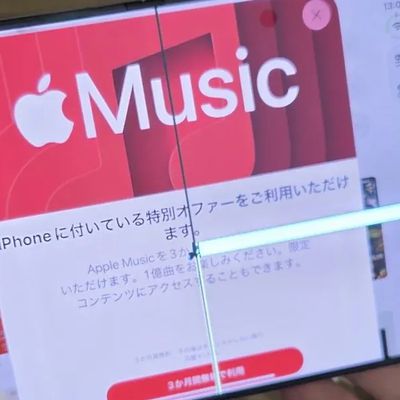
Some iPhone Duos are already experiencing hinge issues that cause display cracks, based on photos shared on Reddit and the MacRumors forums. Almost all of the display faults are right along the hinge, and most result in a line of bright pixels across one side of the screen.
An iPhone Duo owner in Australia said his device cracked after being opened fewer than 20 times, and there was no...