Apple has approached publishers to establish content deals that would give Siri AI access to current news and information, reports The Wall Street Journal.
Apple is proposing multiyear agreements where publishers would receive payment when their content is used, which is different from standard AI deals. Typical deals between AI companies and news organizations have set fees for broad content access. Apple has discussed a nine-figure budget for the payments.
The Wall Street Journal says Apple previously inked deals that included AI training rights. Apple has also worked with publishers for its Apple News+ service since 2019, though some publishers were unhappy with the content deals and ended their partnerships.
Siri AI is set to launch this fall in iOS 27, iPadOS 27, and macOS 27. Siri AI is a major departure from the prior version of Siri, and Apple has an incentive to ensure accurate news headlines. An iOS 18 notification summary feature turned out to be an embarrassment after Apple Intelligence generated false headlines that misled users. Apple ended up removing news summaries for more than a year while it made improvements.
U.S. Supreme Court Justice Elena Kagan today granted Apple a one-day stay in its legal fight with Epic Games, giving Apple more time to outline the fees it wants to charge developers for linking out to purchase options on the web.
Just yesterday, the U.S. District Court for the Northern District of California denied Apple's request for a stay in the proceedings, giving Apple 24 hours to deliver its fee proposal. Apple then submitted an emergency filing to the Supreme Court, arguing that fee calculations should be paused until the justices hear the case and make a decision on the contempt ruling. If the contempt ruling is thrown out, fee proceedings won't be necessary.
Bloomberg says the short stay is meant to give the high court more time to consider Apple's request. Without the pause, Apple would have needed to submit its proposed fees to the court by 5:00 p.m. Eastern Time on Wednesday. Apple now has until 5:00 p.m. on Thursday, unless the Supreme Court gives the company a longer reprieve. Kagan already denied a similar stay request earlier this year.
The fight over fees is part of an ongoing dispute with Epic Games that started in 2020. Apple won the initial legal fight and wasn't declared a monopolist, but the company was ordered to change its anti-steering rules to let developers link to non-App Store purchase options. Apple did so, but charged fees that were almost identical to standard App Store fees.
Epic Games accused Apple of violating the injunction, and the court agreed. Apple was found in contempt of court for willfully violating the original ruling, and barred from collecting fees on links in the U.S. App Store.
An appeals court ruling upheld the contempt decision, but said Apple was due reasonable fees for its intellectual property. The case was sent back to district court to determine what a reasonable fee might be. Apple then appealed to the Supreme Court, and the justices agreed to hear it.
Apple wants the Supreme Court to throw out the contempt ruling, negating the order barring it from collecting fees and the subsequent appeals court order mandating reasonable fee calculations. Apple has argued that regulators worldwide are watching to see what a U.S. court considers a reasonable rate, so fee proceedings set a reference point even if the contempt ruling is thrown out.
Apple has not collected fees from link-outs in the U.S. since April 2025, and the company would rather continue to collect no money while it exhausts all appeals than have the court establish a rate.
Google raised the price of its latest smartphones compared to last year, and the increase may hint at what Apple will do with the iPhone 18 Pro models.
All of Google's Pixel starting prices are $100 higher than they were last year.
Pixel 11 - $899, up from $799
Pixel 11 Pro - $1,099, up from $999
Pixel 11 Pro XL - $1,299, up from $1,199
Pixel 11 Pro Fold - $1,899, up from $1,799
The 41mm Pixel Watch 5 is now $399, up from $349, and the 45mm model is now $429, up from $399.
With the price hikes, Google increased the base storage for some of its devices, which Apple did with the iPhone 17 Pro. The Pixel 11 and Pixel 11 Pro now start with 256GB instead of 128GB, so pricing is technically the same as last year's 256GB model. The Pixel 11 Pro XL and Pixel 11 Pro Fold started with 256GB last year and still do, so those devices have straight price increases.
Google also cut RAM in some models to mitigate costs. The base Pixel 11 Pro and Pixel 11 Pro XL have 12GB RAM instead of 16GB RAM. Last year, all Pixel 10 Pro devices had 16GB RAM, but this year, Pixel users need to pay at least $1,219 for 11 Pro and $1,419 for the 11 Pro XL to get 16GB RAM.
A customer buying the Pixel 11 Pro will now pay $100 more for a 128GB storage increase and 4GB less RAM than the 10 Pro last year.
Google is heavily emphasizing trade-in offers, which has the effect of distracting customers from the price increase. Google's product page lists trade-in discounts before actual pricing, stating the Pixel 11 Pro is priced "From $499" with trade-in, while the Pixel 11 Pro XL is "From $699." Purchase pages for the new devices don't even reveal full pricing for a chosen model until a customer declines a trade-in. Google also shows carrier discounts and monthly payment options.
Apple already focuses on trade-in offers and monthly financing when launching new iPhones, but whether it will go as far as Google remains to be seen. Apple recently announced the Apple Upgrade program in partnership with Klarna, offering fee-free 12-month through 36-month payment plans for purchases.
Google told Engadget that despite the decrease in RAM, this year's models will perform faster than the comparable 2025 models.
Pixel's full stack approach allows us to optimize the way on-device models load and execute, keeping our hardware lean, fast, and highly responsive. In fact, through software and silicon optimization, you can expect faster and smoother performance from this year's Pro models when compared to last year's comparable 256GB SSD SKUs.
Both Apple and Google have been affected by memory price hikes that Apple CEO Tim Cooklikened to a "100-year flood." He said there have been "exponential increases in memory prices," leading the company to raise the cost of its iPads and Macs. Memory chips for consumer devices are in short supply because chip manufacturers are prioritizing chips for AI data centers. The lack of supply has caused RAM prices to skyrocket.
iPhone prices have not increased yet, even though other manufacturers like Samsung have raised prices. Multiple rumors suggest iPhones will be more expensive starting in September. Apple could use the same tactic as Google and increase base storage while hiking prices, but so far it doesn't look like the company will lower the amount of RAM in the Pro models.
The iPhone 17 Pro and Pro Max already start with 12GB, and Apple likely can't make major changes without impacting the Apple Intelligence and Siri AI features it is rolling out this fall.
Google today announced new products that compete with Apple devices like the iPhone and the Apple Watch. There are new Pixel smartphones with AI capabilities, a new foldable, and new wearable devices.
Pixel 11 Pro Fold
The Pixel 11 Pro Fold is thinner and lighter than the prior-generation Pixel Fold. It has a 6.5-inch OLED display when closed, and an 8-inch OLED display when open. When unfolded, it's 5.1mm thick, and when closed, it's 10.2mm thick.
The Pixel 11 Pro Fold and other new Pixel models have a "HiLight" feature with LED lights around the flash. HiLight glows in different colors for incoming calls or when talking to Gemini. Other features:
Thinner bezels
Up to 2,000 nits brightness for HDR and 3,600 nits peak brightness for the inner display, 120Hz refresh rate
Obsidian and olive colors
Glass fiber composite back cover that Google says is "nearly impossible to crack"
Gearless hinge with larger bend radius and thicker glass layer for better durability
Improved crease performance
Faster charging speeds and 4,806mAh battery
2nm Tensor G6 chip with 16GB RAM
48-megapixel main camera with larger sensor, 10.5-megapixel ultrawide camera, and 10.8-megapixel telephoto camera with up to 30x zoom
The Pixel Watch 5 uses the same round display Google's smartwatches are known for, with an improved 3,000-nit brightness level. There are new watch faces and complications, including new generative watch faces.
The device has more accurate GPS route tracking, more accurate sleep tracking, new Gemini integrations, and personalized strength coaching. It has context-aware updates on the watch face, surfacing info when it's needed. Raise to Talk engages Gemini, with core actions done on-device.
There are new one-handed gestures for confirming, selecting, and sending content, which are similar to some of the gestures available on the Apple Watch. Google says the Pixel Watch 5 can detect when the wearer stops breathing and can summon help with a new breathing emergency detection feature.
Gemini Intelligence - Google says Gemini Intelligence can do more multistep tasks across apps. There's a new Rambler voice input feature that removes filler words and corrects run-on sentences, and a sign-to-text feature that supports American Sign Language. There are new location-based insights that show you info based on where you are, and contextually relevant suggestions in text conversations.
Magic Capture - One tap records video that the Pixel edits, crops, and unblurs into a collection of images and video.
Camera Looks - Mirrors the iPhone's Photographic Styles feature, letting users choose an aesthetic (Natural, Shadows, or Vanilla) at the point of capture.
Circle to Search - Circle to Search works in the Camera viewfinder, so you can circle something and get AI info on it.
Live Translate - Google's new devices translate videos and audio in real time.
Health Guardian - An AI Health Guardian monitors insulin resistance trends, blood pressure patterns, and sleep breathing quality trends.
Pixel Tag
Google also debuted a $29 Pixel Tag that competes with the AirTag. It links to the Google item tracking network that leverages Android devices to find items. It has much of the same feature set as the AirTag, with details available in our full article.
More Info
Google's new product lineup will launch on August 20, just a few weeks ahead of when Apple will unveil its latest smartphone models. We're expecting Apple to announce the iPhone 18 Pro, iPhone 18 Pro Max, foldable iPhone Ultra, and new Apple Watch models.
Google today introduced the Pixel Tag, its answer to Apple's AirTag. Pixel Tag is Google's first item tracker, even though Google implemented an item tracking network two years ago that's been used by third-party devices.
The Pixel Tag is made from stainless steel, and it is IP67 water- and dust-resistant. There's a built-in speaker that can play a sound when an item it's attached to is lost, and a button that causes a sound to play on a connected smartphone. An on-device button is one feature that distinguishes the Pixel Tag from the AirTag.
Pixel Tags have an oval shape instead of a round shape, and they don't come with an attachment point and like the AirTag, require an add-on accessory for adding to keys or bags. Like the AirTag, the Pixel Tag uses a replaceable battery that lasts for up to one year. It works with Android devices running Android 9 or newer with Bluetooth 6, and can be tracked in the Find Hub app.
Google added Bluetooth and Ultra Wideband to the Pixel Tag, so it supports a precision finding feature when an item is lost nearby but out of sight. The Pixel Tag supports many of the same functions as the AirTag, like alerts when an item is left behind and the option to share item location with multiple people.
The AirTag relies on Apple's Find My network when an item is out of range of its owner's device, and Google has a similar system. The Find Hub network taps into more than a billion Android devices for locating items.
Google has the same protections as Apple, and Android devices send alerts when an unknown tag is detected traveling with you. Unknown tracker alerts are cross-platform thanks to a collaboration between Apple and Google, so iPhone users will get an alert if a Pixel Tag is nearby and vice versa.
Google plans to sell Pixel Tags for $29 for one or $99 for four, which is the same price as the AirTag 2. Pixel Tags will launch in November 2026.
Apple appears to be developing a retail trade-in system that would let customers save a trade-in offer to the Wallet app for up to 90 days, based on code seen by MacRumors.
References to the system were found in an update to Apple's Guide app. Guide is used by Apple employees, Apple Authorized Resellers, and other sales organizations during conversations and product demonstrations with customers.
One string in the app says: "You can add this trade-in offer to your Apple Wallet. It will be valid for 90 days."
Other strings indicate that an employee could display a QR code for the customer to scan with their iPhone. "To save this offer, simply scan the QR code with your iPhone's camera," another message says. The app also has localized "Add to Apple Wallet" buttons for dozens of regions and languages.
The Wallet pass appears to be the final step in a broader trade-in workflow added to the app. Code references describe checking whether a device is eligible, scanning or entering its serial number or IMEI, answering questions about its physical condition, and running Apple Diagnostics. The system can then retrieve quotes from trade-in vendors and generate a Wallet pass for the selected offer.
Apple has also added references to a "TradeInKit" framework, along with server endpoints for device eligibility, diagnostic sessions, trade-in pricing, and Wallet pass generation. Both the overall trade-in feature and the Wallet pass option appear to be controlled by server-side switches, so their presence in the app does not mean they are live for employees or customers yet.
A trade-in offer valid for 90 days would give customers a longer window than Apple currently advertises for online trade-ins. After a trade-in estimate is generated, Apple has to receive the device within 14 days to ensure the customer gets the estimated value.
Given the current 14-day limit, it's possible the unreleased system could be intended for a different kind of transaction. A customer visiting an Apple Store could have a device evaluated without immediately purchasing a replacement, save the resulting offer in Apple Wallet, and return within 90 days to use it. The Wallet pass could make the offer easier to retrieve than an email or paper quote, while giving customers more time to decide whether to upgrade.
Apple's code does not say whether the value displayed in the Wallet pass would be guaranteed for the full 90-day period. Apple's current trade-in terms allow a quote to be revised when the inspected condition differs from the customer's description, when an activation lock has not been removed, or when a device is not returned within the required period. The new code also includes warnings for device lock states and indicates that trade-in values may be provided through Apple's existing third-party trade-in partners.
Apple has not announced Wallet-based trade-in offers or a 90-day price window. The feature could remain an internal test, and its implementation or terms may change before any wider rollout.
Apple hired former American Airlines executive vice president Nick Gatten as its new vice president of government affairs, reports Bloomberg.
Gatten will take on some of the duties of senior vice president of government affairs Katherine Adams, who is retiring at the end of 2026. Gatten will report to Apple senior vice president and general counsel Jennifer Newstead, with Adams to remain available in an advisory role until October 1.
Bloomberg says Gatten is a Republican that Apple felt would be able to align with the Trump administration while also working with democrats. He previously worked at Fannie Mae where he managed a team that interfaced with Republican members of Congress, and he oversaw government affairs at JPMorgan Chase & Co. and American Airlines. He is also on the board of the Faith and Politics institution, an organization that "cultivates mutual respect, moral reflection, increased understanding, and honest conversation among political leaders." From the article:
At the same time, Apple sees Gatten as someone who can work constructively with policymakers on both sides of the aisle, the people said. That will be especially important if the balance of power shifts in Washington. Democrats are vying to take control of at least one chamber of Congress in midterm elections in November, and Trump has less than 2 1/2 years left in his term.
Gatten will work closely with Tim Cook in his new role. Cook plans to step down as Apple CEO on September 1, with hardware chief John Ternus to take over. Cook will remain on as executive chairman, engaging with policymakers and governments worldwide.
Note: Due to the political or social nature of the discussion regarding this topic, the discussion thread is located in our Political News forum. All forum members and site visitors are welcome to read and follow the thread, but posting is limited to forum members with at least 100 posts.
Apple has secured lower prices for OLED displays for the upcoming iPhone 18 Pro models, according to industry sources cited by South Korea's DealSite.
For example, the report said Apple will pay LG and Samsung around $68 per OLED display destined for the iPhone 18 Pro Max, down significantly from the $110 to $120 that it paid those suppliers for each iPhone 17 Pro Max display.
Apple is said to have made an aggressive push for lower display prices due to the ongoing memory chip shortage, resulting from companies building out powerful AI data centers. The supply-demand imbalance has led to skyrocketing prices for RAM chips used in devices like the iPhone, leading to increased production costs for Apple.
South Korea's The Elecfirst reported on these negotiations last month.
By securing lower costs for some non-memory iPhone components, such as displays, Apple can partially offset the rising costs of RAM. Even still, the iPhone 18 Pro models are expected to be more expensive than the iPhone 17 Pro models, with market research firms estimating that U.S. starting prices could rise by $200 to $300. If so, the iPhone 18 Pro and iPhone 18 Pro Max could start at up to $1,399 and $1,499, respectively.
Apple already raised prices on Macs, iPads, and select other products in June, but the iPhone was spared. If Apple can secure lower prices for displays and some other components, then perhaps the price increases expected for the iPhone 18 Pro models will be closer to the $200 mark or less rather than $300, but only time will tell.
Apple is expected to unveil the iPhone 18 Pro models and a foldable iPhone this September, so we are only a month away from official pricing info.
A newly published Apple patent application describes a system for deciding, in real time, whether to interrupt what someone is doing on a device or leave them alone.
The application was filed with the U.S. Patent and Trademark Office (USPTO) on February 5, 2026 and published on August 6, 2026, as spotted by patent tracking site Patentlyze. The patent describes how a device can observe what someone is doing, check that behavior against rules for when an interruption is warranted, and only then decide whether to show a prompt.
For example, if someone has been scrolling in an app for a long time, staring at one app, or repeating some other pattern the rules flag, the device would step in. If nothing matches, it does nothing and allows the person to carry on uninterrupted. A second part of the same filing covers turning recent activity into a short summary, so instead of getting interrupted mid-task, someone could check in afterward and see what they had missed.
Apple already ships something conceptually close to both halves of this patent. iOS 18.1 introduced AI-powered notification summaries, which use on-device AI to condense a stack of alerts into a single line, alongside a Reduce Interruptions Focus mode that filters out notifications the system judges unimportant. If Apple built the proposed system into a shipping feature, it looks better suited to sharpening those two tools than replacing them.
Reduce Interruptions currently judges each notification individually, weighing its content and sender to decide whether it counts as important enough to break through. It does not factor in what someone is actively doing on the device at that moment. The mechanism in this patent could add that layer, checking a person's ongoing activity, such as how long they have been on a call or how many times they have reopened an app, before deciding whether an interruption is warranted at all, even for a notification that would otherwise qualify.
Notification summaries could benefit in a similar way. Rather than condensing whatever alerts happen to stack up regardless of context, the patent's summarization element describes building a digest from a person's broader activity, which could let the system hold back a stray or inaccurate summary until it has enough of a pattern to summarize accurately, the kind of context Apple's AI summaries lacked when they generated a false news headline and drew criticism in December 2024.
As with all Apple patent filings, there is no guarantee that this specific system will ship in an actual product, and its docketed but unexamined status means the invention could still be narrowed or rejected before a patent is granted. That being said, the application maps onto features already live on Apple devices, which makes it appear to be less of a shot in the dark than many other patent applications. It could easily be Apple laying the groundwork for where it wants to take Reduce Interruptions and notification summaries next.
With Apple's upcoming iPhone Ultra there's been a lingering question over the exact placement of the selfie cameras in the device's folded and unfolded states – but today we may have stumbled upon the answer.
Dummy units have suggested a top-centered cut-out for the selfie camera on the outer display of Apple's foldable, while locating the selfie camera for the inner display in the outermost top-left corner. That presents an asymmetry untypical of Apple's designs.
However, screen protectors for the iPhone Ultra that surfaced online today suggest the device's selfie cameras on the inner and outer displays may be located in the same corner of the same half, with one facing out and one facing in.
The screen protectors show a selfie camera cutout on the top-right corner of the outer display when the device is closed. Taken together, the two leaks could imply one front-facing camera zone in a single corner.
Such an arrangement – two slightly offset lenses – could let Apple confine the cutouts and camera modules to a single region of a 4.5mm thick chassis, rather than having them spaced out in different places, which would fit for a device where internal space is at a premium.
Now, accessory makers typically work from leaked CAD files of sometimes dubious accuracy, so a pair of screen protectors can't be considered to provide definitive evidence of a device's design. Our reading also assumes the dummy iPhone Ultra models had one camera placement correct (the top-left inner selfie camera) and one out of whack (the centered outer camera). Even so, the side-by-side internal placement could make sense.
We'll know one way or another soon enough. The iPhone Ultra is expected to be unveiled next month, featuring a 5.5-inch cover display and a 7.8-inch inner display, the A20 Pro chip, Touch ID integrated into the Side button in lieu of Face ID, and a 5,000mAh battery, along with a 48-megapixel dual rear camera system.
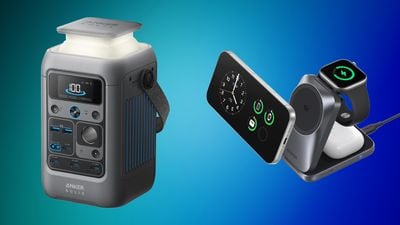
There's a big accessory sale happening on Amazon this week, with the year's best prices on Anker chargers, Samsung monitors, Sonos audio products, and much more.
Note: MacRumors is an affiliate partner with some of these vendors. When you click a link and make a purchase, we may receive a small payment, which helps us keep the site running.
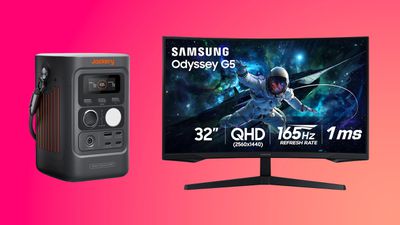
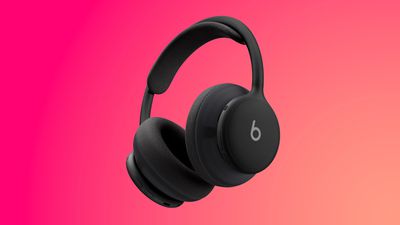
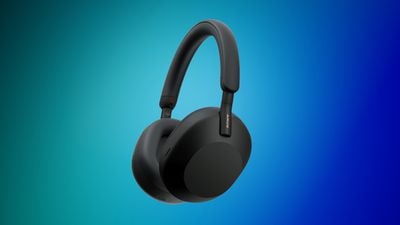
Highlights this time around include a new batch of audio devices on sale, including the Sonos Ace Headphones for $299.00, down from $399.00, and Sony's WH-1000XM5 Noise Canceling Headphones for $248.00, down from $399.00. Another notable audio discount is on the Soundcore Sleep A30 Earbuds, which are designed to be worn in bed, available for $168.99, down from $229.99.
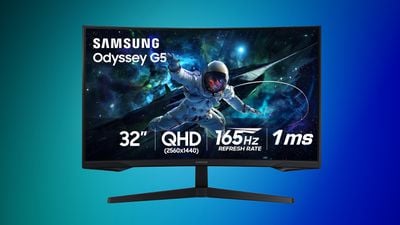
In terms of monitor and TV deals, there are quite a few Samsung deals happening this week on Amazon. The 32-inch Smart Monitor M9 has hit its second-best price on Amazon at $1,199.99, down from $1,599.99, an all-time low price. You'll also find solid sales on The Frame TVs and Odyssey monitors right now, including a great deal on The Frame TV 55-inch model for $897.99, a solid second-best price.
We're also tracking big discounts from brands like LG, Hisense, iVANKY, Jackery, and more in the lists below. Accessories on sale include USB-C wall chargers, MagSafe-compatible wireless chargers, portable batteries, headphones, docks, and monitors.
If you're on the hunt for more discounts, be sure to visit our Apple Deals roundup where we recap the best Apple-related bargains of the past week.
Deals Newsletter
Interested in hearing more about the best deals you can find in 2026? Sign up for our Deals Newsletter and we'll keep you updated so you don't miss the biggest deals of the season!
Pegatron held an earnings call for the second quarter of 2026 today. On the call, Taiwan's Economic Daily News said Pegatron indicated that one of its customers will be changing its usual smartphone shipment schedule. As widely expected, the report said Apple plans to release the iPhone 18 Pro, iPhone 18 Pro Max, and a foldable "iPhone Ultra" this September, followed by the standard iPhone 18 model in the first quarter of 2027.
The standard iPhone 11 through to the iPhone 17 all launched alongside Pro and Pro Max models in September over the years, so the launch of the base model iPhone 18 being postponed until around March 2027 would be a notable change.
Bloomberg's Mark Gurman has said "everyone" inside Apple refers to the company's upcoming foldable iPhone as the "iPhone Ultra" internally, though he cautioned that doesn't necessarily confirm it as the final name.
The comments came in response to Creative Strategies analyst Max Weinbach, who argued the "Ultra" name doesn't fit because Apple's existing Ultra products represent the most capable version of a lineup, and the foldable wouldn't clearly outclass the iPhone Pro the way that positioning implies.
The leaker known as "Ice Universe" today shared images and a hands on video of screen protectors for Apple's rumored "iPhone Ultra," and the leak appears to confirm two of the most discussed details about the foldable's front design.
The leaked accessory has square corners on the side that would sit next to the hinge, and rounded corners on the opposite edge. That asymmetry lines up with months of rumors describing a foldable device with a hinge on one side, and the leak marks one of the clearest looks yet at how the proportions and shape carry over to the cover display itself.
Ice Universe said the shape reflects the protector covering the entire glass panel rather than matching the display area exactly, and that the screen underneath is still expected to have symmetrical rounded corners and uniform bezels on all sides. As shown in multiple previous reports, the screen protectors also corroborate the foldable iPhone's shorter, wider design.
This is the screen protector for the iPhone Ultra. You can see, the iPhone Ultra actually has an irregular screen with one side square and the other round. Oh my God, can you even handle that? pic.twitter.com/qpQHZHiqcD
— Ice Universe (@UniverseIce) August 11, 2026
The protector also shows a single punch hole cutout for the front facing camera, positioned on the right side of the panel rather than in the center. Some earlier reports had suggested the cutout could end up centered, so the accessories offer a firmer answer on its placement. Since the iPhone Ultra is expected to use Touch ID rather than Face ID, it doesn't need the larger TrueDepth sensor array Face ID requires, clearing the way for a single hole punch camera, which is a first for the iPhone.
I'm sure this is just a misunderstanding - the protective film covers the entire glass panel, not exactly the same as the actual screen display area. The iPhone Ultra screen itself is still a symmetrical rounded rectangle. pic.twitter.com/Iwu52050uw
— Ice Universe (@UniverseIce) August 11, 2026
The information comes a few days after leaker Sonny Dickson shared images of protective covers for the iPhone Ultra's rear camera module in silver and dark blue finishes. Other rumors point to a 5.5-inch cover display and a 7.8-inch inner display, the A20 Pro chip, and a 5,000mAh battery, as well as a 48-megapixel dual rear camera system and 18-megapixel selfie cameras on both the outer and inner displays. The device is expected to debut alongside the iPhone 18 Pro lineup in mid-September, with a price of at least $2,000.
Microsoft is testing support for signing into its Edge browser using your Apple Account, avoiding the need to create a Microsoft account. Two new flags related to the support were spotted by MacMagazine in the latest Edge Canary build, with the feature also rolling out to Edge Beta users.
One of the flags enables Apple Account sign-in for Edge profiles, while the other adds an Apple sign-in button to the profile menu (where a Google Account sign-in option already exists). In its release notes for Edge Beta 152, Microsoft already lists Apple Account sign-in support for Windows and macOS, but describes it as a "controlled rollout," so there may be some delay before all beta users see it.
There's been more pushback against the recent analyst report that claimed Apple's all-glass 20th-anniversary iPhone next year has been canceled. Bloomberg's Mark Gurman has already responded by saying the "glass-centric" redesign is still on track for 2027, and now a prominent Chinese leaker says the commemorative device indeed remains in active development.
Weibo-based leaker Digital Chat Station identifies the device as having two sizes in equivalent Pro/Pro Max variants, citing the internal codenames V73/V74 previously referenced by Gurman. Based on supply chain information, the leaker says the two new displays have increased in physical size while retaining the same aspect ratio. Their rationale for this is that Apple's borderless four-curved-edge design uses a flat 2D display combined with a glass cover, and takes advantage of the glass's optical refraction and shape to create the visual effect of a display lacking borders.
The description lines up with Gurman's claim that glass is used on the front and back of the phones, with the material curving into the sides, leaving only a small metal band in the middle.
Digital Chat Station's latest post also chimes with an earlier claim of theirs that Apple is testing a slightly larger 6.96-inch display for the device's Pro Max variant, suggesting the OLED panel itself is slightly bigger, but the extra area curves the display further into the device's edges while the chassis remains essentially the same size as the current iPhone 17 Pro Max.
Jefferies analyst Edison Lee caused a stir on Monday when he claimed Apple's rumored all-glass iPhone expected to mark the device's 20th anniversary has been canceled. Gurman soon refuted the claim based on his own information, though he did say that Apple had also considered a "more aspirational version" that "used even more glass" – but this was scrapped early on. It's quite possible that this more ambitious version was the device Lee was referring to in his report.
Either way, today's post from Digital Chat Station adds further weight to the possibility that Lee is off the mark, and that the radically redesigned 20th-anniversary iPhone is still in the works and should arrive in the fall of 2027.
Samsung today said its Galaxy Buds Hearing Aid feature has been cleared by the U.S. FDA, which means hearing aid capabilities will be coming to the Galaxy Buds in the fourth quarter of 2026.
Samsung will join Apple in offering over-the-counter hearing aid functionality. Apple added an FDA-cleared hearing health feature to the AirPods back in 2024, allowing them to be used as a clinical-grade hearing aid.
Like the AirPods, the Galaxy Buds can replace a hearing aid for mild to moderate hearing loss, and Samsung is introducing a Hearing Test option like Apple did. Galaxy Buds users can do a self-administered hearing test in five minutes and the resulting clinical-grade audiogram can be used to adjust the built-in Hearing Aid feature.
The Galaxy Buds will amplify the sounds users have difficulty hearing, like high frequencies or whispers, which is also how the AirPods work. Noise elimination and beamforming also help Galaxy Buds users by focusing on the sounds in front of the user and suppressing background noise.
Samsung says it worked with the National Acoustic Laboratories and Samsung Medical Center to develop the hearing aid feature set. Hearing Aid features will be available on the Galaxy Buds3 Pro and the Galaxy Buds4 Pro. A newer Samsung Galaxy smartphone that supports One UI 8 or later is required.
After introducing hearing aid features in the U.S. in iOS 18.1, Apple has expanded availability to over 150 countries and regions. Apple had a two-year head start, but Samsung is now starting to catch up with a Galaxy Buds hearing health option that matches most of what the AirPods can do.
Sonos is working on an upgraded version of its Ace headphones that will support AI, reports Bloomberg. The Sonos Ace Ultra showed up in an FCC filing earlier this week, with the product likely set to debut in September.
Sonos debuted the original Sonos Ace in 2024. Reviews praised the sound quality and active noise cancellation, but the headphone market is crowded, and Sonos' product launched shortly after its disastrous app redesign. The headphones also didn't fully integrate with the rest of the Sonos ecosystem, making them unappealing to Sonos users. Sonos ended up selling around 200,000 units, well below the internal one-million target it set.
Bloomberg suggests the new model will kick off Sonos' push into artificial intelligence. The headphones could support voice commands based on info in the filing, allowing them to be used with AI chatbots from third-party companies. Sonos CEO Tom Conrad said last month that AI will be an area of focus, with "conversational computing and predictive intelligence moving into the home."
The headphones will come in Greige, Shadow Black, Agave, Blush, and Sand, according to the FCC filing, but little else is known about them because most of the filing was redacted.
The original Sonos Ace were priced at $449 at launch and were competitive with the AirPods Max. The headphones had an over-ear design similar to the AirPods Max, and the same general feature set. Apple does not have a new version of the AirPods Max coming anytime soon, so the second-generation Sonos Ace headphones will still be pitted against the original AirPods Max design.
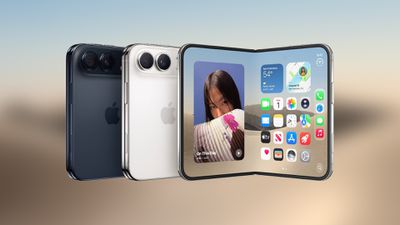
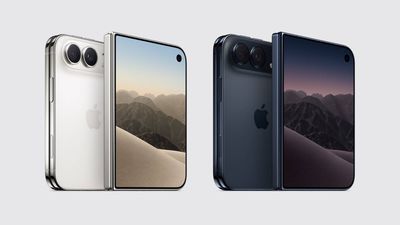
Apple's first foldable iPhone, with a book-style design featuring a ~5.5-inch outer display and a ~7.8-inch inner display with a minimal crease down the middle.