Apple this week announced that it has discontinued the Mac Pro, with new configurations no longer available and no further models planned.
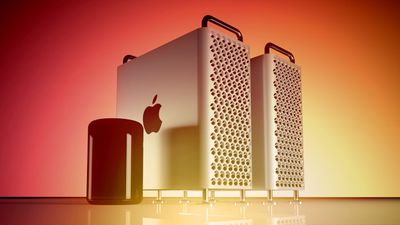
In August 2006, Apple introduced the original Mac Pro, which was an Intel-based follow-up to the PowerPC-based Power Mac G5. The classic Mac Pro continued to receive updates with faster Intel processors and other spec bumps until 2012.
The so-called "trash can" Mac Pro arrived in 2013 with a polished, cylindrical design and a "unified thermal core." The computer was visually striking, but Apple later admitted that it was thermally constrained, and it had poor upgradeability. Instead of internal slots, Apple pushed expansion via six built-in Thunderbolt 2 ports.
Apple eventually apologized over the situation and went back to the drawing board. In December 2019, it released a third-generation Mac Pro, which reverted to a modular design with an aluminum housing that lifts off for "360-degree access" to the entire system. The computer had a "state-of-the-art thermal architecture."
In June 2023, the Mac Pro entered the Apple silicon era when it received the M2 Ultra chip.
By the time the Mac Pro moved to Apple silicon, Apple had already released the Mac Studio, another desktop computer that is smaller than a Mac Pro but beefier than a Mac mini. It is currently powered by M4 Max or M3 Ultra chips, and configurations with M5 Max and M5 Ultra chips are expected to launch later this year.
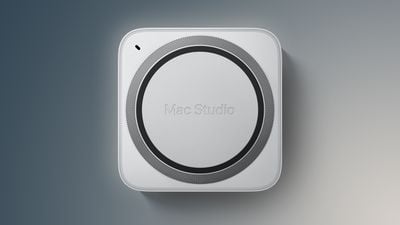
The primary reason to purchase the latest Mac Pro over the Mac Studio was PCI expansion, but the Mac Pro's starting price was thousands of dollars higher than the Mac Studio, so the writing was on the wall that the Mac Pro's days were probably numbered.
Indeed, the Mac Pro was ultimately discontinued this week, marking the end of an era.