iPhone 17 Introduces 'Groundbreaking' New Memory Security Feature

Apple has added a "groundbreaking" new memory security feature to its new iPhone 17 lineup called Memory Integrity Enforcement (MIE), which the company describes as "the most significant upgrade to memory safety in the history of consumer operating systems."
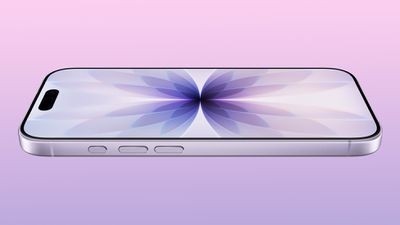
iphone 17 ceramic shield
The new security feature targets spyware tools like Pegasus that exploit vulnerabilities to hack targeted devices. According to Apple, MIE provides comprehensive, always-on memory-safety protection covering the kernel and over 70 userland processes, built on the Enhanced Memory Tagging Extension (EMTE).

The new feature is supported by the new A19 and A19 Pro chips found across the iPhone 17 lineup as well as the iPhone Air. Apple says it has also added memory safety improvements for older hardware that doesn't support the new memory tagging features. In addition, Apple is making EMTE available to all Apple developers in Xcode as part of the new Enhanced Security feature that the company released earlier this year during WWDC.

The approach includes mitigation for Spectre V1 attacks that Apple claims works with "virtually zero CPU cost," addressing performance concerns that have plagued similar security features in the past. Apple says these changes make "mercenary spyware" significantly more expensive to develop, and present a major challenge to the surveillance industry.

Based on our evaluations pitting Memory Integrity Enforcement against exceptionally sophisticated mercenary spyware attacks from the last three years, we believe MIE will make exploit chains significantly more expensive and difficult to develop and maintain, disrupt many of the most effective exploitation techniques from the last 25 years, and completely redefine the landscape of memory safety for Apple products.

For in-depth information about the new MIE security feature, readers should refer to Apple's Security Research blog.
Related Roundups: iPhone 17, iPhone 17 Pro, iPhone Air
Related Forum: iPhone

Popular Stories

airpods pro 3 purple

New, Higher End AirPods Pro Coming This Year

Tuesday January 20, 2026 9:05 am PST by
Apple is planning to debut a high-end secondary version of AirPods Pro 3 this year, sitting in the lineup alongside the current model, reports suggest. Back in September 2025, supply chain analyst Ming-Chi Kuo reported that Apple is planning to introduce a successor to the AirPods Pro 3 in 2026. This would be somewhat unusual since Apple normally waits around three years to make major...
smaller dynamic island iphone 18 pro Filip Vabrous%CC%8Cek

iPhone 18 Pro Leak: Smaller Dynamic Island, No Top-Left Camera Cutout

Tuesday January 20, 2026 2:34 am PST by
Over the last few months, rumors around the iPhone 18 Pro's front-panel design have been conflicted, with some supply-chain leaks pointing to under-display Face ID, reports suggesting a top-left hole-punch camera, and debate over whether the familiar Dynamic Island will shrink, shift, or disappear entirely. Today, Weibo-based leaker Instant Digital shared new details that appear to clarify the ...
iOS 27 Mock Quick

iOS 27 Will Add These 8 New Features to Your iPhone

Sunday January 18, 2026 3:51 pm PST by
iOS 27 is still many months away, but there are already plenty of rumors about new features that will be included in the software update. The first beta of iOS 27 will be released during WWDC 2026 in June, and the update should be released to all users with a compatible iPhone in September. Bloomberg's Mark Gurman said that iOS 27 will be similar to Mac OS X Snow Leopard, in the sense...
14 inch MacBook Pro Keyboard

MacBook Pro Buyers Now Facing Up to a Two-Month Wait Ahead of New Models

Sunday January 18, 2026 6:50 pm PST by
MacBook Pro availability is tightening on Apple's online store, with select configurations facing up to a two-month delivery timeframe in the United States. A few 14-inch and 16-inch MacBook Pro configurations with an M4 Pro chip are not facing any shipping delay, but estimated delivery dates for many configurations with an M4 Max chip range from February 6 to February 24 or even later. At...
Apple Logo Spotlight

Apple Expected to Unveil Five All-New Products This Year

Wednesday January 21, 2026 10:54 am PST by
In addition to updating many of its existing products, Apple is expected to unveil five all-new products this year, including a smart home hub, a Face ID doorbell, a MacBook with an A18 Pro chip, a foldable iPhone, and augmented reality glasses. Below, we have recapped rumored features for each product. Smart Home Hub Apple home hub (concept) Apple's long-rumored smart home hub should...

Top Rated Comments

Mr. Heckles Avatar
19 weeks ago

I maybe wrong but I believe GrapheneOS on Pixel phones have been doing this for a while now…
Cloud be, but what is their market share compared to iOS? Having one of the biggest phone makers make this a standard going forwards is pretty cool.
Score: 22 Votes (Like | Disagree)
neuropsychguy Avatar
19 weeks ago

I maybe wrong but I believe GrapheneOS on Pixel phones have been doing this for a while now…
You're partially correct (although, we shouldn't ignore that Apple also had all sorts of security features already). Why only partially? Yes, Android on Pixels and GrapheneOS both use Memory Tagging Extension (MTE), but it appears to be a more basic method than what Apple is implementing. More importantly, MTE on those systems is optional, although GrapheneOS enables MTE for the system server and key system apps but it is optional for user apps. Why does GrapheneOS not make it mandatory? Some components or apps still can’t tolerate the performance/compatibility hit. Plus, GrapheneOS is on maybe 200,000 devices in the world so comparisons between iOS and that OS are basically moot.


What Apple's MIE does is build on Enhanced Memory Tagging Extension (EMTE) by also adding secure memory allocation and tagged memory confidentiality. It makes this all available by default with low system overhead.

One way to think of the difference is Pixel phones and GrapheneOS both had locks on doors, windows, and alarms on furniture in the house but much of those were optional. iOS adds more and makes them mandatory. My analogy could be a little off, but that's what I'm getting out of this.

iOS was already one of the most secure mainstream OSes (likely the most secure); this appears to make it considerably more secure.

We'll have to wait to see what security experts find, but this is impressive if Apple is correct about what this offers and does while using low resources.
Score: 18 Votes (Like | Disagree)
Apple_Robert Avatar
19 weeks ago

I maybe wrong but I believe GrapheneOS on Pixel phones have been doing this for a while now…
Why should that matter to someone using an iPhone? I see comments like that all the time about Android has done this for years etc. I don't get the point of saying it especially from iPhone users. So many are quick to brag about Android being first with x,y, and z features and yet, many stay with iPhone.

I reported on this new security feature yesterday and I think it is an excellent move by Apple. Hopefully, most of us will never be attacked.
Score: 16 Votes (Like | Disagree)
applicious84 Avatar
19 weeks ago
This is good timing if it really works out:
https://www.theguardian.com/us-news/2025/sep/02/trump-immigration-ice-israeli-spyware
Score: 16 Votes (Like | Disagree)
DougieS Avatar
19 weeks ago

"Apple has added a "grounbreaking". Grounbreaking huh? I know we aren't supposed to point out spelling and grammar issues in here, but come on! Spell check has been around for what, 25-30 years now?
It’s just that groundbreaking, it broke the d!
Score: 12 Votes (Like | Disagree)
neuropsychguy Avatar
19 weeks ago
There is an interesting discussion about this feature here (edit: the site is weird and might just be AI bots talking to each other -- I just posted it as one possible source of information about the security features): https://tianpan.co/forum/t/apples-memory-integrity-enforcement-breakthrough-or-hype/28

One benefit of this over the ARM-included Memory Tagging Extension (MTE) that Android uses is the feature is apparently more secure and a default, system-wide safeguard built deeply into Apple Silicon and the OS stack.

From my quick reading of what this does (cybersecurity is not my area of expertise though so I could be wrong about this), it might be like this -- this MIE security feature might be like moving from locking the doors and windows to the 'house' to set an active alarm for every piece of furniture and wiring inside the house -- all supposedly with minimal CPU overhead.
Score: 11 Votes (Like | Disagree)