Skip to Content

Apple Likely to Make Vision Pro Lineup More Affordable in Two Ways

Apple plans to launch its next-generation Vision headsets as early as 2026, and they will likely be more affordable, according to TrendForce.
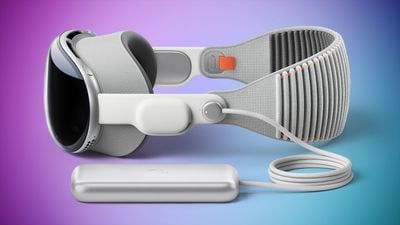
Apple Vision Pro with battery Feature Blue Magenta
In line with previous rumors, the Taiwanese research firm today said Apple is planning to introduce both a next-generation Vision Pro and a mainstream headset, which would likely be named "Apple Vision" without the "Pro" modifier.

For the next-generation Vision Pro, TrendForce said Apple will likely consider sourcing components from suppliers beyond Sony to reduce production costs, and this move could contribute to the headset having a lower price. Currently, the Vision Pro starts at $3,499 in the U.S., and this price has naturally limited sales of the device.

In an interview earlier this year, Apple CEO Tim Cook acknowledged that the Vision Pro is not a mass-market product due to its high price.

"At $3,500, it's not a mass-market product," said Cook. "Right now, it's an early-adopter product. People who want to have tomorrow's technology today—that's who it's for. Fortunately, there's enough people who are in that camp that it's exciting."

In July, research firm IDC estimated that Vision Pro sales would be below 500,000 units this year.

While the next Vision Pro could be at least slightly more affordable, TrendForce ensured that the device will continue to have high-end specifications, including display technology with a resolution exceeding 3,000 pixels per inch.

In addition to a Vision Pro price cut, a lower-end model is also expected eventually.

For this mainstream Vision headset, the research firm said that Apple is expected to focus on "affordability and "cost-efficiency" as a main priority, which should make visionOS accessible to more customers at a considerably lower price compared to the Vision Pro. It said the device could have less-advanced displays to keep costs down.

"Possible display options for this model include glass-based OLED displays and LCDs with LTPO backplane technology, both of which offer a balance between performance and cost," said TrendForce, in a press release.

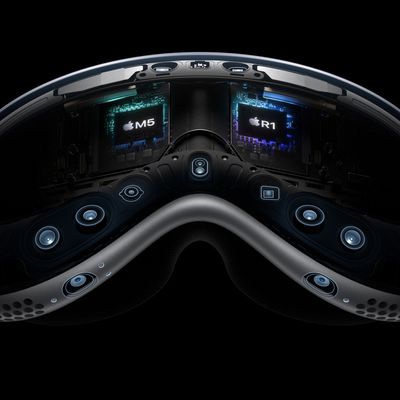
Apple analyst Ming-Chi Kuo last month said the next Vision Pro will actually launch in 2025, with an M5 chip in place of the current M2 chip, but he said Apple pushed back its plans for a cheaper Vision headset until beyond 2027.

Related Roundup: Apple Vision Pro
Buyer's Guide: Vision Pro (Buy Now)
Related Forum: Apple Vision Pro

Popular Stories

macbook air blue

What's Coming in the M5 MacBook Air

Thursday February 26, 2026 3:57 pm PST by
Along with the low-cost MacBook, Apple could introduce a refreshed version of the MacBook Air next week. Most of the focus will be on the new machine, but the MacBook Air is expected to get some useful internal updates. M5 Chip The next-generation MacBook Air will adopt the M5 chip, which Apple already introduced in the iPad Pro and MacBook Pro models that came out last year. Apple's M5...

Apple Announces Special Event in New York Feature 1

Apple Teases 'A Big Week Ahead' With Announcements Starting Monday

Thursday February 26, 2026 6:06 am PST by
Apple CEO Tim Cook today teased "a big week ahead," with announcements starting Monday. His post included an #AppleLaunch hashtag with a colorful Apple logo, along with a short video that ultimately shows an Apple logo on the lid of a Mac. Apple is reportedly planning a three-day stretch of product announcements from Monday, March 2 through Wednesday, March 4, with up to five new products...
ipad mini 7 1

Could Apple's OLED iPad Mini Finally Be a Kindle Killer?

Friday February 27, 2026 12:08 pm PST by
With a similar screen size and easy, one-handed grip, the iPad mini has always been the Apple device that overlaps most with dedicated e-readers. Now, amid rumors pointing to an OLED display for the next generation, could the iPad mini finally replace devices such as the Kindle and Kobo? The shift from LCD to OLED could make the iPad mini far more appealing as a reading device. OLED panels...

Top Rated Comments

lilkwarrior Avatar
16 months ago

They can make it as "affordable" as they want, I'll never buy one.
…Okay, then why you’re commenting and following a device variety you have no interest in buying instead of a device category you actually find worthwhile?
Score: 19 Votes (Like | Disagree)
lilkwarrior Avatar
16 months ago

I still don't know who this is for
Spatial computing has several benefits for:

- Private computing

- More optimal on-the-go/portable computing with better ergonomics than hunching over a physical screen

- Superior active content creation and DIY computing keeping your hands free like action sports (i.e. biking), dancing

- Superior in-the-moment content creation or capturing line concerts that is also less unobtrusive (i.e. it will be archaic having as many cameras in the way of concerts and etc)

- Multi-tasking spatially has plenty of advantages
Score: 19 Votes (Like | Disagree)
dugbug Avatar
16 months ago
Shees apple just drop that stupid front display that has almost no value. Put a cool looking LED indicator on it if you want to indicate the wearer sees you as you approach. It would even make the thing lighter.
Score: 18 Votes (Like | Disagree)
Andres Cantu Avatar
16 months ago
I think the price isn’t necessarily the only show-stopper for a lot of people.

Even at $300 for the exact same headset, I wouldn’t buy one for myself because I don’t see a use case for it, for me at least.
Score: 13 Votes (Like | Disagree)
deckard666 Avatar
16 months ago
Under a 1000 would be very appealing....especially with some decent interface to my iPhone
Score: 12 Votes (Like | Disagree)
lilkwarrior Avatar
16 months ago

I think the price isn’t necessarily the only show-stopper for a lot of people.

Even at $300 for the exact same headset, I wouldn’t buy one for myself because I don’t see a use case for it, for me at least.
The world doesn’t revolve around your use cases nor mine and you’re not obligated to have a need for every computing device a manufacturer comes up with to sell.

Headset form factor can fundamentally not work with people with legit and worthwhile spatial computing needs needing glasses instead (even because of hair or their on-the-go needs) similar to not everyone needs or want a desktop compared to a laptop/tablet
Score: 11 Votes (Like | Disagree)