Meta's VR Headset Can Play iPhone Spatial Videos
The Meta Quest VR headset will soon be able to play spatial videos captured on an iPhone 15 Pro or iPhone 15 Pro Max, Meta announced today. The upcoming v62 update will add support for the feature.

Spatial videos can be uploaded to the Meta Quest headset using the Meta Quest mobile app, so that the stereoscopic videos captured on the iPhone 15 Pro models can be relived on Meta's device for those who do not have an Apple Vision Pro.
Spatial videos uploaded to the Meta Quest will be converted to the correct format for playback on the device, and it will be stored in the cloud. Spatial video content can be selected from the Files menu for an immersive viewing experience. Several demo videos are available on the Meta Quest so users can experience what spatial videos are like.
Apple added the ability to capture spatial videos specifically for Apple Vision Pro headset owners. On Apple devices, spatial videos can only be viewed on the Vision Pro headset, which is priced at $3,500. Other products show the spatial videos as standard 2D videos.
We are thrilled to announce support for spatial video playback on Meta Quest! If you have an iPhone 15 Pro or iPhone 15 Pro Max, you can now upload spatial videos (a.k.a stereoscopic videos) to your Meta Quest headset using the Meta Quest mobile app--letting you relive the moment with surprising depth. With this new feature, you can experience your memories and media content like never before.
At $500, the Meta Quest is more affordable than the Vision Pro, so the option to watch spatial videos on a lower-cost device might be appealing to some iPhone 15 Pro owners.
Popular Stories
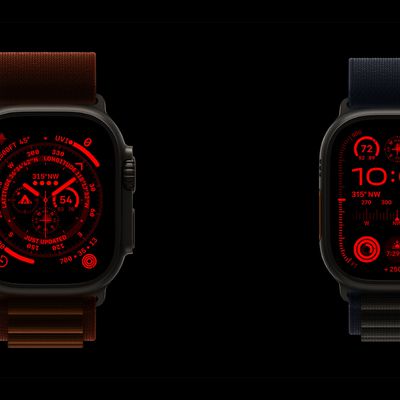
The long wait for an Apple Watch Ultra 3 appears to be nearly over, and it is rumored to feature both satellite connectivity and 5G support.
Apple Watch Ultra's existing Night Mode
In his latest Power On newsletter, Bloomberg's Mark Gurman said that the Apple Watch Ultra 3 is on track to launch this year with "significant" new features, including satellite connectivity, which would let you...
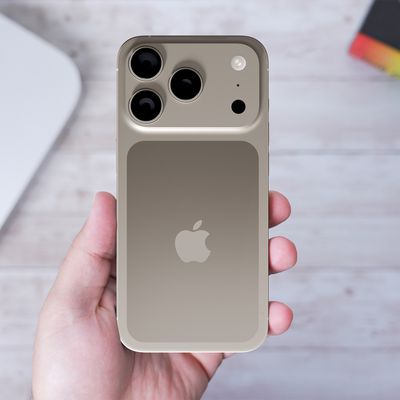
Apple's next-generation iPhone 17 Pro and iPhone 17 Pro Max are just over two months away, and there are plenty of rumors about the devices.
Below, we recap key changes rumored for the iPhone 17 Pro models.
Latest Rumors
These rumors surfaced in June and July:Apple logo repositioned: Apple's logo may have a lower position on the back of the iPhone 17 Pro models, compared to previous...
The iPhone 17 Pro Max will feature the biggest ever battery in an iPhone, according to the Weibo leaker known as "Instant Digital."
In a new post, the leaker listed the battery capacities of the iPhone 11 Pro Max through to the iPhone 16 Pro Max, and added that the iPhone 17 Pro Max will feature a battery capacity of 5,000mAh:
iPhone 11 Pro Max: 3,969mAh
iPhone 12 Pro Max: 3,687mAh...
Apple's position as the dominant force in the global true wireless stereo (TWS) earbud market is expected to continue through 2025, according to Counterpoint Research.
The forecast outlines a 3% year-over-year increase in global TWS unit shipments for 2025, signaling a transition from rapid growth to a more mature phase for the category. While Apple is set to remain the leading brand by...
AppleInsider's Marko Zivkovic today shared a list of alleged identifiers for future Mac models, which should roll out over the next year or so.
The report does not reveal anything too surprising, but it does serve as further evidence that Apple is seemingly working on new models of every Mac, including the MacBook Air, MacBook Pro, iMac, Mac mini, Mac Studio, and Mac Pro.
Apple is...
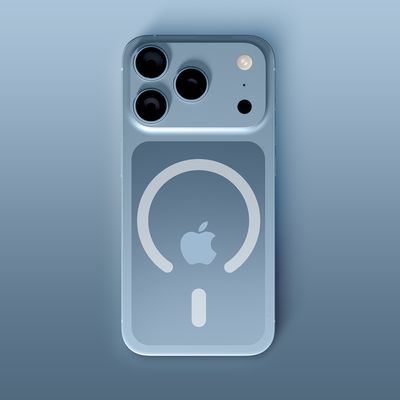
The upcoming iPhone 17 Pro and iPhone 17 Pro Max are rumored to have a slightly different MagSafe magnet layout compared to existing iPhone models, and a leaked photo has offered a closer look at the supposed new design.
The leaker Majin Bu today shared a photo of alleged MagSafe magnet arrays for third-party iPhone 17 Pro cases. On existing iPhone models with MagSafe, the magnets form a...