In today's iOS 15.4 beta that's available to developers, Apple added a useful new feature that changes the way Face ID works. There's now a Face ID with a Mask option that allows the iPhone to be unlocked when you're wearing a mask, but you need to have an iPhone 12 or newer.
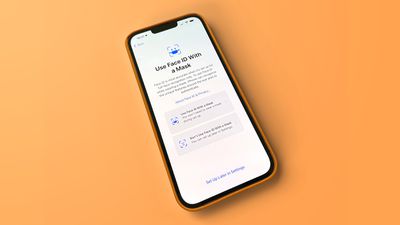
Right now, an iPhone can be unlocked with a mask if you have an Apple Watch for authentication to add an extra layer of security, but the new option removes the need for an Apple Watch. Face ID with a Mask works by recognizing the area around the eye when a mask is worn, which is less secure but more convenient. Unlike Face ID with the Apple Watch, the mask version works with Apple Pay and can be used to authenticate third-party apps.
Unfortunately, Face ID with a Mask is limited to some of Apple's newest iPhones, even though Face ID has been available since 2017 with the launch of the iPhone X. As noted on our forums, Face ID with a Mask is only an option on the iPhone 12 and later, so you'll need an iPhone 12, 12 mini, 12 Pro, 12 Pro Max or an iPhone 13, 13 mini, 13 Pro, or 13 Pro Max.
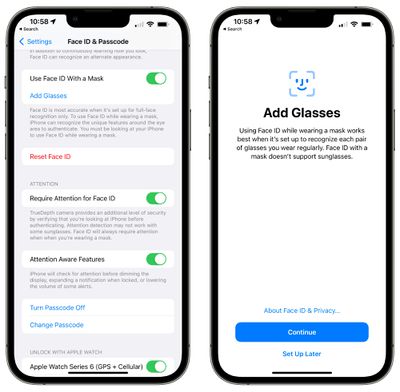
If you have an iPhone 11 or earlier, you will not see the Face ID with a Mask setup screen when updating to iOS 15.4, nor will you have the option to toggle it on in the Settings app.
It is not clear why Apple has limited Face ID with a Mask to the iPhone 12 and newer, but there may be some differences in Face ID hardware over the years that allow it to work for some devices and not others in terms of reasonable security. It's also possible that Apple will expand Face ID with a Mask to older iPhones in future betas.
Thursday January 15, 2026 10:56 am PST by Joe Rossignol
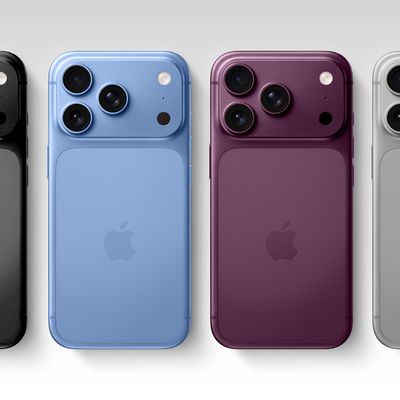
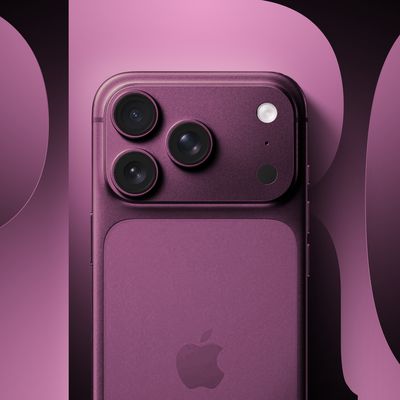
While the iPhone 18 Pro and iPhone 18 Pro Max are not expected to launch for another eight months, there are already plenty of rumors about the devices.
Below, we have recapped 12 features rumored for the iPhone 18 Pro models, as of January 2026:
The same overall design is expected, with 6.3-inch and 6.9-inch display sizes, and a "plateau" housing three rear cameras
Under-screen Face ID...
Friday January 16, 2026 7:07 pm PST by Joe Rossignol
Apple plans to upgrade the iPad mini, MacBook Pro, iPad Air, iMac, and MacBook Air with OLED displays between 2026 and 2028, according to DigiTimes.
Bloomberg's Mark Gurman previously reported that the iPad mini and MacBook Pro will receive an OLED display as early as this year, but he does not expect the MacBook Air to adopt the technology until 2028 at the earliest.
A new iPad Air is...
Thursday January 15, 2026 11:19 am PST by Joe Rossignol
Apple today updated its trade-in values for select iPhone, iPad, Mac, and Apple Watch models. Trade-ins can be completed on Apple's website, or at an Apple Store.
The charts below provide an overview of Apple's current and previous trade-in values in the United States, according to the company's website. Most of the values declined slightly, but some of the Mac values increased.
iPhone
...
Friday January 16, 2026 12:12 pm PST by Joe Rossignol
In select U.S. states, residents can add their driver's license or state ID to the Apple Wallet app on the iPhone and Apple Watch, and then use it to display proof of identity or age at select airports and businesses, and in select apps.
The feature is currently available in 13 U.S. states and Puerto Rico, and it is expected to launch in at least seven more in the future.
To set up the...
Wednesday January 14, 2026 7:09 am PST by Joe Rossignol
While the iPhone 18 Pro models are still around eight months away, a leaker has shared some alleged details about the devices.
In a post on Chinese social media platform Weibo this week, the account Digital Chat Station said the iPhone 18 Pro and iPhone 18 Pro Max will have the same 6.3-inch and 6.9-inch display sizes as the iPhone 17 Pro and iPhone 17 Pro Max.
Consistent with previous...
Typical Apple. "Hey, if you want this feature, upgrade!".
I don’t think consumers would ever use this as leverage to upgrade. Think about it. They would have to know this feature would even exist in the first place and be annoyed enough to upgrade. (I suspect most average consumers don’t even know how to navigate properly through the settings on iOS.)
My guess? The ML chip on the iPhone 11 or older devices aren't powerful enough to enable FaceID with Mask, whereas the iPhone 12 and newer phones have the ML chip that is more powerful and can handle the FaceID with Mask feature.
This is a hardware limitation and it all has to do with two thing: Neural Engine on Ax series chip and the face mapping sensors on iPhone 12s and iPhone 13s
This is how FaceID with mask will basically work. Lot of it is machine learning that requires more processing power.