iOS 14.6 Beta 1 Code Hints at Upcoming HiFi Apple Music Support

Apple is laying the groundwork for adding HiFi support to Apple Music which would offer ‌Apple Music‌ subscribers and owners of compatible devices, such as certain models of AirPods, access to high-fidelity audio streaming, according to code within the iOS 14.6 beta discovered by MacRumors.
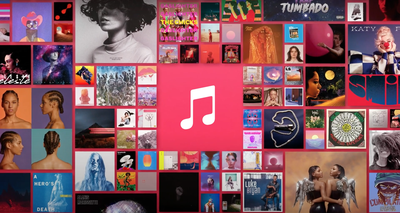
apple music album cover art
Earlier today, a report claimed that Apple will announce a new $9.99 per month ‌Apple Music‌ tier that offers HiFi music streaming in the "coming weeks." Now, code within the first beta of iOS 14.6 discovered by MacRumors contributor Steve Moser confirms that Apple is exploring the option and preparing for a possible release.

Within the code for the first beta of the upcoming update, references to "lossless audio," "high-quality stereo streaming," and "HiFi" are found within the ‌Apple Music‌ app. Accompanying code within the beta suggests that HiFi streaming could be limited to only certain AirPods such as the AirPods Pro, AirPods Max, and newer.

Presumably, HiFi support would also be available to customers without AirPods, although it's unknown if Apple will have certain hardware requirements for speakers, headphones, etc.. to support HiFi ‌Apple Music‌ streaming.

Wording such as "Route Incompatible" and "Route Unknown Compatibility" suggests that much like how Spatial Audio is limited to only the AirPods Pro and ‌AirPods Max‌, HiFi ‌Apple Music‌ streaming could be exclusive to certain generation AirPods and other compatible devices.

Additional code within the beta suggests that Apple could incorporate a dynamic way for ‌Apple Music‌ to switch between standard, compressed audio streaming and high-fidelity streaming. On the iPhone 12 with 5G, Apple has a "Smart Data Mode," which automatically switches between a 5G and 4G/LTE connection depending on the user's current needs, connection strength, and battery life.

According to code within the beta, Apple may take a similar approach with HiFi support on ‌Apple Music‌, only offering users high-fidelity audio streaming when there's sufficient bandwidth or depending on other factors such as a user's data consumption.

Spotify has announced plans to include HiFi support for subscribers sometime this year but has yet to announce a specific date. Apple is reportedly preparing to announce the new HiFi tier as soon as a few weeks alongside the release of new third-generation AirPods. The new tier will reportedly cost the same as the current individual ‌Apple Music‌ tier.

Given the evidence that HiFi ‌Apple Music‌ support could be limited to only newer AirPods models, Apple may offer HiFi as a separate, more expensive tier for owners of compatible AirPods. Thus, customers with older AirPods would be able to retain their existing ‌Apple Music‌ subscription without HiFi support.

At WWDC last year, Apple did announce automatic switching for AirPods and Spatial Audio for AirPods Pro and newer AirPod products. With WWDC 2021 being just weeks away, Apple could announce the new ‌Apple Music‌ tier at the event, marketing them as an add-on feature for the third-generation AirPods.

Apple analyst Ming-Chi Kuo previously reported that the new AirPods would enter mass production in the third quarter of the year.
Popular Stories

iOS 26

15 New Things Your iPhone Can Do in iOS 26.2

Friday December 5, 2025 9:40 am PST by
Apple is about to release iOS 26.2, the second major point update for iPhones since iOS 26 was rolled out in September, and there are at least 15 notable changes and improvements worth checking out. We've rounded them up below. Apple is expected to roll out iOS 26.2 to compatible devices sometime between December 8 and December 16. When the update drops, you can check Apple's servers for the ...
Intel Inside iPhone Feature

Apple's Return to Intel Rumored to Extend to iPhone

Friday December 5, 2025 10:08 am PST by
Intel is expected to begin supplying some Mac and iPad chips in a few years, and the latest rumor claims the partnership might extend to the iPhone. In a research note with investment firm GF Securities this week, obtained by MacRumors, analyst Jeff Pu said he and his colleagues "now expect" Intel to reach a supply deal with Apple for at least some non-pro iPhone chips starting in 2028....
ive and altman

Jony Ive's OpenAI Device Barred From Using 'io' Name

Friday December 5, 2025 6:22 am PST by
A U.S. appeals court has upheld a temporary restraining order that prevents OpenAI and Jony Ive's new hardware venture from using the name "io" for products similar to those planned by AI audio startup iyO, Bloomberg Law reports. iyO sued OpenAI earlier this year after the latter announced its partnership with Ive's new firm, arguing that OpenAI's planned "io" branding was too close to its...
iPhone 17 Pro Cosmic Orange

10 Reasons to Wait for Next Year's iPhone 18 Pro

Monday December 1, 2025 2:40 am PST by
Apple's iPhone development roadmap runs several years into the future and the company is continually working with suppliers on several successive iPhone models at the same time, which is why we often get rumored features months ahead of launch. The iPhone 18 series is no different, and we already have a good idea of what to expect for the iPhone 18 Pro and iPhone 18 Pro Max. One thing worth...
Photos App Icon Liquid Glass

John Gruber Shares Scathing Commentary About Apple's Departing Software Design Chief

Thursday December 4, 2025 9:30 am PST by
In a statement shared with Bloomberg on Wednesday, Apple confirmed that its software design chief Alan Dye will be leaving. Apple said Dye will be succeeded by Stephen Lemay, who has been a software designer at the company since 1999. Meta CEO Mark Zuckerberg announced that Dye will lead a new creative studio within the company's AR/VR division Reality Labs. On his blog Daring Fireball,...
maxresdefault

iPhone Fold: Launch, Pricing, and What to Expect From Apple's Foldable

Monday December 1, 2025 3:00 am PST by
Apple is expected to launch a new foldable iPhone next year, based on multiple rumors and credible sources. The long-awaited device has been rumored for years now, but signs increasingly suggest that 2026 could indeed be the year that Apple releases its first foldable device. Subscribe to the MacRumors YouTube channel for more videos. Below, we've collated an updated set of key details that ...
Johny Srouji

Apple Chip Chief Johny Srouji Could Be Next to Go as Exodus Continues

Sunday December 7, 2025 10:41 am PST by
Apple's senior vice president of hardware technologies Johny Srouji could be the next leading executive to leave the company amid an alarming exodus of leading employees, Bloomberg's Mark Gurman reports. Srouji apparently recently told CEO Tim Cook that he is "seriously considering leaving" in the near future. He intends to join another company if he departs. Srouji leads Apple's chip design ...
Apple John Ternus 2019

Will John Ternus Really Be Apple's Next CEO?

Friday December 5, 2025 9:01 am PST by
There is uncertainty about Apple's head of hardware engineering John Ternus succeeding Tim Cook as CEO, The Information reports. Some former Apple executives apparently hope that a new "dark-horse" candidate will emerge. Ternus is considered to be the most likely candidate to succeed Cook as CEO. The report notes that he is more likely to become CEO than software head chief Craig Federighi, ...
iPhone 14 Pro Dynamic Island

iPhone 18 Pro Leak Adds New Evidence for Under-Display Face ID

Monday December 8, 2025 4:54 am PST by
Apple is actively testing under-screen Face ID for next year's iPhone 18 Pro models using a special "spliced micro-transparent glass" window built into the display, claims a Chinese leaker. According to "Smart Pikachu," a Weibo account that has previously shared accurate supply-chain details on Chinese Android hardware, Apple is testing the special glass as a way to let the TrueDepth...
ios 18 to ios 26 upgrade

Apple Pushes iPhone Users Still on iOS 18 to Upgrade to iOS 26

Tuesday December 2, 2025 11:09 am PST by
Apple is encouraging iPhone users who are still running iOS 18 to upgrade to iOS 26 by making the iOS 26 software upgrade option more prominent. Since iOS 26 launched in September, it has been displayed as an optional upgrade at the bottom of the Software Update interface in the Settings app. iOS 18 has been the default operating system option, and users running iOS 18 have seen iOS 18...

Top Rated Comments

MauiPa Avatar
60 months ago

Wait… what? The ONLY way that you will be able to listen to HiFi music is if you own AirPods?? What about through speakers and whatever home set up?

That seems like a very odd decision if true as that would push me straight to Spotify.
don't get all snickety over a rumor. As the above post points out there are various other alternatives that could easily support HiFi: Airplay2, AppleTV, Mac, HomePods. and while the current streaming is 250 kbit AAC for AirPods and AirPods Pro, the standard supports up to 320 kbit. that is without a different codec being supported (I'm not an expert, but I pretty much think the codec is software which would allow modifications), so that would say that AirPods, AirPods Pro, etc could also be potential targets.

Bottom line, its only a rumor at this point, so relax. Besides, Spotify doesn't pay the artists. If you are going to switch, go with a service that honors the artists at least as well as Apple Music.
Score: 22 Votes (Like | Disagree)
Sevenfeet Avatar
60 months ago

Well I'm an old guy too, and you miss the point. Music streaming services mostly compress the music (lossy) for streaming, a few services TIDAL, soon to be Spotify, and if this rumor is correct, Apple Music (there are others). HiFi streams are not lossy, or are much less lossy. For example, SBC is a pretty bad codec to stream music over your bluetooth to speakers and/or headphones, as is AAC on Android. AAC on Apple is considered as good as 320 OGG used by Spotify, and as good as aptx, but still they reduce the audio stream by compression and removing what the algorithms determine can't be heard anyway. HiFi refers to the less lossy ways of sending the music. many vendors have less lossy, or zero lossy, formats.

Does it matter? Probably not, unless you are talking about the crappy low end codecs. The better versions provide adequate detail and resolution for most ears (Music is pretty low in frequency in general <12000 kHz, although audiophiles will tell you there are harmonics with push the spectrum up to 20000khz). Most people can't hear the difference, but the HiFi enthusiasts, will swear they can. Of course being old, our ears have decreased sensitivity and frequency response - pity us
Music on Apple devices goes way back. I'm old enough to remember the first CD-ROM (SCSI based) back in 1989. Those first units mounted an audio CD to the desktop and you could literally drag songs to the hard drive. It was a cool feature and Apple even invented a file format for it called AIFF. The problem is that AIFF music files were usually 40-50 MB in size. That may not sound like a lot now, but back then the biggest hard drives in a Mac II were 80 MB, so two songs could fill up the whole thing.

Fast forward to the 90s and the MP3 format became the rage. You could take a 40MB music file and compress is down to 2 MB for a typical 128kbit file. With sizes that small (or smaller if you choose crappier compression), you could not only store all your CDs on a typical hard drive of the day, but you could even easily trade music, even on dial-up services. The downside was that lossy compression did degrade the quality of the music, but if you weren't listening on nice equipment (or just didn't care), then it was perfectly fine for you.

By the end of the 90s, a new format called FLAC was born, directed at audiophiles. The idea was to compress the music as best as possible biasing itself toward quick decompression. These files usually only have the size of an AIFF file, but the music quality didn't differ from the original CD it was ripped from.

But piracy was ravaging the music industry by 2001 when Apple introduced the iPod. Remember "1000 songs in your pocket"? Those original iPods had tiny 5 and 10 GB hard drives which made this possible combined with a new audio format from the same company who invented MP3 in the 90s. Called AAC, this format promised similar lossy audio compression with better quality. It was originally at 128kbit files but Apple upgraded that to 256kbit files which is what the iTunes Store and later Apple Music streaming have all supported.

Apple would add its own Lossless file format (ALAC) in 2003 which debuted on the 2003 iPod with dock connector. Interestingly enough, the original iPods between 2001 and 2002 always offered AIFF file compatibility for audiophiles who didn't mind having higher quality but far fewer songs in their pocket.

Not much has changed in the music delivery business since 256k AAC debuted but so much else has changed. Dial up gave way to broadband, and the iPod gave way to the iPhone. 2G cell data networks which barely transferred anything gave way to 3G and widely now, 4G LTE networks. Also, iPods which originally came with 5 gig hard drives now pale in comparison to iPhone 12 which begin with 64GB of flash storage and can be configured up to 256 GB, or even 512GB. To give some context to that, my entire ripped CD collection (30,000+ songs) collected over three decades compressed with ALAC is about 750 GB.

But with streaming, I don't even need that kind of storage on me if I can stream high fidelity lossless music to whereever I am. And in an age where Wifi and 4G LTE communication is everywhere and 5G has been making serious inroads in major cities, there's no excuse not to offer higher quality ALAC music when we've been streaming much bigger Youtube and Netflix video files without giving it a second thought. ALAC files on my hard drive are about 20-30 MB in size while AAC files are usually 5-8 MB. ALAC is biggest sure, but these days, it's a difference that doesn't matter much with most cell phone plans.

So CD-quality (16 bit/44.1Khz) ALAC is way overdue. But why stop there? Audiophiles moved on to 24 bit music with sampling rates from 44.1 khz all the way up to 192 or even 384 khz. And if you have the right equipment, the difference is noticeable. Even better, the "right equipment" is well within the reach of many consumers without reaching into lofty audiophile territory. Now what is called in the industry HiRes audio has file sizes from 100-200 MB each or larger. But again, it's still much smaller than video files we consume every day.

And streaming lossless files (FLAC format) have been available for a while from Amazon Music and Qobuz. Tidal offers HiRes music through a lossless format called MQA which is beyond the scope of this discussion.

But the bottom line is that I'd love for Apple to finally offer lossless CD quality music. And we know that Apple has HiRes music in the vaults....they often receive them from the artists before they are compressed to AAC. Will we see either? Time will tell but we've been waiting a decade so far with no luck. Curiously, iTunes (and later Apple Music) has dealt with not only ALAC files with HiRes ALAC for several years on your hard drive with no problems. Even MacOS knows what a FLAC file is and will even play it from the Finder.

Finally there is multi-channel atmospheric music like Sony 360 and Dolby Atmos. Atmos got started as a movie sound platform (lossless and lossy) but recently added music to its features which in the streaming world, is the same lossy format Apple already delivers via the Apple TV 4K. Dolby Atmos music is already a thing with Tidal on the Apple TV 4K assuming you have a proper receiver and speakers or compatible soundbar. Apple could easily deliver Atmos music on Airpod Pros, AirPod Max and HomePods much like they do for movies already.
Score: 18 Votes (Like | Disagree)
spyguy10709 Avatar
60 months ago

I'm old guy, so I had to look up what HiFi supposedly refers to. I initially assumed it was either just another BS gimmicky name for better music quality with the streaming. What I read though is that HiFi is this new thing wherein you buy separate pieces/components of equipment to create your audio system. Really, new? Growing up in the 70s as a teenager we did that. You had a separate amplifier, a separate tuner, a separate record player, a separate tape deck, and later on a separate CD player. It was what we called a modular system made up of the components you wanted, along with separate speakers of course. Some even added separate reel to reel tap players as well. So if this is what young people are calling HiFi, well you are reinventing the darn wheel. With the advent of boomboxes and Walkmans in the 1970s and 1980s, the trend was to scale down to a bookshelf system which was still somewhat modular but much smaller. When the MP3 players became popular in the late 1990s and exploded in popularity after the iPods were introduced, smaller and pocketable became the fashion. Maybe the younger folks are oblivious to the old stereo systems of their grandparents era, but those old systems predate HiFi systems by half a century. So I have to wonder, is HiFi really just a gimmicky, BS term to refer to better audio quality? After all, AirPods hardly fit the description I've read for HiFi.
I think they're referring to "High Fidelity" digital encoding that's "lossless" - ie, a complete preservation of the original digital source file, as opposed to the "lossy" encoding that's used today - which is 3-5x more space efficient because it discards parts of the sound our ears are not likely to notice is gone.

Most people can't tell a high quality Lossy encoding from a lossless one, simply due to the low-fidelity headphones and speakers they're most likely to use. But those that can (or convince themselves they can) are usually quite interested in the subject as a hobby.

Check out - https://en.wikipedia.org/wiki/Psychoacoustics if you want to learn more about how digital audio is stored and https://www.whathifi.com/ if this topic of high-quality digital sound is something that intrigues you!
Score: 18 Votes (Like | Disagree)
verpeiler Avatar
60 months ago
If you really think you can hear the difference between a good mp3 and lossless, test yourself:

https://www.npr.org/sections/therecord/2015/06/02/411473508/how-well-can-you-hear-audio-quality?t=1619896374252

For 99,9% of the population it is completely pointless... I'd say I have very good hearing (and almost perfect pitch), I managed to guess 4/6 correct (with good headphones) and even then I wasn't sure for the most parts.
Score: 18 Votes (Like | Disagree)
w5jck Avatar
60 months ago
I'm old guy, so I had to look up what HiFi supposedly refers to. I initially assumed it was either just another BS gimmicky name for better music quality with the streaming. What I read though is that HiFi is this new thing wherein you buy separate pieces/components of equipment to create your audio system. Really, new? Growing up in the 70s as a teenager we did that. You had a separate amplifier, a separate tuner, a separate record player, a separate tape deck, and later on a separate CD player. It was what we called a modular system made up of the components you wanted, along with separate speakers of course. Some even added separate reel to reel tap players as well. So if this is what young people are calling HiFi, well you are reinventing the darn wheel. With the advent of boomboxes and Walkmans in the 1970s and 1980s, the trend was to scale down to a bookshelf system which was still somewhat modular but much smaller. When the MP3 players became popular in the late 1990s and exploded in popularity after the iPods were introduced, smaller and pocketable became the fashion. Maybe the younger folks are oblivious to the old stereo systems of their grandparents era, but those old systems predate HiFi systems by half a century. So I have to wonder, is HiFi really just a gimmicky, BS term to refer to better audio quality? After all, AirPods hardly fit the description I've read for HiFi.
Score: 18 Votes (Like | Disagree)
kalafalas Avatar
60 months ago
There’s no way they would gate it to exclusively the new AirPods. Over Bluetooth sure, but Wired and AirPlay, Mac HomePod and Apple TV should definitely be supported for HiFi playback. It does sound like they are implementing a seamless switching tech so the device can detect airpods, wired or airplay, WiFi/5G etc to send the appropriate stream and not waste data where unnecessary which is welcome. I hope I can offline tracks in lossless as well.
Score: 15 Votes (Like | Disagree)