Apple Updates Platform Security Guide, Says Kernel Extensions Won't Be Supported on Future Apple Silicon Macs

Apple today shared an updated version of its Platform Security Guide [PDF], providing a comprehensive overview of the latest security advancements across iOS 14, iPadOS 14, macOS Big Sur, tvOS 14, watchOS 7, and more.
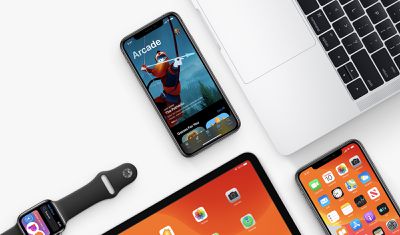
apple devices mac iphone ipad watch collage
For example, the guide provides security details about Safari's optional Password Monitoring feature on iOS 14 and macOS Big Sur, which automatically keeps an eye out for any saved passwords that may have been involved in a data breach. Apple also outlines the security of its new digital car keys feature on the iPhone and Apple Watch.

Apple updated its "commitment to security" preamble, touting the security advantages of Apple-designed chips across the iPhone, iPad, Apple Watch, and Mac:

Apple continues to push the boundaries of what's possible in security and privacy. This year Apple devices with Apple SoC's across the product lineup from Apple Watch to iPhone and iPad, and now Mac, utilize custom silicon to power not only efficient computation, but also security. Apple silicon forms the foundation for secure boot, Touch ID and Face ID, and Data Protection, as well as system integrity features never before featured on the Mac including Kernel Integrity Protection, Pointer Authentication Codes, and Fast Permission Restrictions. These integrity features help prevent common attack techniques that target memory, manipulate instructions, and use javascript on the web. They combine to help make sure that even if attacker code somehow executes, the damage it can do is dramatically reduced.

New sections have been added for Macs with Apple silicon, outlining the security of the boot process, boot modes, startup disk, Rosetta 2 translation process for running Intel-based Mac apps, FileVault, Activation Lock, and more.

As expected, the guide confirms that kernel extensions will not be supported on future Macs with Apple silicon (emphasis ours):

In addition to enabling users to run older versions of macOS, Reduced Security is required for other actions that can put a user's system security at risk, such as introducing third-party kernel extensions (kexts). Kexts have the same privileges as the kernel, and thus any vulnerabilities in third-party kexts can lead to full operating system compromise. This is why developers are being strongly encouraged to adopt system extensions before kext support is removed from macOS for future Mac computers with Apple silicon.

macOS Catalina was the last version of macOS to fully support kernel extensions. Apple says kernel extensions are no longer recommended for macOS, noting that they pose a risk to the integrity and reliability of the operating system.

Starting with macOS Catalina, developers have been able to use system extensions that run in user space rather than at the kernel level. System extensions running in user space are granted only the privileges necessary to perform their specified function, which increases the stability and security of macOS, according to Apple.

Apple includes a document revision history section in the Platform Security Guide with a list of all new and updated information.

Apple also has a new Security Certifications and Compliance Center.
Popular Stories

imac video apple feature

Apple Unveils First New Products of 2026

Monday January 26, 2026 1:55 pm PST by
Apple today introduced its first two physical products of 2026: a second-generation AirTag and the Black Unity Connection Braided Solo Loop for the Apple Watch. Read our coverage of each announcement to learn more:Apple Unveils New AirTag With Longer Range, Louder Speaker, and More Apple Introduces New Black Unity Apple Watch BandBoth the new AirTag and the Black Unity Connection Braided...
Second Generation AirTag Feature

Apple Unveils New AirTag With Longer Range, Louder Speaker, and More

Monday January 26, 2026 6:07 am PST by
Apple today introduced the second-generation AirTag, with key features including longer range for tracking items and a louder speaker. For those who are not familiar, the AirTag is a small accessory that you can attach to your backpack, keys, or other items. Then, you can track the location of those items in the Find My app on the iPhone, iPad, Mac, Apple Watch, and iCloud.com. The new...

iPhone 5s

iPhone 5s Gets New Software Update 13 Years After Launch

Monday January 26, 2026 3:56 pm PST by
Alongside iOS 26.2.1, Apple today released an updated version of iOS 12 for devices that are still running that operating system update, eight years after the software was first released. iOS 12.5.8 is available for the iPhone 5s and the iPhone 6, meaning Apple is continuing to support these devices for 13 and 12 years after launch, respectively. The iPhone 5s came out in September 2013,...
Apple Logo Spotlight

Apple to Launch These 20+ Products This Year

Sunday January 25, 2026 6:02 pm PST by
2026 promises to be yet another busy year for Apple, with the company rumored to be planning more than 20 product announcements over the coming months. Beyond the usual updates to iPhones, iPads, Macs, and Apple Watches, Apple is expected to release its all-new smart home hub, which was reportedly delayed until the more personalized version of Siri is ready. Other unique products rumored for ...
M5 MacBook Pro

Apple Reportedly Aiming to Upgrade the MacBook Pro Twice This Year

Sunday January 25, 2026 11:46 am PST by
Apple plans to release new MacBook Pro, MacBook Air, Mac Studio, and Studio Display models in the first half of this year, according to Bloomberg's Mark Gurman. In his Power On newsletter today, Gurman added that redesigned MacBook Pro models with an OLED touch screen "should be hitting toward the end of 2026," meaning that the MacBook Pro line would be upgraded twice this year. First up...


Top Rated Comments

chucker23n1 Avatar
65 months ago
"Apple continues to push the boundaries of what's possible in security and privacy."

I mean, sure, yes. But also: "Apple continues to reduce the ceiling of what's possible in macOS."
Score: 28 Votes (Like | Disagree)
asiga Avatar
65 months ago
At the end, their goal is that MacOS is just iPadOS with Terminal and Xcode.
Score: 26 Votes (Like | Disagree)
jameslmoser Avatar
65 months ago
Anyone surprised by this hasn't been paying attention. Apple is transforming Macs into Apple Service Appliances, and allowing you to customize your OS and install stuff from other places than the App store or developer signed Apps doesn't make them any money.
Score: 16 Votes (Like | Disagree)
aednichols Avatar
65 months ago
Herding developers to run app code in userspace instead of the kernel is just a good idea in general.

I've already been avoiding kext-based apps where possible for years.
Score: 16 Votes (Like | Disagree)
leman Avatar
65 months ago
Anyone surprised by this has not been following macOS development for the last couple of years. Kernel extensions are out, userland drivers are in.


I mean, sure, yes. But also: "Apple continues to reduce the ceiling of what's possible in macOS."
If DriverKit supports enough relevant use cases, I don't see a problem.


Apple is inching MacOS to full Mach, which would be awesome... killing kernel extensions before having third-party GPU support will be interesting. What is old is new again https://en.wikipedia.org/wiki/MkLinux
There won't be any third party GPU support on Apple Silicon. Why would Apple sabotage the developer and user experience ecosystem they have been painstakingly bulding?


VirtualBox
Made irrelevant by the new virtualization framework. Parallels Preview runs on M1 without any kernel extensions.
Score: 14 Votes (Like | Disagree)
jrlcopy Avatar
65 months ago
Umm.... that's like a decent amount of professional apps.
Score: 8 Votes (Like | Disagree)