Researcher Breaches Systems of Over 35 Companies, Including Apple, Microsoft, and PayPal

A security researcher was able to breach the internal systems of over 35 major companies, including Apple, Microsoft, and PayPal, using a software supply chain attack (via Bleeping Computer).
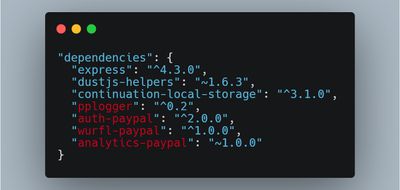
paypal hack

Security researcher Alex Birsan was able to exploit a unique design flaw in some open-source ecosystems called "dependency confusion" to attack the systems of companies such as Apple, Microsoft, PayPal, Shopify, Netflix, Yelp, Tesla, and Uber.

The attack involved uploading malware to open source repositories including PyPI, npm, and RubyGems, which were then automatically distributed downstream into the various companies' internal applications. Victims automatically received the malicious packages, with no social engineering or trojans required.

Birsan was able to create counterfeit projects using the same names on open-source repositories, each containing a disclaimer message, and found that applications would automatically pull public dependency packages, without needing any action from the developer. In some cases, such as with PyPI packages, any package with a higher version would be prioritized regardless of wherever it was located. This enabled Birsan to successfully attack the software supply chain of multiple companies.

Upon verifying that his component had successfully infiltrated the corporate network, Birsan reported his findings to the company in question, and some rewarded him with a bug bounty. Microsoft awarded him its highest bug bounty amount of $40,000 and released a white paper on this security issue, while Apple told BleepingComputer that Birsan will receive a reward via the Apple Security Bounty program for responsibly disclosing the issue. Birsan has now earned over $130,000 through bug bounty programs and pre-approved penetration testing arrangements.

A full explanation of the methodology behind the attack is available at Alex Birsan's Medium page.


Popular Stories

m5 macbook pro deal

Why You Shouldn't Buy the Next MacBook Pro

Tuesday February 10, 2026 4:27 pm PST by
Apple is planning to launch new MacBook Pro models as soon as early March, but if you can, this is one generation you should skip because there's something much better in the works. We're waiting on 14-inch and 16-inch MacBook Pro models with M5 Pro and M5 Max chips, with few changes other than the processor upgrade. There won't be any tweaks to the design or the display, but later this...


iOS 26

Apple Releases iOS 26.3 and iPadOS 26.3

Wednesday February 11, 2026 10:07 am PST by
Apple today released iOS 26.3 and iPadOS 26.3, the latest updates to the iOS 26 and iPadOS 26 operating systems that came out in September. The new software comes almost two months after Apple released iOS 26.2 and iPadOS 26.2. The new software can be downloaded on eligible iPhones and iPads over-the-air by going to Settings > General > Software Update. According to Apple's release notes, ...
Apple Logo Zoomed

Apple Expected to Launch These 10+ Products Over the Coming Months

Tuesday February 10, 2026 6:33 am PST by
It has been a slow start to 2026 for Apple product launches, with only a new AirTag and a special Apple Watch band released so far. We are still waiting for MacBook Pro models with M5 Pro and M5 Max chips, the iPhone 17e, a lower-cost MacBook with an iPhone chip, long-rumored updates to the Apple TV and HomePod mini, and much more. Apple is expected to release/update the following products...
iPhone 16e Bottom Crop

Apple Reportedly Unveiling a New iPhone Next Week

Tuesday February 10, 2026 1:51 pm PST by
Apple plans to announce the iPhone 17e on Thursday, February 19, according to Macwelt, the German equivalent of Macworld. The report said the iPhone 17e will be announced in a press release on the Apple Newsroom website, so do not expect an event for this device specifically. The iPhone 17e will be a spec-bumped successor to the iPhone 16e. Rumors claim the device will have four key...
Apple Logo Black

Apple Acquires New Database App

Wednesday February 11, 2026 6:44 am PST by
Apple acquired Canadian graph database company Kuzu last year, it has emerged. The acquisition, spotted by AppleInsider, was completed in October 2025 for an undisclosed sum. The company's website was subsequently taken down and its Github repository was archived, as is commonplace for Apple acquisitions. Kuzu was "an embedded graph database built for query speed, scalability, and easy of ...

Top Rated Comments

hybrid_x Avatar
65 months ago
I love that ethical hackers can actually earn a decent income through bug bounty programs.
Score: 27 Votes (Like | Disagree)
65 months ago
Well played sir, well played!

I'm glad companies have bounty programs to encourage the "good guys" to report vulnerabilities. I have no idea how much time he put into the exploit but 130k is a nice payday.
Score: 16 Votes (Like | Disagree)
Stephen.R Avatar
65 months ago

People put too much trust in open-source community and software and this is the price they pay.
the irony of your statement is superb.

if the packages he spoofed had been open source he wouldn’t have been able to pull it off - it worked specifically because the companies were referencing internal/private packages (thus not open source) and he was able to make fake packages with the same name, in open source package repositories.

This type of shenanigans is just another reason why you should always vendor your dependencies kids.
Score: 12 Votes (Like | Disagree)
Kabeyun Avatar
65 months ago
This reminds me of the Russians hacking SolarWinds. Don’t get to the companies, get to the software the companies use and trust. Of course the irony is that these companies are some of the same ones that have been spending years trying to teach us not to automatically trust downloaded software.
Score: 11 Votes (Like | Disagree)
Blackstick Avatar
65 months ago
Well, time to hire this guy...
Score: 9 Votes (Like | Disagree)
65 months ago

People put too much trust in open-source community and software and this is the price they pay.

Open-source software, unless independently audited, have no guarantees of being secure (or even functional). Remember the disclaimer “this software is provided ‘AS IS’...”

They might even contain malicious code, since very few people will actually read the code before executing it.
The issue isn't open source - it's in the distribution model of software dependencies. This vulnerability has been known for quite some time.
Score: 7 Votes (Like | Disagree)