Many iOS Encryption Measures 'Unused,' Say Cryptographers

iOS does not utilize built-in encryption measures as much as it could do, allowing for potentially unnecessary security vulnerabilities, according to cryptographers at Johns Hopkins University (via Wired).
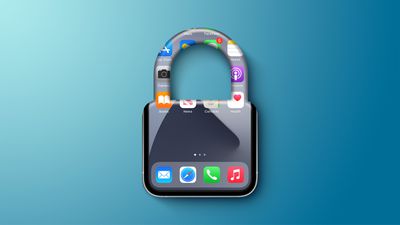
iPhone 12 Security Feature

Using publicly available documentation from Apple and Google, law enforcement reports about bypassing mobile security features, and their own analysis, the cryptographers assessed the robustness of iOS and Android encryption. The research found that while encryption infrastructure on iOS "sounds really good," it is largely left unused:

"On iOS in particular, the infrastructure is in place for this hierarchical encryption that sounds really good," said Maximilian Zinkus, lead iOS researcher. "But I was definitely surprised to see then how much of it is unused."

When an iPhone boots up, all stored data is in a state of "Complete Protection," and the user must unlock the device before anything can be decrypted. While this is extremely secure, the researchers highlighted that once the device has been unlocked for the first time after a reboot, a large amount of data moves into a state Apple calls "Protected Until First User Authentication."

Since devices are rarely restarted, most data is in a state of "Protected Until First User Authentication" rather than "Complete Protection" most of the time. The advantage of this less secure state is that decryption keys are stored in quick access memory, where they can be swiftly accessed by applications.

In theory, an attacker could find and exploit certain types of security vulnerabilities in iOS to obtain encryption keys in the quick access memory, enabling them to decrypt large amounts of data from the device. It is believed that this is how many smartphone access tools work, such as those from the forensic access company Grayshift.

While it is true that attackers require a specific operating system vulnerability to access the keys, and both Apple and Google patch many of these flaws as they are noticed, it may be avoidable by hiding encryption keys more deeply.

"It just really shocked me, because I came into this project thinking that these phones are really protecting user data well," says Johns Hopkins cryptographer Matthew Green. "Now I've come out of the project thinking almost nothing is protected as much as it could be. So why do we need a backdoor for law enforcement when the protections that these phones actually offer are so bad?"

The researchers also shared their findings and a number of technical recommendations with Apple directly. A spokesperson for Apple offered a public statement in response:

"Apple devices are designed with multiple layers of security in order to protect against a wide range of potential threats, and we work constantly to add new protections for our users' data. As customers continue to increase the amount of sensitive information they store on their devices, we will continue to develop additional protections in both hardware and software to protect their data."

The spokesperson also told Wired that Apple's security work is primarily focused on protecting users from hackers, thieves, and criminals looking to steal personal information. They also noted that the types of attacks the researchers highlighted are very costly to develop, require physical access to the target device, and only work until Apple releases a patch. Apple also emphasized that its objective with iOS is to balance security and convenience.
Related Forum: iOS 14

Popular Stories

maxresdefault

Apple Shows Off a Key Reason to Upgrade to the iPhone 17

Saturday February 7, 2026 9:26 am PST by
Apple today shared an ad that shows how the upgraded Center Stage front camera on the latest iPhones improves the process of taking a group selfie. "Watch how the new front facing camera on iPhone 17 Pro takes group selfies that automatically expand and rotate as more people come into frame," says Apple. While the ad is focused on the iPhone 17 Pro and iPhone 17 Pro Max, the regular iPhone...
apple wallet drivers license feature iPhone 15 pro

Apple Says These 7 U.S. States Plan to Offer iPhone Driver's Licenses

Monday February 9, 2026 6:24 am PST by
In select U.S. states, residents can add their driver's license or state ID to the Apple Wallet app on the iPhone and Apple Watch, and then use it to display proof of identity or age at select airports and businesses, and in select apps. The feature is currently available in 13 U.S. states and Puerto Rico, and it is expected to launch in at least seven more in the future. To set up the...
m5 macbook pro deal

Why You Shouldn't Buy the Next MacBook Pro

Tuesday February 10, 2026 4:27 pm PST by
Apple is planning to launch new MacBook Pro models as soon as early March, but if you can, this is one generation you should skip because there's something much better in the works. We're waiting on 14-inch and 16-inch MacBook Pro models with M5 Pro and M5 Max chips, with few changes other than the processor upgrade. There won't be any tweaks to the design or the display, but later this...
iOS 26

Apple Releases iOS 26.3 and iPadOS 26.3

Wednesday February 11, 2026 10:07 am PST by
Apple today released iOS 26.3 and iPadOS 26.3, the latest updates to the iOS 26 and iPadOS 26 operating systems that came out in September. The new software comes almost two months after Apple released iOS 26.2 and iPadOS 26.2. The new software can be downloaded on eligible iPhones and iPads over-the-air by going to Settings > General > Software Update. According to Apple's release notes, ...
Apple Logo Zoomed

Apple Expected to Launch These 10+ Products Over the Coming Months

Tuesday February 10, 2026 6:33 am PST by
It has been a slow start to 2026 for Apple product launches, with only a new AirTag and a special Apple Watch band released so far. We are still waiting for MacBook Pro models with M5 Pro and M5 Max chips, the iPhone 17e, a lower-cost MacBook with an iPhone chip, long-rumored updates to the Apple TV and HomePod mini, and much more. Apple is expected to release/update the following products...

Top Rated Comments

Joseph C Avatar
66 months ago
The biggest problem for me is that Apple planned to make iCloud backups end to end encrypted but this was thwarted.

Thus really even on Apple devices we have little privacy if we use iCloud.
Score: 28 Votes (Like | Disagree)
66 months ago

I wouldn't mind sacrificing some speed when logging in/opening applications to have my phone in a state of "complete protection" when ever I lock it. I do however have no idea what impact this will have for calls, text and other notifications. But we are at a place where the iPhone is fast enough that added security shouldn't be noticed to much on new models
The problem is that enforcing the "complete protection" at all times would result in you having to enter your password every time you use your phone. Nor would the phone be able to perform background operations whilst it was locked - such as check email, accept incoming notifications etc. The impact is not about a couple millisecond delay as users start using the phone - but real changes to the user experience.

All of security it a balance between privacy and convenience; I think Apple's balance in iOS is pretty good - and appropriate for something like 99.5% of the users out there.
Score: 17 Votes (Like | Disagree)
velocityg4 Avatar
66 months ago
It would be nice if they had a USB off option. I know there is USB Restricted Mode. But that still gives an hour where the USB port may be attacked (plus loopholes to reset the timer). When we should have the option to disable all data connections to the USB port entirely. Whether or not the phone is unlocked. Only allowing charging. Heck with wireless charging now. Users should have the option to totally disable the port.


So, TL;DR, it seems that I should restart my phone every day.
Doesn't really help. As soon as you use it the vulnerability returns. You'd have to turn it off whenever you aren't using it.
Score: 12 Votes (Like | Disagree)
AngerDanger Avatar
66 months ago

Then what was the slogan all about “what’s on iPhone stays on iPhone” ? Or something like that lol
My guess is that the original was more accurate but less eloquent.


Attachment Image
Score: 11 Votes (Like | Disagree)
66 months ago

So, TL;DR, it seems that I should restart my phone every day.
You don't have to restart your phone. Hitting the power button 5 times in a row forces the phone into the Complete Protection mode as well.
Score: 7 Votes (Like | Disagree)
66 months ago
The last paragraph is the most important.

The spokesperson also told Wired that Apple's security work is primarily focused on protecting users from hackers, thieves, and criminals looking to steal personal information. T[I]hey also noted that the types of attacks the researchers highlighted are very costly to develop, require physical access to the target device, and only work until Apple releases a patch. [/I]Apple also emphasized that its objective with iOS is to balance security and convenience.
So all you worrywarts out there thinking Apple security is crap need to take chill pill and relax. If you had 100% security you wouldn’t be able to use your device.

Score: 7 Votes (Like | Disagree)