Apple Wins iPod Antitrust Lawsuit, Found Not Guilty of Harming Consumers

Jury deliberations for the iPod antitrust lawsuit Apple faced in court last week began on Monday, and it appears the jury has already reached a verdict just a day later. As reported by The Verge, the jury has sided with Apple, finding the company not guilty of harming consumers with anticompetitive practices.

In the class action lawsuit, the plaintiffs argued that Apple had deliberately crippled third-party music services by locking iPods and iTunes to its own ecosystem, which in turn artificially raised the price of Apple's products. At issue was a specific iTunes 7.0 update that disabled the DRM workarounds put in place by RealNetworks, a competing music service, allowing its music to be played on the iPod.
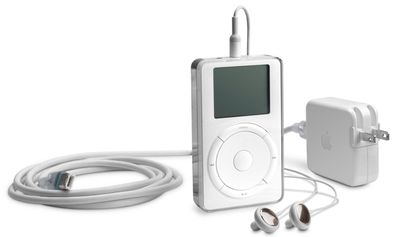
ipod-original
Apple argued that the iTunes update in question was done mainly to improve the iTunes service rather shut down third-party music services, a point that the jury agreed with.

Delivering a unanimous verdict today, the group said Apple's iTunes 7.0, released in the fall of 2006, was a "genuine product improvement," meaning that new features (though importantly increased security) were good for consumers. Plaintiffs in the case unsuccessfully argued that those features not only thwarted competition, but also made Apple's products less useful since customers could not as easily use purchased music or jukebox software from other companies with the iPod.

During the trial, Apple also explained that its DRM efforts and the blocking of competing music services was done at the behest of record companies. According to Apple, its iTunes updates were designed to preserve deals and protect consumers from hackers and malicious content.

Apple executives like iTunes chief Eddy Cue and head of marketing Phil Schiller testified during the trial, and former Apple CEO Steve Jobs also had a large role, in the form of emails and a 2011 videotaped deposition that was shown in court.

The plaintiffs in the trial were asking for damages of $350 million, which could have gone up to $1 billion under antitrust law. Apple's victory means the company will not have to pay out any money at all.
Popular Stories

maxresdefault

Apple Shows Off a Key Reason to Upgrade to the iPhone 17

Saturday February 7, 2026 9:26 am PST by
Apple today shared an ad that shows how the upgraded Center Stage front camera on the latest iPhones improves the process of taking a group selfie. "Watch how the new front facing camera on iPhone 17 Pro takes group selfies that automatically expand and rotate as more people come into frame," says Apple. While the ad is focused on the iPhone 17 Pro and iPhone 17 Pro Max, the regular iPhone...
m5 macbook pro deal

Why You Shouldn't Buy the Next MacBook Pro

Tuesday February 10, 2026 4:27 pm PST by
Apple is planning to launch new MacBook Pro models as soon as early March, but if you can, this is one generation you should skip because there's something much better in the works. We're waiting on 14-inch and 16-inch MacBook Pro models with M5 Pro and M5 Max chips, with few changes other than the processor upgrade. There won't be any tweaks to the design or the display, but later this...
apple wallet drivers license feature iPhone 15 pro

Apple Says These 7 U.S. States Plan to Offer iPhone Driver's Licenses

Monday February 9, 2026 6:24 am PST by
In select U.S. states, residents can add their driver's license or state ID to the Apple Wallet app on the iPhone and Apple Watch, and then use it to display proof of identity or age at select airports and businesses, and in select apps. The feature is currently available in 13 U.S. states and Puerto Rico, and it is expected to launch in at least seven more in the future. To set up the...
iOS 26

Apple Releases iOS 26.3 and iPadOS 26.3

Wednesday February 11, 2026 10:07 am PST by
Apple today released iOS 26.3 and iPadOS 26.3, the latest updates to the iOS 26 and iPadOS 26 operating systems that came out in September. The new software comes almost two months after Apple released iOS 26.2 and iPadOS 26.2. The new software can be downloaded on eligible iPhones and iPads over-the-air by going to Settings > General > Software Update. According to Apple's release notes, ...
Apple Logo Zoomed

Apple Expected to Launch These 10+ Products Over the Coming Months

Tuesday February 10, 2026 6:33 am PST by
It has been a slow start to 2026 for Apple product launches, with only a new AirTag and a special Apple Watch band released so far. We are still waiting for MacBook Pro models with M5 Pro and M5 Max chips, the iPhone 17e, a lower-cost MacBook with an iPhone chip, long-rumored updates to the Apple TV and HomePod mini, and much more. Apple is expected to release/update the following products...

Top Rated Comments

146 months ago
Great news. Sanity prevails. Now we just need some sanity from the appeals court in the e-books case.
Score: 43 Votes (Like | Disagree)
146 months ago
Here is to hoping that Apple can get their lawyer fees back. That should provide some disincentive to sue in future
Score: 37 Votes (Like | Disagree)
Patriot24 Avatar
146 months ago
Imagine the precedence that would have been set had the plaintiffs won this case. Every tech company for the rest of time would be open to litigation for just about any security enhancement that also limited interoperability with third party systems and equipment.

Sanity prevails, indeed.
Score: 24 Votes (Like | Disagree)
146 months ago
The current class action lawsuit is prominent in the news because it’s sensational, featuring a videotaped deposition by Steve Jobs, who has been dead for 3 years or so. Here's the real story >>

The plaintiffs allege anti-competitive behavior by Apple. In the 2006 - 2008 period, Apple’s software prevented copying iTunes music content from the iPod to a 2nd computer, if the iPod had been already been connected (and backed up) to another computer via iTunes. If a user attempted to connect to a 2nd computer, a message appeared stating, “ … this device (iPod) was already associated with a computer … to connect with another computer, you must erase all content - click OK to continue …”. And the content was then erased. Oops!

Did this represent Apple’s attempt to prevent competing music on its devices, or other anticompetitive behavior? No - what really happened was that Apple had been told by the music industry (RIAA) to cease/desist rampant music piracy (copying to multiple devices). The RIAA was paranoid and considered the iPod to be the ultimate piracy device, with a huge 160 GB disk drive, allowing users to copy music to all their friends in an unlimited way. RIAA demanded that Apple remedy this by installing a method to prevent copying to more than one device.

Which Apple did - it had no choice. Given the nature of Apple’s business development and the nature of distributing massive software updates, the correction (software update to iPods and the iTunes software to satisfy the RIAA) was a bit clumsy. iTunes was modified so that the iPod could copy songs to only one computer, as demanded by the RIAA, and not to a 2nd computer. In certain situations (a customer bought a 2nd computer due to computer crash, or whatever), this resulted in inconvenience, or maybe the customer “lost” his music because it was erased when the iPod connected to a 2nd computer and had not been backed up properly. Predictably, some sued, and the lawsuit is still playing out. And this is all due to legal issues and the RIAA, not Apple’s anticompetitive behavior.

My take is that it represents predictable growing pains at the intersection of two huge industries - music and mobile/computer technology - in a period of rapid and disruptive change, complicated by the legal system. For sure, Apple wanted to change the way music was distributed and wrestle away the viselike grip that the big music distributors had on the music content providers and artists. This was embraced by customers - note that CD sales are way down, now that most people now buy music by software download or by paid streaming services instead of by CD purchases. Or cassette tapes or vinyl records, for that matter. To continue this rapid change theme, Apple’s iTunes music sales subsequently peaked and then declined as competitors entered the picture with another disruptive technology - streaming music: Beats Music, Google Play, iTunes, Pandora, Rdio, Spotify. Far from monopolizing all music sales, Apple’s actions to popularize online digital music distribution ultimately opened music distribution to many competitors, and Apple is playing catch-up with its purchase of Beats Music. In fact, Spotify is winning, not Apple, at the moment. Customers are getting all the music they want (and only what they want!) at lower prices. The old music distributors are fading away since they offer no value. And it’s harder for artists to command exorbitant fees, since it’s easier for newer (and lesser-paid) artists to enter the digital distribution scheme (at least in some cases, not all).

If you think about it, this lawsuit is a moot issue. Old news, now passed by by even newer technology and new competition. But the lawyers still want their millions, while allegedly “affected” customers each get 50 cents or so.

It's gratifying to see the jury side with Apple, not the class action lawyers, on this one.

Here is a link to more info if you are interested. It’s a video podcast by Leo Laporte. This issue starts at 2:50, goes for 4 minutes or so.
http://techguylabs.com/episodes/1141
Score: 15 Votes (Like | Disagree)
146 months ago
What a waste of time

Score: 14 Votes (Like | Disagree)
146 months ago
I wonder if the lawyers will try to "settle" to get paid, i.e., promise not to appeal if apple kicks some $$ their way.

I know this is the cost of doing business, but in my opinion the lawyers should have to pay Apple for a frivolous lawsuit. Think of all the effort Apple had to put into their defense. If the plaintiff's won, Apple would have been forced to pay lawyer fee's. It should go both ways.
Score: 10 Votes (Like | Disagree)