During Apple's Q1 2011 Financial Results conference call, Apple revealed that they had made long term commitments with three companies in the amount of $3.9 billion. When questioned about the exact component, Tim Cook declined to answer citing competitive reasons.
During the opening statements, however, Peter Oppenheimer revealed that the agreements began in the September and December quarters:
"During the September and December quarters, we executed long-term supply agreements with three vendors through which we expect to spend a total of approximately $3.9 billion in inventory component prepayment and capital expenditures over a two-year period. We made approximately $650 million in payments under these agreements in the December quarter, and anticipate making $1.05 billion in payments in the March quarter"
Looking back at the previous quarters, it seems to us that Apple is likely securing LCD supplies from various vendors for the years to come.
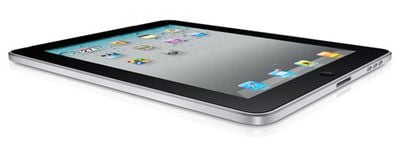
When the iPad originally launched, the supplies were initially constrained specifically due to limited production of its LCD displays. Apple's supplier for the original iPad's display was LG. In July, LG's CEO Kwon Young-soo told reporters that they were simply unable to meet the production demands for the iPad:
"Demand (from Apple) keeps growing and we can't meet it all. Apple may have to delay launches of the iPad for some countries due to tight component supplies and strong demand. We are considering increasing production lines for iPad products but overall supply is likely to remain tight until early next year."
That experience alone would likely have incentivized Apple to explore more reliable supplies of LCD displays for their growing iOS portfolio.
In December, we heard two separate reports that Apple was investing $1.2 billion with Toshiba and Sharp separately. The rapid-fire sequence of the reports made us question that one might have been a mistake, especially since Toshiba actively denied the claim. But, in retrospect, one or even both of the reports seem to have been true. The Sharp rumor reported that Sharp would be spending 100 billion yen ($1.2 billion) to build production lines for "small to midsize LCDs, with Apple Inc slated to purchase bulk of the output for its iPhone". While the iPhone might be a target for the small LCDs, the reports description of "midsize" LCDs seems more appropriate for the iPad.
Apple was said to be shouldering the bulk of the investment and will buy up most of the panels that Sharp produces. The factory would not begin production, however, until 2012. Meanwhile, the Toshiba plant was rumored to be ready for production in late 2011.
Meanwhile, Hon Hai / Foxconn is said (video embedded above) to be considering a $1.2 billion investment in Hitachi's LCD arm to build a new factory in Japan that will begin operating in 2012. While Apple is not known to be involved in this deal specifically, Foxconn is one of the biggest manufacturers of the Apple iPhone and iPad and is expected to start supplying LCDs for Apple's iPad in 2011 through its Chimei Innolux subsidiary. Interestingly, despite Toshiba's previous denials, this news report says that Toshiba is indeed building a new LCD plant in 2011 which is set to supply Apple.
The latest reports peg Apple's 2011 iPad display orders at 65 million units (up from 15 million in 2010), showing that Apple will need an enormous supply of displays as the iPad's market continues to grow. It also suggests that Sharp and Toshiba may have been two of the three target companies for Apple's massive $3.9 billion long term investment.