Apple Leads Top Brands for China Smartphone Growth as Market Declines - MacRumors
Skip to Content

Apple Leads Top Brands for China Smartphone Growth as Market Declines

China's smartphone shipments fell 4% year over year in the first quarter of 2026, according to data from Counterpoint Research, with Apple delivering the strongest growth among the top six brands.
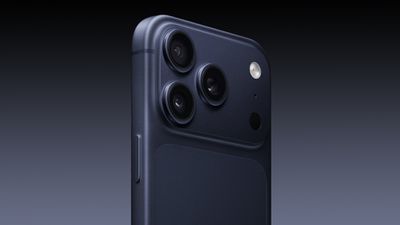
iphone 17 pro dark blue 1

Counterpoint's Market Monitor Tracker attributed the decline primarily to a high base effect from last year's government subsidy program and rising component costs. Counterpoint noted that February's Lunar New Year promotions provided a slight boost, but said the "magnitude of these discounts was hampered by a sharp increase in memory costs." Rising costs are already driving up retail prices on both new and used devices, and the pressure is expected to continue through the second quarter.

Apple rose to second place in the market with shipments up 20% year over year, driven by strong iPhone 17 series demand, promotional price cuts, and government subsidies. Counterpoint says Apple is best positioned among manufacturers to navigate the ongoing global memory crunch, supported by its premium product portfolio and supply chain management. The firm expects Apple to absorb rising costs internally in the near-to-medium term and expand its market share as a result. The first quarter result extends a strong run for Apple in China; the company reclaimed the top spot in the country in the fourth quarter of 2025 with shipments up 28% year over year, and recorded a 23% sales increase in the first nine weeks of 2026.

Huawei led with a 20% market share, its highest since the fourth quarter of 2020, with shipments up 2% year over year, aided by domestic supplier relationships that cushion the impact of rising memory costs. OPPO ranked third following the reintegration of realme, with OnePlus rising 53% year over year on the Ace 6 and Turbo 6 series, though OPPO's decision to raise prices on older models in March has weighed on demand. vivo grew 2% year over year on mid-to-low-end strength, while Xiaomi was the sharpest decliner, falling 35% year over year as its core models underperformed the previous generation.

Counterpoint warned that manufacturers broadly face a "double hit" of shrinking shipments and thinning margins, and forecast that China smartphone shipments will decline 9% for the full year. Apple, by contrast, is expected to use the cost pressure to its advantage, absorbing memory price increases internally while rivals are forced to raise prices and cede ground.

Popular Stories

apple silicon feature joeblue

Senators Demand Apple Commit to Not Buying Chinese Memory Chips

Thursday July 30, 2026 12:28 pm PDT by
U.S. Senator Chuck Schumer has teamed up with several of his Senate colleagues to demand Apple commit to not purchasing chips from Chinese companies ChangXin Memory Technologies (CXMT) or Yangtze Memory Technologies Co. (YMTC). [PDF] With memory shortages causing Apple to raise the prices of Macs and iPads, the company has been talking with CXMT and YMTC about a chip deal. The two companies...
Apple Silicon Teal Feature

Apple's Bid to Use Chinese Chipmaker as Leverage Backfires

Thursday August 6, 2026 4:53 am PDT by
Apple's attempt to use Chinese memory maker CXMT as leverage against Samsung Electronics and SK Hynix has backfired, with the two Korean chipmakers ending up with more pricing power rather than less, ml">DigiTimes reports, citing South Korean and Chinese trade press. This year, Apple has explored CXMT and fellow Chinese chipmaker YMTC as potential DRAM suppliers, and had progressed to testing...
Apple Silicon Teal Feature

Apple Testing Chinese Memory Chips in iPhones and MacBooks

Monday August 10, 2026 5:01 am PDT by
Apple has been testing memory chips from China's ChangXin Memory Technologies (CXMT) across product lines including iPhones and MacBooks, according to a report today from The Wall Street Journal ($). Laptop makers HP and Acer have already started using memory chips from CXMT in devices sold outside the U.S. Meanwhile, Apple has held early talks with CXMT about supplying components for...

Top Rated Comments

17 weeks ago
Good for Apple and the iPhone 17 series being excellent iPhones will help the sales throught the year.
Score: 4 Votes (Like | Disagree)
Jaziry Avatar
17 weeks ago
It's really a good thing that Chinese phone makers, say, Xiaomi, pushed their own specs so hard that even Apple decided to gain some upgrade like the 17 Pro thermo design. Competition yes. Now I'm all waiting for the 20th anniversary iPhone.
Score: 3 Votes (Like | Disagree)
sw1tcher Avatar
17 weeks ago

The firm expects Apple to absorb rising costs internally in the near-to-medium term
We should prepare ourselves for a small price increase with the iPhone 18 series. I mean, how long is Apple going to continue absorbing higher memory costs? At some point, they will pass the cost onto their customers.
Score: 2 Votes (Like | Disagree)
17 weeks ago
It’s race to the bottom in china.
Score: 2 Votes (Like | Disagree)
17 weeks ago

The bigger story here is that the Chinese domestic consumer market is faltering. There are multiple news items about declining demand across many sectors in China. Most often the news is about a foreign company seeing shrinking demand in China that is attributed to the company not adapting to the Chinese market. But the declines are everywhere, and not just being felt by foreign companies. Apple was being portrayed as such one company as recently as last year, and yet as we now know, Apple is outperforming the competition in China in a declining smartphone market.

The muted media coverage of the very evident malaise in the Chinese domestic consumer market is odd.
I guess mainstream media are more focused on local economy and international trades, but not local economy in other countries. Chinese media are blatantly covering the low demand and deflation issue here.

Attachment Image
Score: 1 Votes (Like | Disagree)
17 weeks ago

The number of manufacturers does not have much of an effect, if any, on the size of the market or on market demand. People buy phones regardless of how many manufacturers there are.
The problem is that there are so many vendors that they all get into a price war and nobody makes money. The CPP has been trying to shut down this "race to the bottom" dynamic.

The important thing is to see how the luxury brands are doing in China. The narrative over the last few years was "Chinese consumers are starting to prefer domestic brands." The unsaid story was that The People couldn't afford foreign brands anymore, so they went with the cheaper local ones.

Apple's relative success means that the Chinese economy might actually be on the way back up; their sales are from people who didn't upgrade over the last two/three years.
Score: 1 Votes (Like | Disagree)