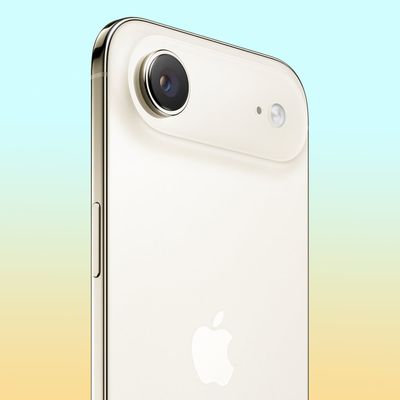
Apple's Custom Image Sensor Could Debut in 20th Anniversary iPhone
Apple could debut LOFIC camera sensor technology in its 2027 iPhone lineup, according to new information coming out of Korea. The tech would allow iPhones to capture photos with far more detail in both bright and dark areas of the same shot without losing information in either.

LOFIC, or Lateral Overflow Integration Capacitor, is a next-generation imaging technology that enables each pixel to store varying amounts of light based on scene brightness. This allows a sensor to capture detail in both bright highlights and dark shadows within a single frame, potentially reaching up to 20 stops of dynamic range – comparable to high-end cinema cameras and approaching the range of human vision.
According to the account name "yeux1122" on the Korean-langauge Naver blog, Chinese manufacturers including Honor, Xiaomi, and Huawei plan to adopt LOFIC technology in their 2026 flagship smartphones using new Sony sensors, while OPPO and Vivo are also developing LOFIC-equipped models for release next year. Apple's adoption will reportedly follow in 2027.
Apple first detailed LOFIC in an image sensor patent filed in July, describing a stacked sensor design with a dedicated light-capture layer and a processing layer that handles real-time noise reduction. Apple has reportedly already developed a working prototype and may be testing it in developmental hardware.
Apple currently uses sensors made by Sony across the iPhone lineup. Those sensors also use a two-layer design, but Apple's proposed version includes several innovative features and takes up less space. Based on the adoption roadmap in today's report, Apple could be planning to debut its custom image sensor in the 20th anniversary iPhone. Apple is reportedly considering a radical redesign for the anniversary model that could feature a completely bezel-less display that curves around all four edges of the device.
Popular Stories
Apple today confirmed to Reuters that it has acquired Q.ai, an Israeli startup that is working on artificial intelligence technology for audio.
Apple paid close to $2 billion for Q.ai, according to sources cited by the Financial Times. That would make this Apple's second-biggest acquisition ever, after it paid $3 billion for the popular headphone and audio brand Beats in 2014.
Q.ai has...
Apple today introduced its first two physical products of 2026: a second-generation AirTag and the Black Unity Connection Braided Solo Loop for the Apple Watch.
Read our coverage of each announcement to learn more:Apple Unveils New AirTag With Longer Range, Louder Speaker, and More
Apple Introduces New Black Unity Apple Watch BandBoth the new AirTag and the Black Unity Connection Braided...
Alongside iOS 26.2.1, Apple today released an updated version of iOS 12 for devices that are still running that operating system update, eight years after the software was first released.
iOS 12.5.8 is available for the iPhone 5s and the iPhone 6, meaning Apple is continuing to support these devices for 13 and 12 years after launch, respectively. The iPhone 5s came out in September 2013,...
Update: Apple Creator Studio is now available.
Apple Creator Studio launches this Wednesday, January 28. The all-in-one subscription provides access to the Final Cut Pro, Logic Pro, Pixelmator Pro, Motion, Compressor, and MainStage apps, with U.S. pricing set at $12.99 per month or $129 per year.
A subscription to Apple Creator Studio also unlocks "intelligent features" and "premium...
On an earnings call with equity analysts today, Apple CEO Tim Cook responded to fast-rising RAM and SSD storage chip prices in the supply chain.
Prices for RAM and NAND storage chips are surging lately due to high demand from companies building out AI servers, resulting in supply constraints.
Cook said that rising memory chip prices had a "minimal impact" on Apple's gross margin in the...