LG Considering Exit From Smartphone Business, Halts LCD Production for iPhone
LG is considering exiting the smartphone business entirely amid declining shipments and accrued losses of $4.5 billion over the past five years (via The Korea Herald).
LG CEO Kwon Bong-Seok cautioned staff earlier today that the company is re-evaluating its presence in the smartphone industry:
Since the competition in the global market for mobile devices is getting fiercer, it is about time for LG to make a cold judgment and the best choice. The company is considering all possible measures, including sale, withdrawal and downsizing of the smartphone business.
He added that regardless of any change, the company will retain its current employees from the smartphone division and reassign them elsewhere.
LG has seen rapidly declining smartphone shipments in recent years, and the company is now believed to hold a market share of just two percent. LG has posted major financial shortfalls in its smartphone segment for 23 consecutive quarters, reaching a total loss of $4.5 billion.
When taking office as CEO in January 2020, Kwon pledged to turn the company's smartphone business around. The CEO's latest comments therefore appear to be an admission of failure to make the segment profitable.
At the same time, LG is reportedly ending its production of LCD displays for the iPhone, according to The Elec. LG Display had previously attempted to supply LCDs for the second-generation iPhone SE, but failed to meet Apple's requirements, leading to Japan Display and Sharp being selected as suppliers instead. LG's factory that previously made the components will be repurposed to manufacture automobile display panels.
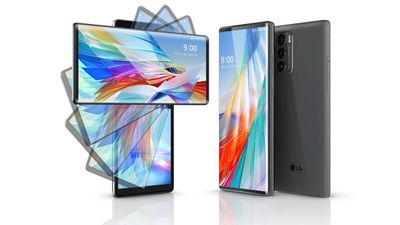
Earlier this month, LG unveiled one of the world's first rollable smartphones at CES, as the company has endeavored to explore unusual designs to lure in customers. The future of this device, and other LG smartphones such as the LG Velvet and LG Wing, are now highly uncertain.

Popular Stories
Apple today confirmed to Reuters that it has acquired Q.ai, an Israeli startup that is working on artificial intelligence technology for audio.
Apple paid close to $2 billion for Q.ai, according to sources cited by the Financial Times. That would make this Apple's second-biggest acquisition ever, after it paid $3 billion for the popular headphone and audio brand Beats in 2014.
Q.ai has...
Apple today introduced its first two physical products of 2026: a second-generation AirTag and the Black Unity Connection Braided Solo Loop for the Apple Watch.
Read our coverage of each announcement to learn more:Apple Unveils New AirTag With Longer Range, Louder Speaker, and More
Apple Introduces New Black Unity Apple Watch BandBoth the new AirTag and the Black Unity Connection Braided...
Alongside iOS 26.2.1, Apple today released an updated version of iOS 12 for devices that are still running that operating system update, eight years after the software was first released.
iOS 12.5.8 is available for the iPhone 5s and the iPhone 6, meaning Apple is continuing to support these devices for 13 and 12 years after launch, respectively. The iPhone 5s came out in September 2013,...
Update: Apple Creator Studio is now available.
Apple Creator Studio launches this Wednesday, January 28. The all-in-one subscription provides access to the Final Cut Pro, Logic Pro, Pixelmator Pro, Motion, Compressor, and MainStage apps, with U.S. pricing set at $12.99 per month or $129 per year.
A subscription to Apple Creator Studio also unlocks "intelligent features" and "premium...
On an earnings call with equity analysts today, Apple CEO Tim Cook responded to fast-rising RAM and SSD storage chip prices in the supply chain.
Prices for RAM and NAND storage chips are surging lately due to high demand from companies building out AI servers, resulting in supply constraints.
Cook said that rising memory chip prices had a "minimal impact" on Apple's gross margin in the...