iPhone Screen Repairs to Get Faster as Apple Moves to Software-Only Calibration Process - MacRumors
Skip to Content

iPhone Screen Repairs to Get Faster as Apple Moves to Software-Only Calibration Process

Apple has announced that its iPhone display calibration process no longer requires specialized hardware, according to an internal service-related document obtained by MacRumors today.

Starting today, Genius Bars and Apple Authorized Service Providers can calibrate the display on a repaired iPhone 6s or newer by simply connecting the device to a Mac mini or MacBook Air running Apple's calibration and diagnostics software, without the need to use a so-called 3D Touch Calibration Fixture.
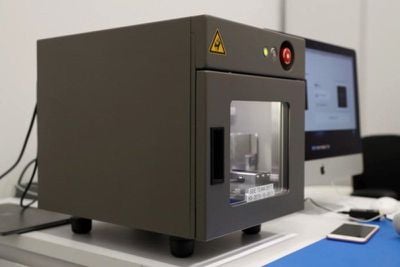
horizonmachine

3D Touch Calibration Fixture via Reuters

Apple says this change will result in three benefits for service providers and customers:

  1. More flexible workspaces for service providers, as the calibration fixture takes up quite a bit of space.

  2. Reduced wait times for customers, suggesting that the software-based calibration process is faster.

  3. Later this year, more Apple Authorized Service Providers around the world will have an opportunity to expand their in-store repair offerings to include iPhone display repairs.

Apple will outline the required steps for service providers to transition from the hardware to the software process later today, according to the internal communication, which was earlier reported by iMore's Rene Ritchie.

Apple Authorized Service Providers with a 3D Touch Calibration Fixture will be required to return the hardware at a later date to be announced.

iPhone display calibration ensures that a replacement display is fully integrated with the device's logic board at the system level. The process has been required since the arrival of Touch ID on the iPhone 5s in 2013, followed by 3D Touch on the iPhone 6s and newer, and Face ID on the iPhone X and newer.

Touch ID and Face ID calibration was already completed in software, and now 3D Touch calibration will be too, completely eliminating the need for hardware. If the display on an iPhone is replaced, but the calibration process is not completed, then Touch ID, Face ID, and/or 3D Touch will not function.

Apple only provided a handful of third-party service providers with its calibration fixture, so this change should result in faster, more flexible, and more widely available iPhone screen repairs in many countries.

Since Apple made Horizon machines available to Authorized Service Providers, there are more AASPs that can provide screen fixes than Apple Stores worldwide, making it quicker and faster for customers to get a screen repair. With change to a software-based calibration process, thousands more AASPs will be able to provide in-store screen fixes without the need to send devices off for repair.
Popular Stories

iPhone Handoff iOS 27 Feature

T-Mobile to Charge $5 a Month for iOS 27 iPhone Handoff

Thursday September 10, 2026 3:58 pm PDT by
T-Mobile will charge customers $5 per month to use iPhone Handoff, an e-SIM feature that allows the same phone number to be used on two separate iPhones. iPhone Handoff requires carrier support, and at launch, only T-Mobile users in the U.S. and Deutsche Telekom users in Germany will be able to use it. T-Mobile says customers can use their number across two compatible iPhone models and...
iOS 27 Feature Dark

Apple Announces iOS 27 Release Date

Wednesday September 9, 2026 10:46 am PDT by
At its event today unveiling the iPhone 18 Pro, AirPods 5, Apple Watch Series 12, and more, Apple announced that iOS 27 will be released later this month. iOS 27 has already been available as a developer beta since June and as a public beta since July, and Apple today said that the update will be released for all users with a compatible iPhone model on Monday, September 14. iOS 27 is...
iphone duo

IMAX Reacts to iPhone Duo's 1:1.4 Aspect Ratio Displays

Friday September 11, 2026 4:42 am PDT by
Production theater company IMAX has responded in a mixed way to Apple's embrace of a 1:1.4 aspect ratio on the iPhone Duo's inner and outer displays. The boxier ratio happens to be very close to the classic "full-frame" IMAX 1.43:1 aspect ratio, which comes from the geometry of the company's original 15-perforation/70mm film system. In response to an X post from someone wondering if we'll see...

Top Rated Comments

AngerDanger Avatar
104 months ago
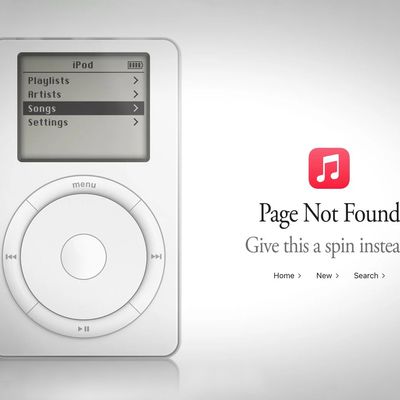
That boxy plastic design looks so familiar…


I knew it!

Attachment Image
Score: 12 Votes (Like | Disagree)
Brookzy Avatar
104 months ago
Something tells me that software-based calibration, no matter how advanced, cannot beat hardware-based calibration.

Unless the hardware steps are now taking place at the factory prior to shipment I’m concerned that displays calibrated with software will be less accurate.
Score: 10 Votes (Like | Disagree)
104 months ago
Starting today, Genius Bars and Apple Authorized Service Providers can calibrate the display on a repaired iPhone 6s or newer by simply connecting the device to a Mac mini or MacBook Air running Apple's calibration and diagnostics software, without the need to use a so-called 3D Touch Calibration Fixture.
Why did they specify the Mac Mini and MacBook Air, the only two Macs left with USB type-A ports? I thought USB-C was the future? ;)
Score: 9 Votes (Like | Disagree)
drewsof07 Avatar
104 months ago
Something tells me that software-based calibration, no matter how advanced, cannot beat hardware-based calibration.

Unless the hardware steps are now taking place at the factory prior to shipment I’m concerned that displays calibrated with software will be less accurate.
"Calibration" is a bit of a misnomer. What they really mean is pairing the replacement parts to the logic board as a means of "security" by preventing non-AASP third party repair.

Score: 6 Votes (Like | Disagree)
104 months ago
What is this "Mac Mini" they speak of? An exciting and mysterious new product not yet available to the public?
Score: 3 Votes (Like | Disagree)
ChrisMoBro Avatar
104 months ago
So they should be cheaper then!
Score: 3 Votes (Like | Disagree)