Apple Reportedly Working Towards Mass Production of Thinner and Brighter Micro-LED Displays - MacRumors
Skip to Content

Apple Reportedly Working Towards Mass Production of Thinner and Brighter Micro-LED Displays

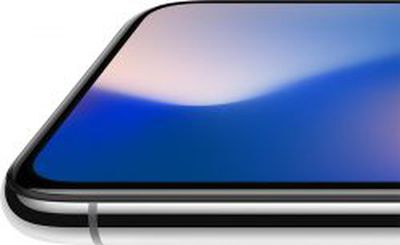
iphone x oledApple is collaborating with its Taiwanese supplier TSMC to solve manufacturing issues preventing volume production of micro-LED display panels, according to DigiTimes.

Apple is reportedly collaborating with Taiwan Semiconductor Manufacturing Company (TSMC) to develop applications based on silicon-based backplanes (silicon wafers) aiming to sidestep the bottleneck that entails with the mass transfer of LED chips, indicated the sources.

Once micro-LED displays can be mass produced both reliably and affordably, the panels could be used in future Apple devices. Apple's use of micro-LED would likely begin in 2019 at the earliest, possibly starting with the Apple Watch, should it choose to proceed with the technology after trial production.

In the meantime, the report claims Apple has downsized its micro-LED research and development team at its laboratory in northern Taiwan.

The downsizing doesn't necessarily mean that Apple has delayed or given up development of the next-generation display technology. In addition to its work with TSMC, it's possible that Apple has shifted the bulk of its micro-LED research back to its headquarters in the United States.

Apple's interest in micro-LED was first reported in late 2015, when it was discovered that the iPhone maker opened a secretive laboratory in Taoyuan, Taiwan to research display technologies like OLED and micro-LED for future devices. OLED is currently used in the Apple Watch and iPhone X.

Apple acquired micro-LED display maker LuxVue Technology in 2014, and some of its employees may be part of Apple's micro-LED research team, in addition to former employees of AU Optronics and Qualcomm subsidiary SolLink.

Micro-LED displays have many of the same advantages as OLED displays have over LCDs, including improved color accuracy, improved contrast ratio, faster response times, and true blacks given both have self-lit pixels, but they can be even thinner, much brighter, and more energy efficient than OLED.

Micro-LED displays also have inorganic gallium nitride-based LEDs, which have a longer lifespan than the organic compound used in OLED displays.
Popular Stories

Oled iPads and MackBook Pro Notch

5 Apple Products to Get OLED Displays

Thursday August 20, 2026 6:50 am PDT by
Apple plans to upgrade several iPads and Macs with OLED displays over the next three years, according to a new DigiTimes report. The following five devices will receive OLED displays between 2026 and 2029, according to the Taiwanese publication's industry sources:iPad mini: 2026 MacBook Pro: Late 2026 or early 2027 iPad Air: 2027 iMac: 2028 or 2029 MacBook Air: 2028 or 2029OLED...
All Screen iPhone 2030 Feature Sans Text

iPhone 18 Pro: Nine Reasons Not to Upgrade This Year

Monday September 7, 2026 5:01 am PDT by
Apple is set to unveil new iPhone 18 Pro and iPhone 18 Pro Max models on Wednesday, September 9, and the devices are expected to feature a design that's largely similar to the iPhone 17 Pro models, with a peppering of enhancements inside. Major changes are not expected until next year, when Apple is expected to introduce a radically redesigned 20th-anniversary iPhone. If you're thinking of...
iPhone 18 Pro Dark Cherry Feature

iPhone 18 Pro Reportedly Starts With 256GB of Storage

Thursday September 3, 2026 9:22 am PDT by
While the iPhone 17 Pro has double the base storage compared to the iPhone 16 Pro, there will apparently be no further increase this year. Taiwanese research firm TrendForce today again reported that the iPhone 18 Pro models will start with 256GB of storage, like the iPhone 17 Pro models. Minimum storage capacities by model:iPhone 16 Pro: 128GB iPhone 17 Pro: 256GB iPhone 18 Pro...

Top Rated Comments

djcerla Avatar
115 months ago
Micro-LED displays have many of the same advantages as OLED displays have over LCDs, including improved color accuracy, improved contrast ratio, faster response times, and true blacks given both have self-lit pixels, but they can be even thinner, much brighter, and more energy efficient than OLED.

And, most importantly, you are no longer in Samsung's hands.
Score: 22 Votes (Like | Disagree)
Blackstick Avatar
115 months ago
They're paying Samsung over $100 per iPhone X... you know they want to get off that bus asap.
Score: 17 Votes (Like | Disagree)
djcerla Avatar
115 months ago
the iPhone X seems to be merely catching up to what the competition offers. .
The iPhone X is the most innovative and high performance Smartphone display that we have ever tested.

http://www.displaymate.com/iPhoneX_ShootOut_1a.htm
Score: 17 Votes (Like | Disagree)
Strelok Avatar
115 months ago
True blacks huh ? Isn't that what say also said about OLED?

One day we will get this right ... Hopefully the shift to U.S will mean no delays..

I say "hopefully" because it doesn't really matter where Apple makes their stuff, they can't escape.
What do you mean said? OLED has true blacks considering the pixels turn off completely.
Score: 15 Votes (Like | Disagree)
KENESS Avatar
115 months ago
Would be nice to see Apple gain a competitive edge with the iPhone display tech again, as the iPhone X seems to be merely catching up to what the competition offers. Regardless, I'll be looking forward to this when I upgrade in 2020...
By most reviews, the iPhone X display surpasses the competition.

On another note, it is hard for Apple to be on the bleeding edge of technological advances, for certain types of advances, because of the volume they need to be able to produce. It's easier to put the latest tech into a product when you will only be making 500k or 1mil of something. (Even those aren't "small" numbers...) But when you look at the iPhone, which can sell 50 million in a single quarter (iPhone 7 is my example here) you can quickly run up against a wall.

So to some degree, the constant complaints about Apple not having the latest tech in the iPhone is not really fair, when NOBODY can produce enough of that whatever it is part at the quantities iPhones require. The technology and the manufacturing issues have to be worked out and more refined before you can go and buy 50-100 million of something. :)
Score: 14 Votes (Like | Disagree)
Mathias Denichi Avatar
115 months ago
Micro-led! Is this a phone for ants?!
Score: 13 Votes (Like | Disagree)