Apple Hit With Class Action Lawsuit for iPhone 5 Wi-Fi Defect That Caused Data Overages
Apple today was hit by a class action lawsuit from iPhone 5 and 5s users on AT&T's network. The lawsuit alleges that the Cupertino company knowingly concealed a defect in the iPhone 5 and 5s that caused the devices to use LTE data even when connected to a Wi-Fi network.
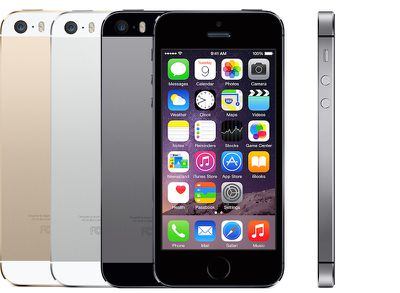
In September 2012, some iPhone 5 users noticed the bug after finding that they were going through more data than usual. Shortly after the issue came to light, Apple and Verizon issued a fix for the bug, with Verizon confirming that users affected by the bug would not be charged for their data use.
However, according to an investigation by law firm Hagens Berman, Apple and AT&T never issued a fix nor did they acknowledge the defect. The firm and plaintiff Thomas Palmer believe that Apple should not have kept the fix from AT&T customers, and that the company failed to address the issue even as it released iOS 7 and the iPhone 5s.
We believe Apple should not have withheld this repair for AT&T Wireless subscribers for any period of time. By withholding this information and repair, consumers were unaware of the defect and were left to sort out high cellular data charges with their wireless carriers.
Specifically, the law firm says the defect occurred when a user streamed "high volumes of data" for 10 to 20 minutes. In this case, the GPU would take over all video decompression, decoding and presentation to the display. Because of this, the CPU was not needed and would go to "sleep" to conserve battery life. When the CPU went to sleep, the defect caused both the iPhone 5 and 5s to switch from streaming data via Wi-Fi to LTE.
Popular Stories
While the iPhone 18 Pro and iPhone 18 Pro Max are not expected to launch for another eight months, there are already plenty of rumors about the devices.
Below, we have recapped 12 features rumored for the iPhone 18 Pro models, as of January 2026:
The same overall design is expected, with 6.3-inch and 6.9-inch display sizes, and a "plateau" housing three rear cameras
Under-screen Face ID...
Apple plans to upgrade the iPad mini, MacBook Pro, iPad Air, iMac, and MacBook Air with OLED displays between 2026 and 2028, according to DigiTimes.
Bloomberg's Mark Gurman previously reported that the iPad mini and MacBook Pro will receive an OLED display as early as this year, but he does not expect the MacBook Air to adopt the technology until 2028 at the earliest.
A new iPad Air is...
Apple today updated its trade-in values for select iPhone, iPad, Mac, and Apple Watch models. Trade-ins can be completed on Apple's website, or at an Apple Store.
The charts below provide an overview of Apple's current and previous trade-in values in the United States, according to the company's website. Most of the values declined slightly, but some of the Mac values increased.
iPhone
...
In select U.S. states, residents can add their driver's license or state ID to the Apple Wallet app on the iPhone and Apple Watch, and then use it to display proof of identity or age at select airports and businesses, and in select apps.
The feature is currently available in 13 U.S. states and Puerto Rico, and it is expected to launch in at least seven more in the future.
To set up the...
iOS 27 is still many months away, but there are already plenty of rumors about new features that will be included in the software update.
The first beta of iOS 27 will be released during WWDC 2026 in June, and the update should be released to all users with a compatible iPhone in September.
Bloomberg's Mark Gurman said that iOS 27 will be similar to Mac OS X Snow Leopard, in the sense...