Apple Ordered to Pay $532.9 Million in iTunes-Related Patent Lawsuit
 A federal jury in Tyler, Texas has ordered Apple to pay $532.9 million to patent licensing firm Smartflash LLC for using its patents without permission, reports Bloomberg. The court found certain iTunes apps to be infringing upon the Texas-based company's patents related to digital rights management, data storage and managing access through payment systems.
Apple argues that Smartflash is exploiting the patent system and plans to appeal the decision.
“Smartflash makes no products, has no employees, creates no jobs, has no U.S. presence, and is exploiting our patent system to seek royalties for technology Apple invented,” said Kristin Huguet, an Apple spokeswoman. “We refused to pay off this company for the ideas our employees spent years innovating and unfortunately we have been left with no choice but to take this fight up through the court system.”
Smartflash was originally seeking $852 million in damages from Apple for infringing three patents, claiming that it was entitled to a percentage of sales of Apple products used to access iTunes, such as iPhones, iPads and Macs. Apple believed that $4.5 million was fair at most, arguing that it was not infringing upon the inventions and that the patents were invalid. Developers Game Circus and KingsIsle Entertainment Inc. were also defendants in the case but were later dismissed from the lawsuit.
“Apple doesn’t respect Smartflash’s inventions,” the company’s lawyer, John Ward of Ward & Smith in Longview, Texas, told the jury. “Not a single witness could be bothered with reviewing the patent.”
Smartflash has also sued Samsung Electronics in a separate lawsuit that is scheduled to begin following the end of this Apple trial. The patent licensing firm also recently filed against Google, which has attempted to move its lawsuit to California, and Amazon in December. This case is Smartflash LLC v. Apple Inc., 13-447, in the U.S. District Court for the District of Texas.
Popular Stories
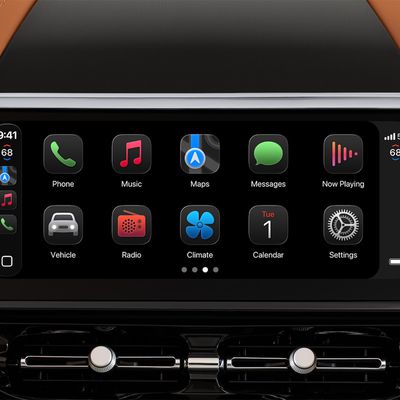
Last year, Apple launched CarPlay Ultra, the long-awaited next-generation version of its CarPlay software system for vehicles. Nearly a year later, CarPlay Ultra is still limited to Aston Martin's latest luxury vehicles, but that should change fairly soon.
In May 2025, Apple said many other vehicle brands planned to offer CarPlay Ultra, including Hyundai, Kia, and Genesis.
CarPlay Ultra...
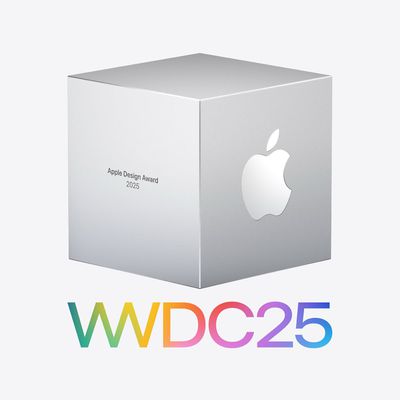
As we wait for WWDC to kick off next Monday, Apple today announced the winners of its annual Apple Design Awards, recognizing apps and games for their innovation, ingenuity, and technical achievement.
The 2025 Apple Design Award winners are listed below, with one app and one game selected per category:
Delight and Fun - CapWords (App) and Balatro (Game)
Innovation - Play (App) and PBJ -...
Apple's iPhone development roadmap runs several years into the future and the company is continually working with suppliers on several successive iPhone models at the same time, which is why we often get rumored features months ahead of launch. The iPhone 18 series is no different, and we already have a good idea of what to expect for the iPhone 18 Pro and iPhone 18 Pro Max.
One thing worth...
Popular Stories
A lawsuit brought against Apple by music streaming app Musi has been dismissed by a federal judge, after she ruled that Apple's developer agreement gives it the right to remove any app from the App Store at any time, "with or without cause."
Launched in 2013 by two Canadian teenagers, Musi was an app that played YouTube videos in a stripped-down interface, showed its own ads (removable for...
Apple's current blood oxygen sensing implementation in the U.S. does not infringe on patents owned by Masimo and Apple will not face a revived import ban, a U.S. International Trade Commission judge said this week (via Reuters).
After Apple was found to have violated Masimo's patents related to blood oxygen sensing, the Apple Watch faced a U.S. import ban that caused Apple to briefly pause...
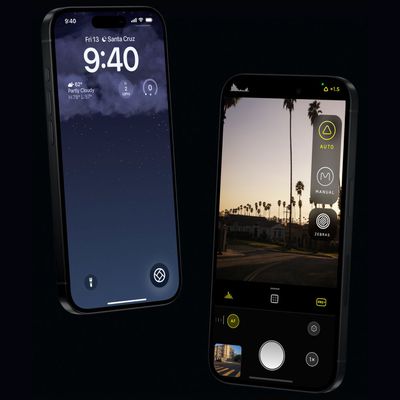
Apple's plans to enhance the iPhone 18 Pro's Camera app led it to consider acquiring Halide, but the talks ultimately collapsed and were followed by a fierce legal dispute between the startup's co-founders, according to The Information reports.
In the summer of 2025, Apple reportedly held discussions to acquire Lux Optics, the developer behind the popular iPhone camera apps Halide, Kino, and ...