German site Apfeltalk.de has posted (via Engadget) screenshots from Safari 4 as well as Apple's preview release of Snow Leopard given to developers at WWDC.
Not surprisingly, since the next version of Mac OS X is being billed as having few new features, there isn't a whole lot to capture in screenshots. "No new features" isn't entirely accurate, of course, as Apple is focusing on underlying performance and stability in Snow Leopard.
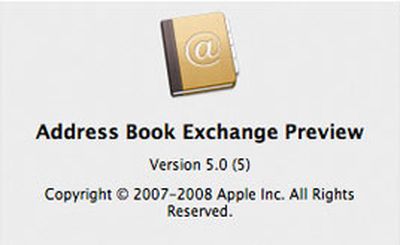
The screenshots, however, do capture the new Address Book with Microsoft Exchange support coming in Snow Leopard. Apfeltalk.de also provides a series of images capturing Safari 4's "Save as Web Application" feature which allows users to save specific web pages as "Site Specific Browsers". This allows users to save specific websites as self-contained applications that can be launched independently of Safari. Fluid is a 3rd party application that provides similar functionality on current versions of Mac OS X and Safari.
PC manufacturers have recently introduced a number of new ultra-thin laptops that share a similar profile to Apple's MacBook Air. The HP Voodoo Envy edges out the MacBook Air with a slightly smaller (0.7 vs .76 inches) maximum thickness and uses the same custom Intel processors (SP7700 and SP7500) that were designed specifically for Apple.
CNet reminds us that this custom processor is based on Intel's older Merom (65-nm) chip design. An Intel representative confirmed to CNet that a 45-nm Penryn/Montevina version of the chip is expected to be introduced later this year. That chip will be suitable for use in a future version of the MacBook Air. According to Wikipedia, the next version of this "SP" line of chips come in at 2.26GHz and 2.4GHz but with a slightly higher power consumption (25 watts vs 20 watts).
The MacBook Air was introduced at Macworld San Francisco 2008 and currently ships at 1.6GHz and 1.8GHz processor speeds.
Update: Several readers note that Apple may choose to take advantage of the improved power-efficiency of the Penryn processor and instead keep the MacBook Air's processor clocked at the same speed. The decreased power usage could extend the battery life of the MacBook Air.
MobileToday.co.uk reports that Apple is actively working with O2 to allow customers to buy the 3G iPhone and sign up for service at Apple Retail stores in the UK.
With the adoption of the subsidized pricing, iPhone 3G customers will be required to sign up for service at the time of purchasing. MobileToday notes that Apple's retail staff is unfamiliar with the process of signing up customers onto subscription contracts and also have no means to run credit checks. O2 is said to be working closely with Apple to allow them to perform these tasks.
Meanwhile O2 confirmed that "prepay iPhones" are also to be sold at Apple retail, O2 and Carphone warehouse. These unsubsidized prepay iPhones will not require a contract but are expected to cost around 350. The cost for a subsidized iPhone 3G from O2 ranges from free to 99 for the 8GB model and from free to 159 for the 16GB model depending on the service plan chosen. For reference, the original iPhone was priced at 269.
After our story about the AT&T subsidy for the Apple iPhone, it appears there remains an enormous amount of confusion about AT&T's iPhone 3G upgrade policy. We had previously posted a guide based on circulating rumors describing individual eligibility for the $199/$299 iPhone 3G pricing.
The main area of confusion relates to existing AT&T customers who don't currently own an iPhone. Some interpreted Apple's initial announcement of $199/$299 as an absolute price, not subject to qualification. Adding to the confusion is that AT&T sales representatives are giving conflicting information about whether or not individuals need to meet special eligibility requirements.
A recent InformationWeek story provides some official word from AT&T spokesman Mark Siegel. Siegel clarifies once and for all that current AT&T customers using something other than an iPhone will need to qualify to receive the iPhone 3G's subsidized $199/$299 price.
While payment history is one factor, "how long the person has left on the current contract" also weighs into the decision. Siegel refused to provide exact criteria since "there's a whole lot of variables, and [he] would hate to give specific criteria." AT&T's standard upgrade criteria, however, are published online and depends on a combination of how much your monthly bill is and how much time is left on your contract.
Siegel states that an "unsubsidized" price for the iPhone has not yet been determined and AT&T will announce that price sometime before the iPhone 3G goes on sale.
To Summarize:
- iPhone 3G will launch in the U.S. on July 11th - $199 (8GB), $299 (16GB) represents subsidized iPhone 3G prices - If you are currently an iPhone AT&T customer or not currently an AT&T customer, you qualify for the subsidized pricing - If you are currently a non-iPhone AT&T customer, you will be subject to certain qualification criteria. AT&T's "standard" upgrade criteria are posted here but may be subject to change. - If you don't qualify, there will be a higher unsubsidized price for the iPhone 3G which will be announced before July 11th. - Speculation: While rumors have pegged AT&T's subsidy at $325, it seems very unlikely that the unsubsidized price will be this high ($199+$325). Historically, canceling your existing mobile phone contract for the typical $175 early-termination fee would automatically qualify you for any future subsidized phones. As a result, we suspect the unsubsidized pricing will be about the same as the early-termination fee (about $199+$175 for 8GB).
Apple released a new version of Safari for Windows today. Version 3.1.2 is recommended for all Safari Windows users and includes stability improvements and the latest security updates.
Computerworld reports that the new version of Safari for Windows provides a fix for a possible "carpet bomb" issue that was described by Nitesh Dhanjani in May. This exploit alone was considered a nuisance by itself, but combined with other flaws in Windows and Internet Explorer could have resulted in a security risk.
This latest update appears to address this and other security issues for Safari for Windows users.
Barrons reports on a recent analyst note from Oppenheimer which claims that AT&T is discounting the iPhone by $325 to reach its $199 (8GB) and $299 (16GB) prices. This means the actual unsubsidized iPhone cost would be $524 and $624, respectively.
The higher subsidy rate for the iPhone, he says, reflects AT&Ts faith in the iPhones ability to attract new subs and increase ARPU. And he also says it has positive implications for Apple, since it effectively results in a playing field that is tilted in their favor. Rivals must scramble to hit a lower, less profitable price point, he writes.
The analyst also reports that AT&T is paying Apple an additional $100 per phone for iPhones sold in Apple stores for a total commission of $425. No reasoning for this additional commission is given.
Based on this higher-than-standard subsidy, it is believed that Apple's revenue for the iPhone 3G is comparable to the original iPhone where Apple received a portion of the monthly subscriber fees. This agreement has been modified with the iPhone 3G with the substitution of an upfront subsidy rather than a monthly payment.
The large amount of the subsidy introduces some interesting issues for some AT&T customers who are trying to upgrade to the iPhone 3G. Little official information has come out of AT&T or Apple regarding rate plans or eligibility to qualify for the subsidized iPhone price. It seems clear that existing iPhone customers will be able to buy a fully subsidized iPhone 3G, but the answer for current non-iPhone AT&T customers remains murky. Known and rumored information for upgrade eligibility has been consolidated in this guide.
Apple announced today that they had sold over 5 billion songs on iTunes. According to data from the NPD Group, iTunes remains the number one music retailer in the US. iTunes features the largest online music catalog with over eight million songs.
Apple also reveals that customers are buying and renting over 50,000 movies every day making iTunes the most popular online movie store as well. iTunes now houses over 20,000 TV episodes and over 2,000 films including over 350 in high definition.
Apple first reported it had become the number one music retailer in the U.S. in April.
Australian IT reports that Telstra will join Optus and Vodafone in launching the new iPhone 3G in Australia.
Telstra stayed quiet as its rivals wracked up marketing points by standing in the glow of the local iPhone launch, but will now go ahead and sell the device according to people close to the company.
According to their sources, Telstra's introduction will lag behind July 11th introduction and is targeting a July 22th sales date.
A recently published patent application discovered by MacRumors reveals that Apple has been researching more advanced uses of the built in sensors on the iPhone to predict what the user wants to do. The patent application describes various scenarios in which a mobile phone could automatically change its configuration based on built-in sensors.
Apple describes the use of proximity sensors, ambient light detectors, temperature sensors and accelerometers to help determine the current state of the device. Apple has already incorporated basic state detection into the iPhone. When a user holds the current iPhone to their ear, the proximity sensor disables the touch screen to prevent unintentional key presses.
Combined with similar sensors in Bluetooth wireless headsets, Apple proposes some additional possibilities:
- Accelerometer to determine if device is being picked up - Temperature, ambient light, and proximity sensors to determine if device in a pocket - Proximity to see if the phone is held up to your ear or Bluetooth headset is being worn - Audio detection to see if you start talking into Bluetooth headset vs phone
Based on a combination of these situations, the iPhone could change configuration. Examples given include: Turning vibrating ring on when placed in your pocket. Turning off speakerphone when holding the phone to your ear. Routing the call correctly to your wireless headset or your phone depending on which one you are planing on using at that time (based on speaking into, wearing or picking up the appropriate device).
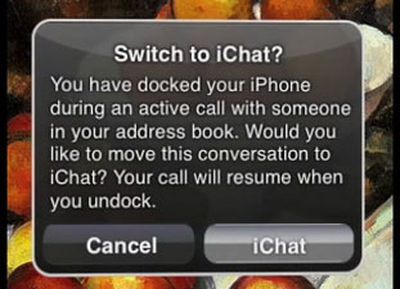
One final intriguing possibility also described is using the docking/undocking of the iPhone to trigger certain events.
Specifically, Apple describes passing off voice over IP (VOIP) calls from the computer to the phone and back again. With the phone docked, the user could answer the phone using their computer's speaker and microphone, and then automatically pass this call over to the phone when it is removed from the dock. This passing-off of phone calls between the iPhone and iChat was previously depicted in a concept iPhone video (at 14m 15s) by Abilene Christian University.
The National Post claims that Rogers Communications will be instituting changes to their mobile phone plans in the next two weeks in preparation for the iPhone launch. Rogers has traditionally charged significantly more for data plans than mobile carriers in the U.S.
"There's a recognition on the part of Rogers that the world has changed," Mr. Mohamed said. "We'll be changing our prices to reflect that."
Today, an unconfirmed data sheet was posted to ehMac.ca (via Electronista) claiming to be leaked plans from Rogers. If the specs are to be believed, Rogers is planning on introducing data plans comparable to AT&T data plan pricing.
Specifically, Rogers is rumored to be offering $30 unlimited data plans for consumers, and $45 unlimited data plans for enterprise. Customers, however, will have to sign 3-year agreements. The remainder of details are very similar to leaked AT&T records. We should note that this data has been unverified and could simply represent a hoax, and there are some doubts in the original discussion thread.
Macworld reports that the MLB At Bat application that was demoed at WWDC last week will be sold on the App Store for $4.99.
The application allows baseball fans to get live scores and watch video highlights while the game is still going on.
Our goal is to be on any device a baseball fan carries, MLB Advanced Media VP of Corporate Communications Matthew Gould told me in an interview Wednesday.
The $4.99 pricing, however, is only guaranteed to get you MLB content for the rest of this season. The app may be season specific according to comments by Macworld, though it appears these details have not yet been established.
Making the rounds today is a rather useless survey which claims that 91% of Japanese will not buy the 'iPhone'. While I may have a personal bias against online surveys and their overreaching conclusions, this one is particularly unhelpful.
Much of the online press are describing this as a negative story, suggesting that 91% of the Japanese not being interested in the iPhone is a disappointing statistic. AlleyInsider spins it only slightly more appropriately, reporting that an impressive 9% of all Japanese are going to buy an iPhone. 9% of the Japanese population represents 11 million people, suggesting that Japan alone could be responsible for Apple's entire 10 million target mark this year.
Of course, neither conclusion is valid since it's not clear from the report how participants had been selected, making it impossible to generalize to the entire Japanese population.
Another disappointing aspect of the survey is that it was conducted before the iPhone 3G was officially announced, which means answers were based on knowledge and pricing of the original iPhone which has never been available for sale in Japan.
That being said, it's not a foregone conclusion that the iPhone will see success in Japan. Wired explored the dramatically different market mobile market found in Japan:
Japan is a culture of spec sheets. When consumers go to electronics stores to buy a cellphone, they frequently line up the specifications side by side to compare them before deciding which one to buy.
Though, it appears that many customers only use a very small percentage of features in their mobile phones in Japan. It remains to be seen if the interface and relative simplicity of the iPhone will be able to win significant marketshare in Japan.
MercuryNews reports on how the iPhone and upcoming App Store are attracting many developers to Apple's mobile platform. Loopt's cofounder, Sam Altman, describes how he's seen an excitement amongst mobile developers:
"People who said they'd never start a mobile (applications) company because they didn't want to rely on the carriers are now starting companies focused only on the iPhone."
The existence of stable development tools, relatively favorable sales percentages, and streamlined application delivery are cited as the most attractive features of the iPhone platform. No other mobile platforms provide as integrated a solution as the App Store to distribute applications directly to the customer. Despite some vocal concerns about the 70%/30% developer/Apple split on App sales, other carriers are said to take up to 60% of revenue on other platforms. One analyst projects that the App store could create a $1 billion-plus iPhone ecosystem by the end of 2009.
Of interest, Apple based the iPhone software development kit (SDK) around the existing Mac development tools. This common toolset has even led some to suggest that these new iPhone developers may also begin developing for the Mac.
Mozilla announced the launch of the Firefox 3 web browser today. Firefox 3 is said to incorporate over 15,000 improvements and claims to be over two to three times faster than its predecessor.
Were really proud of Firefox 3 and it just shows what a committed, energized global community can do when they work together, said John Lilly, CEO of Mozilla.
Firefox 3 offers enhancements to its user interface, increased performance, security and customization. Top new features listed include:
Growing threads on both MacRumors and Apple's discussion forums are reporting intermittent vertical striping with current generation 15" MacBook Pros.
MacRumors reader-submitted photos of the issue
According to affected users, the striping appears to occur when the display is changing brightness, often when waking from sleep or powering up or taking pictures with Photo Booth. To temporarily resolve the issue, users have shut and re-opened the lid or used the ctrl-shift-eject keyboard combination to reset the LCD.
This particular issue has been documented by several sites over the past several months, however Apple has yet to respond in any formal manner.
During Adobe's quarterly conference call last night, Adobe CEO Shantanu Narayen confirmed that the company was working on a version of Flash for the iPhone.
With respect to the iPhone, we are working on it. We have a version thats working on the emulation. This is still on the computer and you know, we have to continue to move it from a test environment onto the device and continue to make it work. So we are pleased with the internal progress that weve made to date.
Apple has been working on a JavaScript framework called SproutCore that would reduce, but not necessarily eliminate, web application dependence on Flash.
The Khronos Group, a member-funded consortium focused on establishing open standard application programming interfaces (APIs), has announced the formation of the "Compute Working Group" to focus on open standards for parallel computing across graphics processing units (GPUs) and CPUs. Apple, AMD (ATI) and Nvidia are amongst the initial members.
The group will specifically evaluate and establish Apple's proposed Open Computing Language (OpenCL) specification. OpenCL aims "to enable any application to tap into the vast gigaflops of GPU and CPU resources through an approachable C-based language." The press release gives us a broader overview of what OpenCL is trying to accomplish:
A widely available open-standard compute programming specification with high-performance, general computation support and robust numerics will complement existing solutions and further liberate GPU-based compute power from the realm of graphics-only applications and provide a multi-vendor, portable interface for coordinating all the many-core GPUs and multi-core CPUs within a system. Such capability will have broad applicability - including a central role in the Khronos API ecosystem by providing a powerful compute front-end to OpenGL and OpenGL ES, and a platform for accelerating tasks such as physics and image processing / recognition.
The Khronos Group is also responsible for OpenGL and OpenGL ES standards as well as many others.
At WWDC, Apple first announced its plans to introduce performance enhancing technologies into their next version of Mac OS X (Snow Leopard). The technologies included "Grand Central" and "OpenCL" which promise to improve computer performance by taking advantage of modern multi-core processors as well as the GPUs found on modern video cards.
According to the president of the Khronos group, this technology could be used in both desktop and handheld devices in the future.
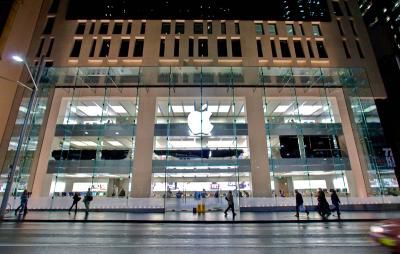
Apple recently took the wraps off their first Apple Retail store in Australia and officially announced the date and time for the grand opening. The Sydney, Australia store will have its grand opening on Thursday, June 19th, 2008 from 5 p.m. to 9 p.m. This means the store will be open in time for the Australian launch of the iPhone 3G on July 11th.
Located at 77 King Street, the three story building is expected to have about 1335 square meters of floor space. Two other Apple Stores are expected to follow: one in Melbourne, and another in Sydney.
Apple's first foldable iPhone, with a book-style design featuring a ~5.5-inch outer display and a ~7.8-inch inner display with a minimal crease down the middle.