Much Brighter iPhone Display Still Years Away, Leaker Suggests - MacRumors
Skip to Content

Much Brighter iPhone Display Still Years Away, Leaker Suggests

Chinese leaker "Instant Digital" today said the iPhone 18 Pro will not feature dual-layer OLED technology, adding that Apple's current thermal management approach remains a limiting factor for sustained outdoor brightness on Pro iPhones.
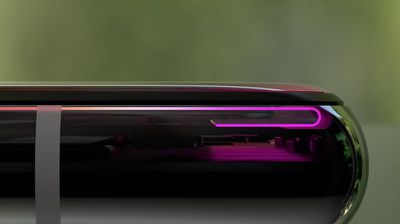
iphone x flexible oled display
In a new post on Weibo, Instant Digital commented on a question about when dual-layer OLED would arrive on iPhone, saying simply: "In any case, the 18 Pro definitely won't have it." The leaker had earlier this week reflected on last year's predictions, noting that the iPhone 17 Pro made little meaningful progress in maintaining peak brightness levels outdoors. Instant Digital suggested that without a change to Apple's thermal throttling strategy, dual-layer OLED is the only path to a significant real-world brightness improvement.

The assessment aligns with what has been rumored elsewhere. A report from last August indicated that Apple has set a two-year production plan for tandem OLED to be adapted for the iPhone, but that Apple had yet to decide whether to develop the panels with Samsung Display or LG Display, pointing to an arrival no earlier than sometime after 2028.

The report also noted that the variant Apple is reviewing differs from the full tandem OLED used in the iPad Pro. Rather than stacking two complete RGB layers, Apple is said to be evaluating a "simplified tandem" design that doubles only the blue sub-pixel layer while keeping red and green on a single layer.

For the ‌iPhone 18 Pro‌, the display upgrade on the table is said to be a move to LTPO+ technology. As reported earlier this month, Apple is expected to finalize panel approvals for the ‌iPhone 18 Pro‌ and Pro Max with Samsung Display and LG Display, with China's BOE reportedly closed out of the premium tier due to quality and yield issues with its own LTPO+ technology. The upgrade from the standard LTPO used in the ‌iPhone 17 Pro‌ should improve battery efficiency by enabling finer control of OLED light emission, but it does not address peak brightness or the thermal throttling that limits sustained outdoor luminance.

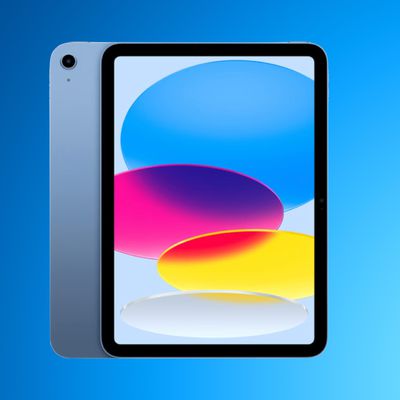
Dual-layer OLED would address both matters. Since each emissive layer operates at lower intensity to achieve a given brightness target, the display generates less heat, reducing the thermal pressure that causes Apple's current panels to throttle under sustained use. The M4 ‌iPad Pro‌ was the first Apple product to adopt the technology. Instant Digital's comments suggest iPhone customers will have to wait considerably longer.
Popular Stories

Foldable iPhone 2023 Feature 1

Foldable iPhone Production Stalls Amid Hinge Issues

Monday May 18, 2026 7:29 am PDT by
Trial production of Apple's long-anticipated foldable iPhone, likely called the "iPhone Ultra," has run into a significant engineering hurdle centered on hinge reliability, according to a known leaker. The leaker known as "Instant Digital" posted on Weibo that the foldable device's hinge is consistently failing to meet Apple's quality control standards under conditions of prolonged,...
iphone 17 pro air

Apple Still Developing Liquid Metal for Future iPhone Pro Frames

Tuesday May 19, 2026 4:13 am PDT by
Apple allegedly wants to switch away from aluminum for future iPhones, with two materials being considered for their greater balance between weight and heat dissipation. Apple introduced titanium to the iPhone with the iPhone 15 Pro and Pro Max back in 2023, with the change even becoming the device's defining tagline. The iPhone 16 Pro models also showcased the material, but while the...
Apple Foldable Thumb

Foldable iPhone May Not Come in Black, Leaker Suggests

Friday June 5, 2026 8:24 am PDT by
Apple has yet to finalize whether its upcoming foldable iPhone will be available in black, according to a questionable new rumor. The Weibo leaker known as "Instant Digital" commented today that Apple "hasn't even decided yet whether the foldable screen will come in black," adding pointedly: "Do they have a vendetta against the color black?" The remark suggests black is at least under...


Top Rated Comments

d-klumpp Avatar
4 weeks ago
Call me old, but iPhone display improvements are increasingly unnoticeable to me.
Score: 13 Votes (Like | Disagree)
4 weeks ago
I'm always adjusting my brightness because auto brightness is worthless on the iPhone!
Score: 8 Votes (Like | Disagree)
4 weeks ago
Seems plenty bright already
Score: 7 Votes (Like | Disagree)
Jamo12 Avatar
4 weeks ago
My iPhone 15 Pro is plenty bright outside. I can see it fine through my transition lenses. So unless you have dark sunglasses, I don’t see much of an issue.
Score: 5 Votes (Like | Disagree)
4 weeks ago

for what? iphones? iphones have been on oled, nothing more to gain
Plenty to gain:

• Longetivity: OLED still suffers from long-term burn-in in ways that LCD and microLED displays do not. MicroLED gets you the deep, perfect blacks of OLED with the longetivity and stability of LCD.

• Efficiency: MicroLED uses less power than OLED.

• Performance: MicroLED is *significantly* brighter than OLED, leading to superior HDR and outdoor performance.

The problem with MicroLED is scaling the manufacturing techniques, and reducing cost. They can’t make enough of them (yet), they can’t make the panels large enough (yet), and they can’t make them at a reasonable cost (yet).

MicroLED remains the holy grail of display technologies that’s always “five years away”, every damn year. 🥲
Score: 3 Votes (Like | Disagree)
Quicksilver867 Avatar
4 weeks ago
I really want to see who is out here thinking the displays aren't bright enough. Are people using these phones on the sun?
Score: 3 Votes (Like | Disagree)