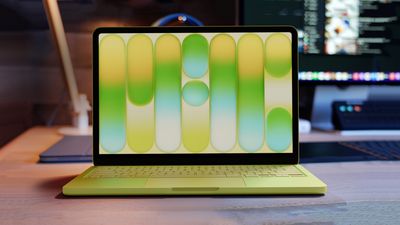
A second-generation MacBook Neo with a touch screen has gone from a yes to a maybe to a no, according to rumors.
In his Power On newsletter today, Bloomberg's Mark Gurman said Apple has yet to decide whether to bring touch-screen support to any Macs beyond the next high-end MacBook Pro, which is expected to be released in late 2026 or early 2027.
A touch screen would slightly increase the cost of making the MacBook Neo, which is priced as low as $499, so the laptop will likely remain without one for years.
In September 2025, Apple analyst Ming-Chi Kuo said the second-generation MacBook Neo "could" include touch support, but last week he said it "may" not happen after all, and now Gurman has completely ruled out the possibility for now.
"I'd be shocked if a touch screen comes to the Neo in the next three years," said Gurman.
Nevertheless, a second-generation MacBook Neo will likely be released next year, according to Kuo. The key upgrade should be the A19 Pro chip with an increased 12GB of RAM, up from the A18 Pro chip with 8GB of RAM in the current model.
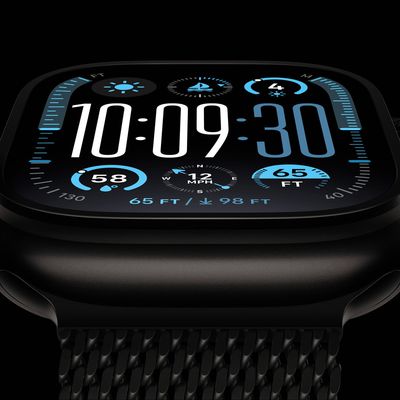
Bloomberg's Mark Gurman today further outlined what to expect from the Apple Watch Series 12 and Apple Watch Ultra 4 set to be unveiled on September 9.
While it was initially rumored that Touch ID may be coming to the Apple Watch this year, Gurman reiterated that he does not expect the Series 12 or Ultra 4 to have any major design changes compared to the current Series 11 and Ultra 3 models.
...
Tuesday September 8, 2026 9:45 pm PDT by Eric Slivka
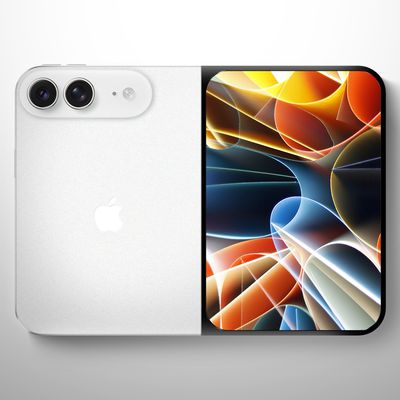
Following some recent speculation that Apple could release its foldable phone under the "iPhone Duo" name, it appears that will indeed be the case, according to Bloomberg's Mark Gurman.
For months now, the foldable iPhone has generally been referred to as the "iPhone Ultra," even internally, but Apple is apparently going in a different direction for the official name, emphasizing the...
Wednesday September 9, 2026 8:47 am PDT by Joe Rossignol
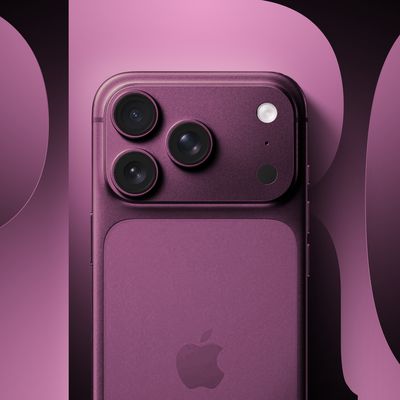
Ahead of Apple's annual iPhone event at 10 a.m. Pacific Time today, Bloomberg's Mark Gurman has leaked all of the color options for the iPhone 18 Pro, iPhone 18 Pro Max, and the first-ever foldable iPhone named the iPhone Duo.
iPhone 18 Pro and iPhone 18 Pro Max color options:Black
Light Blue
Burgundy
Silver
Burgundy has also been described as Dark Red or Dark Cherry.
iPhone Duo...
After decades of availability on windows machines I still do not understand why I’d ever want a touch screen laptop. Like maybe some sort of convertible that could act like a pure tablet as long as the transition was seamless and the device light weight but reaching out to touch the screen when I have more ergonomic access to the keyboard and touxhpad? Why?
The touch screen rumor cycle around the Neo is probably missing the point.
People tend to frame this as a philosophical question to whether Apple is finally willing to admit that touch belongs on the Mac. But the Neo isn’t really a philosophical product. It’s a cost engineered one.
The entire reason the Neo exists at $499–$599 is that Apple is reusing a huge amount of the iPhone silicon ecosystem and keeping the hardware extremely simple. Once you understand that, the touch question becomes much less mysterious.
Adding touch isn’t just “one extra feature.” It means a different display assembly. Higher cost and higher complexity.
And the Neo doesn’t actually need touch to succeed in the segment Apple is targeting.
The machine isn’t competing with iPads. It’s competing with the low end Windows and Chromebook laptops that dominate the $400–$700 retail band. In that market, the differentiator Apple is introducing isn’t touch, it’s Apple Silicon efficiency, build quality, and the macOS ecosystem at a price point where Macs historically didn’t exist.
So the real question isn’t “why doesn’t the Neo have touch?”
The real question is: What problem would touch solve for this product that Apple currently needs solved?
Until there’s a clear answer to that, the simplest explanation is that Apple will keep the Neo exactly as it is, cheap, simple, and strategically disruptive to the bottom end of the laptop market.
Touch screens make much more sense on higher margin Macs where Apple can absorb the cost without undermining the whole point of the machine.
Isnt this obvious? Why would Apple give a feature to entry level product but not available in upper tier products (unless entire mac lineup would have touch screen feature in next iteration)
This device is using binned leftover chips from the 16 Pro with 1 less GPU core. The SoC was basically free, which is what keeps the price of this laptop down. They won’t switch to a touchscreen until they have so many stocked in a warehouse collecting dust that it is cheaper to use them than to shop for something else.