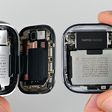
In-Depth iPhone Battery Experiment Pits Slow Charging Against Fast Charging
HTX Studio this week shared the results from a six-month battery test that compared how fast charging and slow charging can affect battery life over time.
Using six iPhone 12 models, the channel set up a system to drain the batteries from five percent and charge them to 100 percent over and over again. Three were fast charged, and three were slow charged.
Another set of iPhones underwent the same test, but with charging initiated at 30 percent and stopped at 80 percent, so the iPhones were always in that range.
Prior to the experiment, the capacity for each phone was tested, and after 500 cycles, the capacity was tested again. The results suggest there is minimal additional battery drain from fast charging, but keeping an iPhone between 30 and 80 percent charge could be minimally beneficial.
HTX Studio concluded that the best way to charge an iPhone is "however you like," without overthinking it and trading mental energy for a tiny bit of battery life. The same video also includes Android tests, and is well worth watching in full for those curious about the effects of fast charging.
Popular Stories
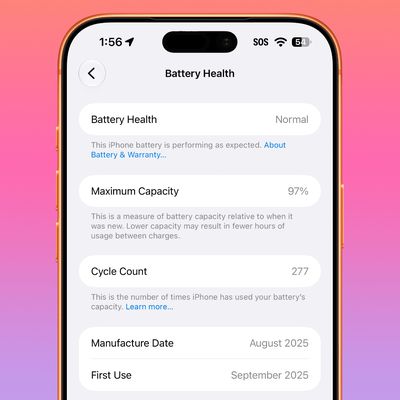
Since 2023, Apple's newer iPhones have had an 80 percent charge limit for those who want to extend battery lifespan. Charging to 80 percent instead of 100 percent is supposed to put less stress on the battery, improving longevity.
For the last three years, I've used that setting on my iPhone. I started with the iPhone 15 Pro Max, then did the iPhone 16 Pro Max, and most recently, the iPhone...
Apple today announced an upcoming product launch that will take place on Tuesday, October 13. We are expecting Apple's announcement to focus on new smart home products, including the long-rumored smart home hub, a new Apple TV 4K, and a refreshed HomePod mini.
Subscribe to the MacRumors YouTube channel for more videos.
The home hub is an all-new device that's like a cross between an iPad and...
Bloomberg's Mark Gurman recently reported that Apple plans to unveil an all-new home hub, a new HomePod mini, and a new Apple TV 4K on Tuesday, October 13, and MacRumors has since learned about another launch slated for later in the month.
Apple is planning to unveil additional new products in the final week of October, according to multiple sources familiar with the matter.
While we do...