2027 iPhone Air Could Debut Power-Saving LTPO3 OLED Display - MacRumors
Skip to Content

2027 iPhone Air Could Debut Power-Saving LTPO3 OLED Display

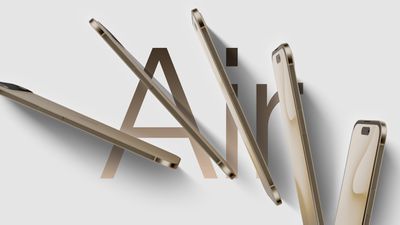
Apple is considering introducing displays that use a lot less battery power in its iPhone lineup starting in 2027, according to a new report from The Elec.
iPhone 17 Air Fanned Feature
According to the Korean-language report, the technology would involve upgrading Apple's current LTPO (low-temperature polycrystalline oxide) OLED displays by incorporating oxide semiconductors in both switching and drive transistors.

Every iPhone screen has millions of tiny switches that control each pixel. Right now, Apple uses two different types of these switches: some are power-efficient but slow, while others are fast but power-hungry.

Apple's current plan has this year's iPhone 17 series using low-temperature polycrystalline oxide (LTPO2) displays across the lineup, which would continue to use a mix of both switch types. But by 2027, Apple might replace more of the power-hungry switches with efficient ones.

The benefit of moving the drive transistors to oxide would be much better battery life when the iPhone screen runs at low refresh rates, such as 1Hz when it's showing the always-on display with just the time and notifications. The downside is that the more efficient oxide switches respond slower, so Apple would somehow have to balance performance with efficiency.

The Elec suggests Apple will likely debut this advanced LTPO technology – sometimes called "LTPO3" – in a 2027 version of the upcoming iPhone 17 Air.

Since thinner phones have less room for big batteries, squeezing every bit of efficiency from the screen is crucial. Therefore, the iPhone Pro models, which are thicker and can fit larger batteries, probably won't get the new display tech right away. In other words, Apple views the power savings as more critical for ultra-thin devices.

Apple has already tested this approach with the Apple Watch Series 10, which uses the more efficient LPTO3 display technology. This has likely given Apple the confidence to scale the technology to iPhone-sized displays.

The report suggests Samsung and LG will manufacture these next-generation displays, though both companies will need to invest in new equipment. LG faces the bigger challenge, since it produces fewer OLED screens overall compared to Samsung.

Apple reportedly plans to make a final decision on adopting the new display architecture for at least one model in its 2027 iPhone lineup by Q3 2025, giving suppliers roughly two years to prepare for potential mass production.


Related Roundup: iPhone Air
Buyer's Guide: iPhone Air (Neutral)

Popular Stories

m4 imac side view

OLED iMac Panel Could Include Extra Layer to Fight Screen Burn-In

Monday August 10, 2026 4:34 am PDT by
LG Display is developing a five-layer OLED panel structure that could end up in a future iMac, with an extra layer added to prevent screen burn-in and increase brightness, reports The Elec. LG Display already builds four-stack OLED panels for high-resolution monitors, and arranges the light-emitting layers in a blue-green-blue-red pattern. The five-stack version reportedly under development...
m3 ipad air mint

iPad Air OLED Panel Orders Could Be Split With BOE in 2027

Tuesday August 11, 2026 4:36 am PDT by
BOE wants a share of the OLED supply chain for Apple's next iPad Air, aiming to land a secondary sourcing role behind primary supplier Samsung Display, according to a report from South Korea's The Elec. Sources cited by The Elec say the Chinese panel maker is building out its iPad Air OLED effort at its B12 fab in Chongqing, home to BOE's sixth-generation OLED production line, ahead of the...
iphone 17 pro sizes camera

Apple Now Stockpiling More Components Amid Rising Prices

Tuesday August 11, 2026 9:00 am PDT by
In response to rising component prices, Apple has extended how long it holds OLED display panels in reserve, according to a report from ETNews, citing industry sources in South Korea. Apple apparently moved from a four-week display supply buffer to six weeks starting in the second quarter of 2026. The move is unusual since Apple has long treated inventory as a cost to be minimized rather...

Top Rated Comments

16 months ago

What do you mean AR interface? Is that augmented reality? Seems like that would be a battery killer.
I think they are trying to crack a joke about liquid glass, but failing.
Liquid glass is not an AR interface, and there’s also still a dark mode
Score: 4 Votes (Like | Disagree)
klasma Avatar
16 months ago

Meanwhile all talks of microoled gone😭 how is it still not affordable even in tiny watch screens?
You mean micro-LED. Micro-OLED is what's on the Vision Pro. Sometimes manufacturing just isn’t economically viable. Some stuff works and some just doesn't, technology isn't magic.
Score: 4 Votes (Like | Disagree)
16 months ago
Surely the Air is just a stop gap product before the Regular and Pro 17s are thin too? I'd bet by 2027/28 this product probably doesn't exist and is subsumed by the other two models.
Score: 3 Votes (Like | Disagree)
Rychiar Avatar
16 months ago
Meanwhile all talks of microoled gone😭 how is it still not affordable even in tiny watch screens?
Score: 3 Votes (Like | Disagree)
16 months ago
Long time away but the Air/slim iPhone might probably need it considering it is not going to have a big battery.
Score: 2 Votes (Like | Disagree)
16 months ago

if apple can keep battery life comparable to the regular iphone, it will sell. Apple has the money — if they really wanted to spice things up and pull ahead of the competition they should bring in silicon carbide batteries and make their phones last longer with a similar form factor.
From the rumors, that's what they've done. The battery is expected to be a high density 2800mAh battery. That is around 15% more efficient than the previous type of battery. Add another 10-15% efficiency improvement from the A19 chip, and you have a capacity roughly equivalent to the standard iPhone 16.
Score: 2 Votes (Like | Disagree)