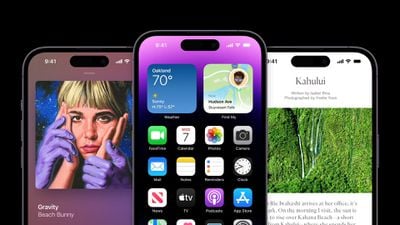
The iPhone 14 Pro features faster 5G speeds on the T-Mobile and Verizon networks in the United States compared to the iPhone 13 Pro, largely thanks to a new 5G modem in the latest iPhones.
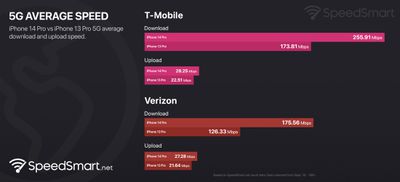
The test by SpeedSmart shows that the iPhone 14 Pro reached average 5G speeds of 255.91 Mbps for downloads on T-Mobile compared to 173.81 Mbps on the iPhone 13 Pro. On Verizon, the iPhone 14 Pro reached average 5G download speeds of 175.56 Mbps versus 126.33 Mbps for last year's iPhone.
The improvements in average 5G speeds on iPhone 14 Pro models are thanks to Qualcomm's Snapdragon X65 modem, offering faster speeds, improved latency, and lower energy consumption.
Saturday April 11, 2026 9:14 am PDT by Joe Rossignol
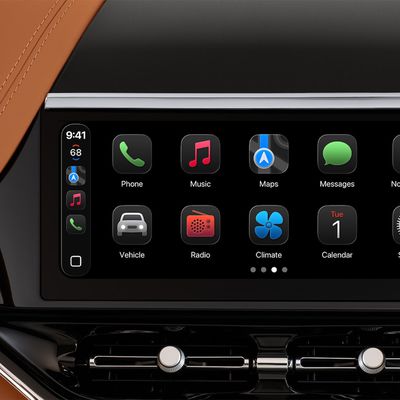
Last year, Apple launched CarPlay Ultra, the long-awaited next-generation version of its CarPlay software system for vehicles. Nearly a year later, CarPlay Ultra is still limited to Aston Martin's latest luxury vehicles, but that should change fairly soon.
In May 2025, Apple said many other vehicle brands planned to offer CarPlay Ultra, including Hyundai, Kia, and Genesis.
CarPlay Ultra...
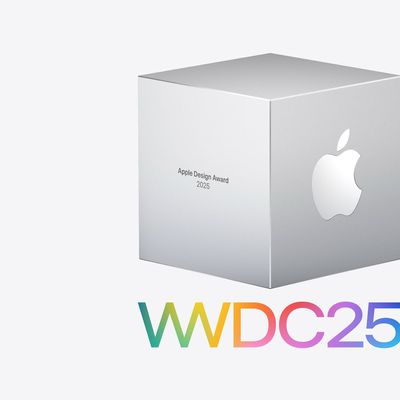
As we wait for WWDC to kick off next Monday, Apple today announced the winners of its annual Apple Design Awards, recognizing apps and games for their innovation, ingenuity, and technical achievement.
The 2025 Apple Design Award winners are listed below, with one app and one game selected per category:
Delight and Fun - CapWords (App) and Balatro (Game)
Innovation - Play (App) and PBJ -...
Saturday April 11, 2026 9:07 am PDT by Joe Rossignol
While the AirPods Max 2 received more attention, Apple also released a second pair of headphones last month: Nike Powerbeats Pro 2.
Nike Powerbeats Pro 2 are the same as the regular Powerbeats Pro 2, except they have a two-tone design consisting of black and Nike's signature Volt neon green-yellow color. The headphones were released on March 20 in the U.S., Canada, Australia, the U.K., and a ...
Saturday April 11, 2026 9:14 am PDT by Joe Rossignol
Last year, Apple launched CarPlay Ultra, the long-awaited next-generation version of its CarPlay software system for vehicles. Nearly a year later, CarPlay Ultra is still limited to Aston Martin's latest luxury vehicles, but that should change fairly soon.
In May 2025, Apple said many other vehicle brands planned to offer CarPlay Ultra, including Hyundai, Kia, and Genesis.
CarPlay Ultra...
As we wait for WWDC to kick off next Monday, Apple today announced the winners of its annual Apple Design Awards, recognizing apps and games for their innovation, ingenuity, and technical achievement.
The 2025 Apple Design Award winners are listed below, with one app and one game selected per category:
Delight and Fun - CapWords (App) and Balatro (Game)
Innovation - Play (App) and PBJ -...
Saturday April 11, 2026 9:07 am PDT by Joe Rossignol
While the AirPods Max 2 received more attention, Apple also released a second pair of headphones last month: Nike Powerbeats Pro 2.
Nike Powerbeats Pro 2 are the same as the regular Powerbeats Pro 2, except they have a two-tone design consisting of black and Nike's signature Volt neon green-yellow color. The headphones were released on March 20 in the U.S., Canada, Australia, the U.K., and a ...
This. It's not like this bump in 5G speeds is gonna suddenly make your browser open up websites 10x faster.
For the vast majority of people, LTE is more than enough and I have no clue why people are so fixated on 5G, when all they do is browse MacRumors and watch YouTube on a phone.
None of us is actually benefiting from this extra speed and this is just another bigger number on paper that will mean next to nothing. Your iPhone isn't a datacenter, it's an iPhone.
We're all benefiting from this extra speed. If there's more bandwidth available, when an area gets crowded you'll still have usable speeds.
So yeah, you might speed test a gigabit and think "wow that's cool but useless" but when there's a big crowd of people in the area, all using their phones, you'll end up speedtesting 50 instead of 0.11. That's what upgrading capacity and bandwidth is all about.
Also it gets ya'll off LTE so us with iPhone 11 series get more speed. ;)
Nothing against getting faster speeds, I just wonder what regular user is actually benefiting from this now. With 2 bars here in Canada, I am getting 350 down, 20 up. LTE had green speeds as well. I don't notice any difference in my usage of loading webpages, the occasional youtube video, streaming music. It all works as well as it did when LTE was the bing thing. I can see commercial applications benefiting from faster speeds, but for regular users it seems like this is a sails gimmick to try and give more value to the 14 when it is basically the same as the 13 with some minor updates.
Nothing against getting faster speeds, I just wonder what regular user is actually benefiting from this now. With 2 bars here in Canada, I am getting 350 down, 20 up. LTE had green speeds as well. I don't notice any difference in my usage of loading webpages, the occasional youtube video, streaming music. It all works as well as it did when LTE was the bing thing. I can see commercial applications benefiting from faster speeds, but for regular users it seems like this is a sails gimmick to try and give more value to the 14 when it is basically the same as the 13 with some minor updates.
It is helpful in areas with spotty coverage when you just have a good signal for a short time. The higher efficiency is one of the main points when battery life is improving. When Qualcomm went from 7nm in the iPhone 12 to 5nm in the iPhone 13 this was a big reason for the better battery life, some would say more than the new Apple SoC which stayed on the same 5nm process node.
When you recognize all these points the effort to build an Apple-modem makes way more sense because the main-chip had enough perfomance for several years and is fully optimized while they see potential to do the same with the modem. I expect iPhones to have a massive increase in battery life some years down the road when Apple ships these modems.
Anyways, I agree with you 100% that an eSIM-only iPhone is objectively inferior to one with a SIM tray. Apple can shove their eSIM BS up their ***es.
Especially when we now know they literally just put a block of plastic in there instead. iPhone 15 better have significant improvements directly attributable to getting that space back.