Apple Expecting High Demand for Upcoming MacBook Pros, Enlists Extra Mini-LED Display Supplier
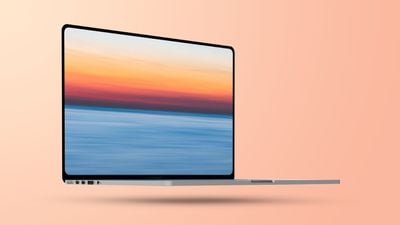
Apple is seemingly preparing for high demand for its upcoming redesigned 14-inch and 16-inch MacBook Pros, and, as a result, has reportedly enlisted a second supplier for its mini-LED displays ahead of their launch.
According to DigiTimes, Apple has added Luxshare Precision Industry as the second supplier for surface mounting technology (SMT) for mini-LED displays. Apple had previously only contracted SMT, or Taiwan Surface Mounting Technology as its supplier for SMT processes in the mini-LED 12.9-inch iPad Pro and the upcoming MacBook Pros.
Apple first introduced a mini-LED display in its high-end 12.9-inch iPad Pro this past April. While the new iPad was announced in April, shipments of the device did not begin until later in May due to high demand and difficult production yield rates. Fueled by a global chip shortage and the continued global health crisis, Apple and its suppliers have faced challenges the past year in maintaining production of new devices.
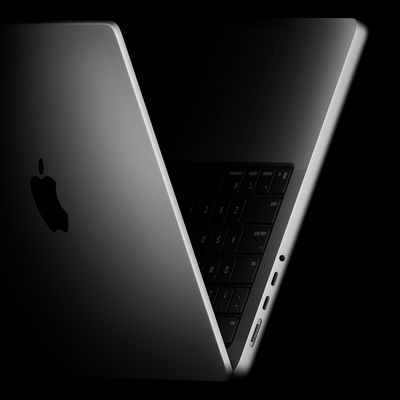
The upcoming MacBook Pros are expected to be in high demand thanks to several long-awaited features and changes. Alongside a more powerful Apple silicon chip, the new MacBook Pros are rumored to include the first major redesign to the MacBook Pro since 2016, including flat-edges, removing the Touch Bar, and additional ports.
DigiTimes says the new MacBook Pros are expected to launch in the fourth quarter of the year, which runs from October through December. The publication previously cited sources claiming an end-of-third-quarter launch for the new models, but early fourth quarter is more in line with industry expectations. Apple last year announced its M1 Apple silicon processor and an updated Mac mini, MacBook Air, and MacBook Pro at a digital event in November.
Popular Stories
While the iPhone 18 Pro and iPhone 18 Pro Max are not expected to launch for more than five more months, there are already plenty of rumors about the devices.

It was initially reported that the iPhone 18 Pro models would have fully under-screen Face ID, with only a front camera visible in the top-left corner of the screen. However, the latest rumors indicate that only one Face ID component...
The all-new MacBook Neo has been such a hit that Apple is facing a "massive dilemma," according to Taiwan-based tech columnist and former Bloomberg reporter Tim Culpan.
In the iPhone 16 Pro models, the A18 Pro chip has a 6-core GPU. During the chip manufacturing process, however, sometimes a CPU or GPU core can turn out to be faulty. Rather than discarding the leftover A18 Pro chips with...
As we wait for WWDC to kick off next Monday, Apple today announced the winners of its annual Apple Design Awards, recognizing apps and games for their innovation, ingenuity, and technical achievement.
The 2025 Apple Design Award winners are listed below, with one app and one game selected per category:
Delight and Fun - CapWords (App) and Balatro (Game)
Innovation - Play (App) and PBJ -...
Popular Stories
The new MacBook Air and MacBook Pro models feature a keyboard change that was easy to miss during Apple's announcements last week.
The new U.S. English keyboard layout
On the U.S. English version of the new MacBook Air and MacBook Pro keyboards, the tab, caps lock, shift, return, and delete keycaps now have glyphs on them. On previous-generation models, these keys are labeled with text...
While the MacBook Neo achieves a breakthrough $599 starting price, that of course comes with some compromises, and one of them is slower SSD speeds.
The Verge today showed the MacBook Neo had up to 8× slower sustained SSD read and write speeds in a benchmark test compared to the new MacBook Pro models with M5 Pro and M5 Max chips. The site did not mention which tool it used to measure SSD...
Apple has updated its battery cycle count support document to include the new MacBook Neo, revealing that the entry-level laptop has a maximum cycle count of 1,000.
A battery cycle is completed when you've discharged an amount equal to 100% of the battery's total capacity, but not necessarily in one go. For example, if you use 60% one day and 40% the next, it still counts as one cycle, even ...