Apple Reportedly Investing Over $300M in New Taiwanese Factory to Produce Mini-LED and Micro-LED Displays - MacRumors
Skip to Content

Apple Reportedly Investing Over $300M in New Taiwanese Factory to Produce Mini-LED and Micro-LED Displays

Apple plans to invest around NT$10 billion (US$334 million) towards the opening of a new factory at the Hsinchu Science Park in Taiwan, according to a Chinese report in the Economic Daily News. English coverage is available at Focus Taiwan.
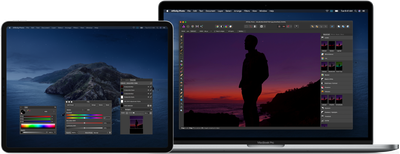
mac ipad pro side by side
The report claims that Apple will use the factory to produce Mini-LED and Micro-LED displays for future devices, in partnership with Taiwan-based suppliers Epistar and AU Optronics. In March, analyst Ming-Chi Kuo said Apple is planning at least six Mini-LED products for release by the end of 2021, including 14-inch and 16-inch MacBook Pro models, an iMac Pro, a 12.9-inch iPad Pro, a 10.2-inch iPad, and a 7.9-inch ‌iPad‌ mini.

Kuo has previously said that Mini-LED backlit displays will allow for thinner and lighter product designs, while offering many of the same benefits of OLED displays used on the latest iPhones, including high contrast and dynamic range.

Apple already has a Mini-LED and Micro-LED research and development facility at the same research park, built in 2014.

Popular Stories

macworld iphone 18 pro colors

iPhone 18 Pro's Four Rumored Colors Revealed, Including 'Dark Cherry'

Friday April 17, 2026 3:50 am PDT by
A source said to be familiar with Apple's supply chain today revealed the color options Apple is planning for the iPhone 18 Pro, iPhone 18 Pro Max, and the upcoming foldable iPhone. Image via Macworld. The information comes from Macworld, which says the signature new color for this year's Pro models will be Dark Cherry, a deep wine-like red. While other sources had previously reported on a...
ipad mini 7 feature red and blue

OLED iPad Mini: Release Date, Pricing, and What to Expect

Wednesday April 15, 2026 8:15 am PDT by
According to the latest rumors, Apple is close to launching its next-generation iPad mini. So what should we expect from the successor to the iPad mini 7 that Apple released over a year ago? Read on to find out. Processor and Performance Apple is working on a next-generation version of the iPad mini (codename J510/J511) that features the A19 Pro chip, according to information found in code...

Apple Event Logo

Apple to Unveil All-New Product Category Later This Year

Thursday April 16, 2026 7:21 am PDT by
Apple is aiming to enter a new product category by unveiling its first pair of smart glasses in late 2026 or early 2027, according to Bloomberg's Mark Gurman. In any case, he expects the glasses to be released at some point next year. Like the Meta Ray-Bans, Gurman said Apple's glasses will have built-in cameras that let users capture photos and videos. He also expects the glasses to have...

Top Rated Comments

78 months ago

care to elaborate?
OLED's downfall is in screen burn in. Phones don't really suffer from this as the small panels generally aren't on for hours at a time. TVs and monitors can suffer when they are on for hours at a time with on screen graphics in the same place all the time - examples include the digital on screen graphics such as the CNN logo or Mac toolbar elements which can relatively quickly burn into the screen.

The cost of OLED panels are prohibitive.

And the O in OLED is organic - which means they will decay over time.

I found a nice primer ('https://medium.com/hd-pro/understanding-oled-qled-mini-led-microled-dont-be-misled-30520b686fcb') out there to bring you up to speed with everything else.

This is why Apple are moving direct to mini LED over OLED with an eye on micro LED when that drops in price.
Score: 11 Votes (Like | Disagree)
78 months ago

OLED was always flawed tech from the very start. I'm trying to avoid it as much as I can. MicroLED is where the future is for now.
So whilst we wait for that I'll take miniLED over OLED any day.
Yup. OLED is really cool tech with major advantages over LCD, but the burn-in is an unavoidable problem. MicroLED has all the advantages of OLED without the burn-in, and I can't wait for it to reach the mass market.
Score: 4 Votes (Like | Disagree)
78 months ago

Isn't OLED better than miniLED? Why aren't they investing in OLED
OLED is, always has been, and always will be garbage. You've been captured by marketing. You can still break free!
Score: 3 Votes (Like | Disagree)
78 months ago

Unless you are talking about panel sizes of 60" and more, that hasn't been true for years. There is a premium compared to LCDs, but the prices are far from "prohibitive".
Just because an OLED TV has a HDMI port in it and you could plug a PC into it doesn't make it a good computer monitor.

Can you name a 'far from prohibitively' priced OLED computer monitor please?

To save you some time I'll name two OLED monitors for you. Dell UltraSharp UP3017UQ ('https://www.anandtech.com/show/11272/dells-ultrasharp-30inch-4k-oled-now-on-sale-up3017q-for-3500') - on launch it cost $3499 and Dell don't seem to sell it any more. Do you want to see an iMac (not even a Pro) start at $5k with i5 and a hard drive in it?

Want one that you can buy now? Alienware AW5520QF - on the Dell UK store it's on sale for £2799. Yeah it's 55 inch and marketed for gamers, but where is the HDR mode?

Too big? OK, Asus PQ22U, a 4k 21.5" display, right? Lovely. Factory calibrated, HDR, 99% of DCI-P3 gamut, and very close to professional grade displays if you only looked at sections of the screen. But the brightness isn't that great on this one - however, crank up the brightness and the burn in chance increases. How much? $4k - or almost £3,900 on Amazon UK. Yeah, I don't see Apple putting that panel into the iMac 21.5"...

I've seen smaller laptop sized panels but read the reviews - tell me how long till you reach the comments about burn-in.

You'll have to look at the definition of prohibitive from a consumer point of view. Imagine the outcry if an OLED iMac screen burns in after 3 years when the rest of the computer could do service for 10? And they've had to pay hundreds (thousands) of extra dollars for the screen? Look at the number of OLED monitors on the market and the cost of them.

Apple aim for a price point and obviously decided that OLED fits the profile for phones and watches and would be unwilling to apply that premium to a computer. Imagine the utter outcry from certain Macrumors denizens if the next iMac came at a $2500 base cost because of an OLED screen despite Apple using power.

Prices are coming down, LCD panels are becoming commodity and it's easy to see why Apple are getting off that particular horse and getting on a more valuable quality proposition - and that proposition is Mini LED and not OLED for iMacs.


You did notice that Apple uses OLEDs in their top-of-the-line iPhones and Apple Watches, didn't you?
Perhaps I needed to clarify the statement to mean monitors for Macs and MacBooks. And OLED may be an acceptable stepping stone for phones and watches that won't last a decade and aren't 'on' for hours - showing a static screen all day. That's the difference that makes OLED acceptable for phones and watches.

Note that iPads have stayed LCD and will be going direct to mini LED rather than ever getting OLED.

OLED colour reproduction may be superior but I doubt the people (like myself) who keep their Macs for the best part of a decade (or indeed the people who buy used machines) would be impressed with OLED panels after any appreciable length of time and used values would plummet even if the machine was in otherwise perfect condition.
Score: 2 Votes (Like | Disagree)
Janichsan Avatar
78 months ago
And the O in OLED is organic - which means they will decay over time.
I somehow sense a fundamental misunderstanding what "organic" means in this context, but okay.

The cost of OLED panels are prohibitive.
Unless you are talking about panel sizes of 60" and more, that hasn't been true for years. There is a premium compared to LCDs, but the prices are far from "prohibitive".

This is why Apple are moving direct to mini LED over OLED ...
You did notice that Apple uses OLEDs in their top-of-the-line iPhones and Apple Watches, didn't you?
Score: 2 Votes (Like | Disagree)
78 months ago
OLED was always flawed tech from the very start. I'm trying to avoid it as much as I can. MicroLED is where the future is for now.
So whilst we wait for that I'll take miniLED over OLED any day.
Score: 2 Votes (Like | Disagree)