Tweaked Apple TV Offers 'Significant' but Nearly Invisible Power Savings With More Efficient Chip Designs
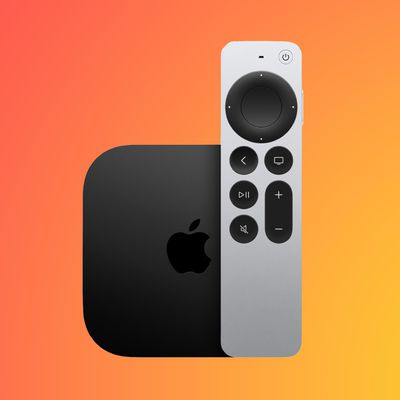
Following Chipworks' examination of the new A5 chip found in Apple's tweaked Apple TV, AnandTech has performed its own analysis of the device. While many of the A5 chip details have already been covered, AnandTech focuses more on the device as a whole, and interestingly finds that the internal changes have yielded a significant decrease in power consumption compared to its predecessor.
The power savings are nothing short of significant. The previous generation Apple TV wasn’t really a power hog, with platform power maxing out at around 1.6W, but the new model tops out at just a watt. Overall the power savings seem to be around 800mW across the board.
With no change to process technology, I can only assume that the reduction in power consumption came from other architectural or silicon optimizations.
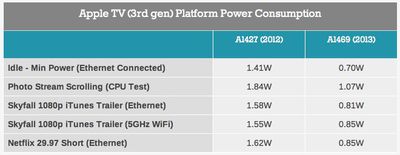
Of course, AnandTech also notes that the power savings are essentially invisible to users given how little power the set-top box used to begin with.
Assuming you’re using the Apple TV for watching video 8 hours a day, every day of the year, you’d save about $0.26 per year on your power bill (assuming $0.11/kWh). You’d break even on the $99 cost of a new Apple TV in about 385 years. Maybe by then we’ll actually have a true replacement to cable TV.
AnandTech also measured Wi-Fi performance on the tweaked Apple TV given that Apple has moved to a new Broadcom Wi-Fi chip and gone back to a one-antenna layout from the two-antenna configuration used in the previous model. Testing revealed that Wi-Fi range and performance is essentially identical between the old and new hardware.
Apple's reasons for introducing a brand-new chip design for the relatively low-volume Apple TV remain unclear, with AnandTech summarizing some of the recent speculation that Apple may be trying to shave costs by stripping out unnecessary components of the A5 or testing the new chip ahead of a broader rollout in other products.
Popular Stories
Apple's iPhone development roadmap runs several years into the future and the company is continually working with suppliers on several successive iPhone models at the same time, which is why we often get rumored features months ahead of launch. The iPhone 18 series is no different, and we already have a good idea of what to expect for the iPhone 18 Pro and iPhone 18 Pro Max.
One thing worth...
According to the latest rumors, Apple is close to launching its next-generation iPad mini. So what should we expect from the successor to the iPad mini 7 that Apple released over a year ago? Read on to find out.
Processor and Performance
Apple is working on a next-generation version of the iPad mini (codename J510/J511) that features the A19 Pro chip, according to information found in code...
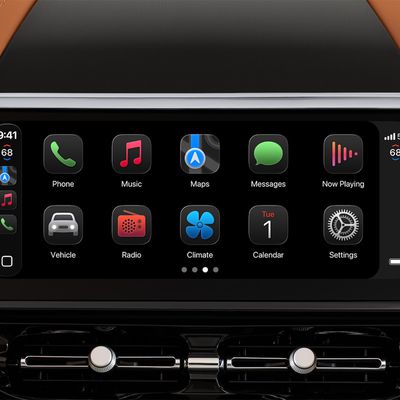
Last year, Apple launched CarPlay Ultra, the long-awaited next-generation version of its CarPlay software system for vehicles. Nearly a year later, CarPlay Ultra is still limited to Aston Martin's latest luxury vehicles, but that should change fairly soon.
In May 2025, Apple said many other vehicle brands planned to offer CarPlay Ultra, including Hyundai, Kia, and Genesis.
CarPlay Ultra...
Popular Stories
Apple this week released tvOS 26.4, and the software update includes a handful of new features and changes for the Apple TV.
tvOS 26.4 is compatible with all Apple TV 4K and Apple TV HD models released since 2015. To update your Apple TV, open the Settings app on the device, navigate to System → Software Updates, and select Update Software.
Below, we have recapped what is new in tvOS...
Apple today seeded the release candidate versions of upcoming watchOS 26.4, tvOS 26.4 and visionOS 26.4 updates for testing purposes. The software comes a week after Apple released the fourth betas. Release candidates are the final updates that will be provided to the public in the near future if no final bugs are discovered.
The software updates are available through the Settings app on...
tvOS 26.4 includes a new Genius Browse section in the Apple TV app, which gives recommendations for TV shows and movies across multiple suggested categories.
Suggestions vary based on your content preferences, and the categories are updated regularly. Some example categories include Upbeat Workplace Comedies, Tense Psychological Thrillers, History Gets Hilarious, Breathtaking Nature Docs,...