Apple Welcomes Kindle Fire Tablet and More Android Fragmentation
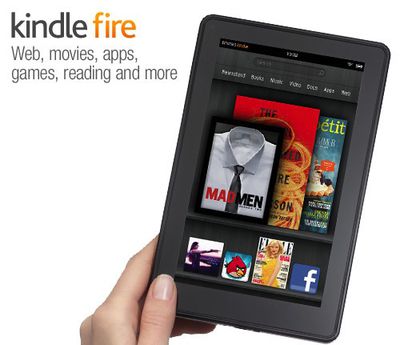
According to the executives, Apple welcomes the entry of the Kindle Fire to the market for its ability to further fragment the Android ecosystem. While the Kindle Fire does utilize Android, it has been heavily modified by Amazon to integrate specifically with Amazon's products and services.
While the pricing at $199 looks disruptive for what seems to be the iPad’s most important rising challenge, the Amazon Fire – it is important to note that it could fuel further fragmentation in the tablet market—given it represents yet another platform. While compatible with Android, the Apps work with Amazon products. The more fragmentation, the better, says Apple, since that could drive more consumers to the stable Apple platform.
Reitzes notes that he believes Apple will eventually lower pricing on the iPad, but will not compromise on quality and customer experience to approach or match its competitors' pricing.Apple and Amazon are approaching the tablet market from opposite perspectives, with Apple achieving significant profitability on the hardware while selling content and services at near break-even prices. Conversely, Amazon is said to be taking a loss on sales of the Kindle Fire, using the device to attract customers into its content and product ecosystem.
Top Rated Comments
(View all)I'd imagine 90% of the people who buy this have no idea it has anything to do with Android.
Only thing is - the fire isn't trying to be the iPad.
And I don't think fragmentation plays into this at all.
The fire is a media consumption device - so as long as there's a good audio/video player + eReading software - most of the people buying it will be content. Sure there will be games and possible issues. But I think Apple is missing the mark on this product. I don't think anyone buying the Kindle is aware what software is on it - nor do they care. It's not the same as with phones where people want to know if they have 2.1, 2.3, etc on it (and to be honest - I think most of the general population doesn't care anyway). I know many people who have never updated their OS from the one that shipped with their phones. And I say that across the board whether they own iPhones or other devices.
Yup. It's a sort of "divide and conquer" observation. Google is clearly going the route that Microsoft went down - and Apple rightly applauds this.
Poor Microsoft, and their 90% OS market share.
And I don't think fragmentation plays into this at all.
The fire is a media consumption device - so as long as there's a good audio/video player + eReading software - most of the people buying it will be content. Sure there will be games and possible issues. But I think Apple is missing the mark on this product. I don't think anyone buying the Kindle is aware what software is on it - nor do they care. It's not the same as with phones where people want to know if they have 2.1, 2.3, etc on it (and to be honest - I think most of the general population doesn't care anyway). I know many people who have never updated their OS from the one that shipped with their phones. And I say that across the board whether they own iPhones or other devices.
At that price, it's not exactly a stretch to say the Kindle Fire is will sell as fast as Amazon can make them, leading to a huge install base. With that I think you'll see a lot of developers taking full advantage of the benefits of known quantities (exactly what makes the iPad so popular, and the apps so 'smooth'). Knowing exactly what screen size/resolution, CPU speed, memory etc they're coding for makes a huge difference.
The Kindle Fire is the best thing to happen for Android in a long time, and the irony is, Google has no control over the product whatsoever.
The Verge has a great article on it.
Oh yeah, because after all, what do people like Cook and Oppenheimer know about this stuff to have any idea what they are talking about?
And bear in mind that it's not as if 'fragmentation of the Android ecosystem' needs public awareness of the details of individual products - at all. It simply requires that the same market be served by increasing variance of products.
I think you should take a deep breath and relax. Then realize that of COURSE Apple is going to take a potshot at the Kindle Fire. Especially since of all products to come out on Android in "tablet" form - the Fire presents probably the biggest competition because it's backed by an ecosystem that can sustain it - and sustain it well.
Should Apple be worried - probably not. The iPad can do a lot more and even with the bigger screen is more enticing. But there's a big audience for the Kindle fire. And the 199 price tag is a sweet spot.
So I'll assert again that I don't think fragmentation has anything to do with this.
[ Read All Comments ]

Accessory maker Moshi has released a new ultra-thin plastic shell protective case for the 11" and 13" MacBook Air models. This type of plastic case tends to be especially popular among...
Blizzard Entertainment said this week that it sold more than 3.5 million copies of Diablo III on launch day, setting the record for fastest-selling PC game. The company also sold 1.2 million copies...
Hard drive maker Seagate has announced it will purchase data storage device maker LaCie for roughly $186 million.
The company plans to buy the controlling stake owned by Philippe Spruch,...
Intuit has upgraded the iOS app for its Mint personal finance tool with two new "most-requested" features that should keep users from ever having to go to the Mint.com website. Until now,...