U.S. Antitrust Committee Likens Tech Companies Including Apple to 'Oil Barons and Railroad Tycoons'

Apple, Facebook, Google, and Amazon have been the subject of an ongoing antitrust investigation conducted by the U.S. House Judiciary Antitrust Subcommittee, which today said the tech companies "have become the kinds of monopolies we last saw in the era of oil barons and railroad tycoons."
appstore
As outlined by CNBC, the subcommittee has released a 450 page report [PDF] highlighting findings from multiple hearings (including one with of the CEOs from each company), interviews, and more than 1.3 million documents, with the report also including recommendations for new antitrust laws.

The recommendations are focused on promoting fair competition in digital markets, strengthening laws related to mergers and monopolization, and restoring vigorous oversight and enforcement of antitrust law.

The committee wants Congress to prohibit dominant platforms from entering adjacent lines of business, encourage antitrust agencies to view mergers by dominant platforms as anticompetitive by default, and prevent dominant platforms from preferencing their own services with a requirement that they offer equal terms for equal products and services.

The subcommittee says that dominant firms should also make their services compatible with competitors and allow users to transfer their data, that "problematic precedents" need to be overridden in antitrust case law, and that forced arbitration clauses and limits on class action lawsuits should be eliminated.

Although these four corporations differ in important ways, studying their business practices has revealed common problems. First, each platform now serves as a gatekeeper over a key channel of distribution. By controlling access to markets, these giants can pick winners and losers throughout our economy. They not only wield tremendous power, but they also abuse it by charging exorbitant fees, imposing oppressive contract terms, and extracting valuable data from the people and businesses that rely on them. Second, each platform uses its gatekeeper position to maintain its market power. By controlling the infrastructure of the digital age, they have surveilled other businesses to identify potential rivals, and have ultimately bought out, copied, or cut off their competitive threats. And, finally, these firms have abused their role as intermediaries to further entrench and expand their dominance. Whether through self-preferencing, predatory pricing, or exclusionary conduct, the dominant platforms have exploited their power in order to become even more dominant.

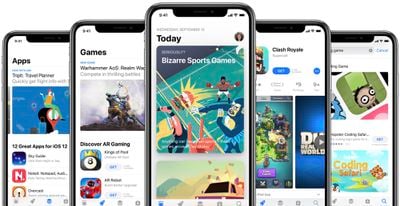
As for Apple specifically, the subcommittee determined that Apple has a monopoly when it comes to the distribution of software apps on iOS devices and that its control over iOS "provides it with gatekeeper power over software distribution on iOS devices."

In contrast, Apple owns the iOS operating system as well as the only means to distribute software on iOS devices. Using its role as operating system provider, Apple prohibits alternatives to the App Store and charges fees and commissions for some categories of apps to reach customers. It responds to attempts to circumvent its fees with removal from the App Store. Because of this policy, developers have no other option than to play by Apple's rules to reach customers who won iOS devices.Owners of iOS devices have no alternative means to install apps on their phones.

The committee cited multiple interviews with App Store developers, including those that have been in major conflicts with Apple, such as the CEO of email app "HEY" and the General Counsel of Tile, along with public disputes with companies like Airbnb and ClassPass, who recently clashed with Apple over fees for digital events during the ongoing public health crisis.

Through interviews and document review, the committee reviewed Apple's 30 percent ‌App Store‌ fees, its control over the ‌App Store‌, the dominant position of its own apps as default apps, ‌App Store‌ search rankings, blocking rival content like parental control apps, ‌App Store‌ guideline enforcement, Apple's decision not to allow other voice assistants to replace Siri as the default, and more, with the data outlined starting on page 329 of the report for those interested.

Much of what was shared was already known through prior reports and coverage of Apple's disputes with various companies, and the recommendation document provides broad recommendations for action rather than recommendations specific to Apple, but Apple could be impacted in a multitude of ways should the recommended antitrust laws be implemented.

Note: Due to the political or social nature of the discussion regarding this topic, the discussion thread is located in our Political News forum. All forum members and site visitors are welcome to read and follow the thread, but posting is limited to forum members with at least 100 posts.

Popular Stories

MacRumors x Bloomberg Banner Cool

Apple Reportedly Plans to Unveil at Least Five New Products Next Week

Sunday February 22, 2026 9:48 am PST by
In his Power On newsletter today, Bloomberg's Mark Gurman said Apple will have a three-day stretch of product announcements from Monday, March 2 through Wednesday, March 4. In total, he expects Apple to introduce "at least five products." Subscribe to the MacRumors YouTube channel for more videos. A week ago, Apple invited selected journalists and content creators to an "Apple Experience" in...
iOS 26

iOS 26.3.1 Update for iPhones Coming Soon as 'Apple Experience' Nears

Sunday February 22, 2026 5:29 pm PST by
Apple's software engineers are testing iOS 26.3.1, according to the MacRumors visitor logs, which have been a reliable indicator of upcoming iOS versions. iOS 26.3.1 should be a minor update that fixes bugs and/or security vulnerabilities, and it will likely be released within the next two weeks. Last month, Apple released iOS 26.2.1 with bug fixes and support for the second-generation...
maxresdefault

iPhone Fold: Launch, Pricing, and What to Expect From Apple's Foldable

Friday February 20, 2026 3:21 am PST by
Apple is expected to launch a new foldable iPhone this year, based on multiple rumors and credible sources. The long-awaited device has been rumored for years now, but signs increasingly suggest that Apple will release its first foldable device in 2026. Subscribe to the MacRumors YouTube channel for more videos. Below, we've collated an updated set of key details that have been leaked about ...
iPhone 18 Pro Deep Red Feature

Apple is Testing These iPhone 18 Pro and Foldable iPhone Colors

Sunday February 22, 2026 8:41 am PST by
The special new color that Apple is considering for the iPhone 18 Pro and iPhone 18 Pro Max this year is red, according to Bloomberg's Mark Gurman. Specifically, he said that Apple is testing a "deep red" finish for the two devices. If this rumor materializes, it would be the first time that the Pro and Pro Max models ever come in red, and the iPhone 18 Pro models would be the first...
Low Cost A18 Pro MacBook Feature Pink

Apple's Low-Cost Colorful MacBook: All the Rumors

Friday February 20, 2026 2:37 pm PST by
Apple has been developing a more affordable version of the MacBook, and it's rumored to be launching in under two weeks. This is going to be one of Apple's most unique Macs, because there hasn't really been anything quite like it before. We've rounded up everything we know about the low-cost MacBook ahead of its March debut. Design Rumors about the MacBook's design make it sound a lot...

Top Rated Comments

70 months ago
And they did not find Google had a monopoly on Ads

Utterly astounding
Score: 35 Votes (Like | Disagree)
GeoStructural Avatar
70 months ago

lol I seriously doubt Apple will allow a third-party App Store.

And Apple has no obligation to open up their platform just, because developers have become greedy. This will cause more harm to the ecosystem than good.
They can be forced to. Apple is not above the law.


Like I’ve said all along: Apple can be the referee or a player in the “game” that is the App Store, but it’s legally difficult if not untenable to be both. Break it up.
You can cause a heart attack to some passionate people in this forum for saying that.

Some fail to understand that it doesn't matter if Apple originated the App Store or manufactured the device, if they want to be in the business they have to do it under commercial law and competitively fair. If they make little XYZ developer sign the developer agreement they cannot allow Amazon (specially giant Amazon) to under the same agreement and market segment pay smaller fees... And then if developer XYZ complains he/she is now greedy, or should just find another Store. No!

Apple here sets the rules, arbitrates, charges you fees, removes your work without consultation and only since a few weeks ago, only recently, they have laid out something equivalent to a formal procedure, before they would just send you an email in which they terminated your license and removed your work. THIS IS WRONG, it does't matter if Apple administrates the Store, they have to do it fairly and protect users and developers alike.
Score: 27 Votes (Like | Disagree)
jayducharme Avatar
70 months ago

first the EU, now this ... concerning that bureaucrats are getting more and more involved in tech ...
What's concerning is that their meddling appears to be without a full understanding of how it all operates. When you have a senator asking how Facebook makes money, that's a big problem. I don't see how any of the services they're citing is a monopoly. If you don't like Amazon, shop online at Walmart or Target. If you don't like Apple computers, get a PC or a Chromebook. If you don't like Google, use Duck Duck Go. If you don't like iPhones, get an Android (or even a Blackberry). There's plenty of choice currently out there.
Score: 21 Votes (Like | Disagree)
PlayUltimate Avatar
70 months ago

lol I seriously doubt Apple will allow a third-party App Store.

And Apple has no obligation to open up their platform just, because developers have become greedy. This will cause more harm to the ecosystem than good.
They will change the business model before they open it up. Apple created a marketplace when there was not one before. Despite the profits of the current App Store, I can see Apple shutting the whole thing down for developers before allowing anyone to have unfettered access to their hardware.
Score: 19 Votes (Like | Disagree)
Red Oak Avatar
70 months ago
Where is it in the report how the App Store has been a godsend to both consumers and developers? Look at the fu**** metrics - downloads, unique users, rev generated, ease of WW distribution. All went off the charts with the App Store

Let’s all take a moment to remember how god damn awful software distribution was on Windows and carrier digital stores 10 years ago. It was a F**** shi* show

What a god dam crime this whole charade is
Score: 16 Votes (Like | Disagree)
Chrjy Avatar
70 months ago
I always struggle with the monopoly argument and it might be because I misunderstand it but I see it quite simply:
Any company, let's take Apple (as it's appropriate!) started from nothing, just an idea. Steve Jobs and Steve Wozniak started the company from a garage in Cupertino and managed to grow it into one of the most successful companies ever. Starting a company is easy, creating a successful company is incredibly hard, especially to get to the size and turnover of Apple.

As soon as a company becomes successful, they get slammed and people try to bring them down. It seems to be the same with people who become famous, once they get to a certain stratosphere, people love to try and pull them down and I find that really sad. Why do we live in a world of such hate rather than celebrate successes.

If a company such as Apple is able to be successful without hurting others or selling others (Google, Facebook etc!) then shouldn't that be something to cheer about?

Again, I reiterate, it maybe my lack of understanding but I'm pretty simple!
Score: 16 Votes (Like | Disagree)