

Rubén Caballero, a hardware engineering executive at Apple who worked with suppliers on modem hardware, has taken on a new role at Microsoft, reports Bloomberg.
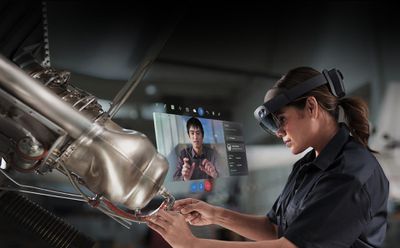
At Microsoft, Caballero is serving as corporate vice president of engineering and based on his Linkedin profile, he will work on mixed reality hardware such as Microsoft's HoloLens. He is listed as part of Microsoft's Mixed Reality and AI Division, and will also work on "special projects."
Caballero left Apple in April 2019, just after Apple settled its lawsuit with Qualcomm and inked a deal that will see Qualcomm supplying modem chips for the 2020 iPhones, and after his division was folded into Apple's custom chip vision headed by Johny Srouji.
Caballero first joined Apple in 2005, and his name has been on hundreds of patents related to wireless technologies. Caballero was a well-known part of Apple's antenna engineering group, having gained public recognition following the "Antennagate" situation that impacted the iPhone 4.


















Top Rated Comments
Dell,
Nike
Hospitals in the USA use this hardware and AR by Microsoft heavily. They’re [EDIT: wrongfully used ‘Their’] years ahead fo Apple in the AR game .
Interestingly last week I made a post of iPhones should no longer have cables within the hardware to connect components (I'll be damned to find it); seems I wasn't crazy as Cabellero (cowboy) joined a startup between Apple before joining Microsoft to do just that:
https://www.reuters.com/article/us-keyssa-wireless/ex-apple-executive-joins-startup-aimed-at-banishing-smartphone-cables-idUSKBN1XB2VF
Just because Microsoft (or any other company) received feedback, does not mean that they know what do do with it, especially, because most negative feedback from users is not actionable (e.g. “this sucks”, rather than: “the most import menu items should be in the top level menu”).
Again, just because they have some number of paying customers does not mean that they have nailed the interface. It just means that these customers think the product solves a problem for them at a price they are willing to pay.
Most of my use of Hololens has been in demos. It seems like reasonable technology, but it does not feel like they have nailed the UI nor come up with a compelling solution for anything other than niche adoption.
There is a British expression “Sell to the classes, live with the masses. Sell to the masses, live with the classes.” that best explains the issue. A product sold to various niche markets (especially one that is a core component on top of which someone else builds a valuable platform) rarely generates enough money to be highly profitable. One can make a living off of it, but not get rich. How successful one can be with that strategy is really dependent on how many niches there are that can drive sales of the core tech.
I have no idea if Apple or anyone else will be able to crack the UI and compelling use case problems either. I have seen some interesting ideas for AR applications (the shopping list that guides you around the grocery store and highlights the right products), but none yet that convince me that I should wear glasses all the time for the benefit of using them.