Apple and Other Tech Giants Condemn GCHQ Proposal to Eavesdrop on Encrypted Messages

Apple and other tech giants have joined civil society groups and security experts in condemning proposals from Britain's cybersecurity agency that would enable law enforcement to access end-to-end encrypted messages (via CNBC).
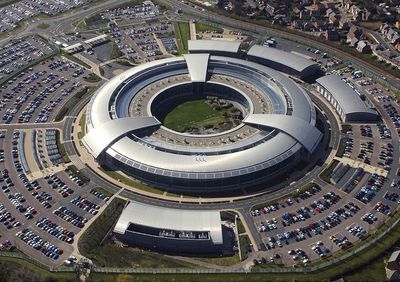
1280px GCHQ aerial

British Government's Communications HQ in Cheltenham, Gloucestershire

In an open letter to the U.K.'s GCHQ (Government Communications Headquarters), 47 signatories including Apple, Google and WhatsApp urged the U.K. eavesdropping agency to ditch plans for its so-called "ghost protocol," which would require encrypted messaging services to direct a message to a third recipient, at the same time as sending it to its intended user.

Ian Levy, the technical director of Britain's National Cyber Security Centre, and Crispin Robinson, GCHQ's head of cryptanalysis, published details of the proposal in November 2018. In the essay, Levy and Robinson claimed the system would enable law enforcement to access the content of encrypted messages without breaking the encryption.

The officials argued it would be "relatively easy for a service provider to silently add a law enforcement participant to a group chat or call," and claimed this would be "no more intrusive than the virtual crocodile clips," which are currently used in wiretaps of non-encrypted chat and call apps.

Signatories of the letter opposing the plan argued that the proposal required two changes to existing communications systems that were a "serious threat" to digital security and fundamental human rights, and would undermine user trust.

"First, it would require service providers to surreptitiously inject a new public key into a conversation in response to a government demand. This would turn a two-way conversation into a group chat where the government is the additional participant, or add a secret government participant to an existing group chat.

"Second, in order to ensure the government is added to the conversation in secret, GCHQ's proposal would require messaging apps, service providers, and operating systems to change their software so that it would 1) change the encryption schemes used, and/or 2) mislead users by suppressing the notifications that routinely appear when a new communicant joins a chat.

"The overwhelming majority of users rely on their confidence in reputable providers to perform authentication functions and verify that the participants in a conversation are the people they think they are, and only those people. The GCHQ's ghost proposal completely undermines this trust relationship and the authentication process."

Apple's strong stance against weakened device protections for the sake of law enforcement access was highlighted in the 2016 Apple vs. FBI conflict that saw Apple refuse to create a backdoor access solution to allow the FBI to crack the iPhone 5c owned by San Bernardino shooter Syed Farook.

Responding to the open letter, which was first sent to GCHQ on May 22, the National Cyber Security Centre's Ian Levy told CNBC: "We welcome this response to our request for thoughts on exceptional access to data — for example to stop terrorists. The hypothetical proposal was always intended as a starting point for discussion."

"We will continue to engage with interested parties and look forward to having an open discussion to reach the best solutions possible," Levy said.

Note: Due to the political nature of the discussion regarding this topic, the discussion thread is located in our Politics, Religion, Social Issues forum. All forum members and site visitors are welcome to read and follow the thread, but posting is limited to forum members with at least 100 posts.

Popular Stories

maxresdefault

Apple Shows Off a Key Reason to Upgrade to the iPhone 17

Saturday February 7, 2026 9:26 am PST by
Apple today shared an ad that shows how the upgraded Center Stage front camera on the latest iPhones improves the process of taking a group selfie. "Watch how the new front facing camera on iPhone 17 Pro takes group selfies that automatically expand and rotate as more people come into frame," says Apple. While the ad is focused on the iPhone 17 Pro and iPhone 17 Pro Max, the regular iPhone...
apple wallet drivers license feature iPhone 15 pro

Apple Says These 7 U.S. States Plan to Offer iPhone Driver's Licenses

Monday February 9, 2026 6:24 am PST by
In select U.S. states, residents can add their driver's license or state ID to the Apple Wallet app on the iPhone and Apple Watch, and then use it to display proof of identity or age at select airports and businesses, and in select apps. The feature is currently available in 13 U.S. states and Puerto Rico, and it is expected to launch in at least seven more in the future. To set up the...
m5 macbook pro deal

Why You Shouldn't Buy the Next MacBook Pro

Tuesday February 10, 2026 4:27 pm PST by
Apple is planning to launch new MacBook Pro models as soon as early March, but if you can, this is one generation you should skip because there's something much better in the works. We're waiting on 14-inch and 16-inch MacBook Pro models with M5 Pro and M5 Max chips, with few changes other than the processor upgrade. There won't be any tweaks to the design or the display, but later this...
Apple Logo Zoomed

Apple Expected to Launch These 10+ Products Over the Coming Months

Tuesday February 10, 2026 6:33 am PST by
It has been a slow start to 2026 for Apple product launches, with only a new AirTag and a special Apple Watch band released so far. We are still waiting for MacBook Pro models with M5 Pro and M5 Max chips, the iPhone 17e, a lower-cost MacBook with an iPhone chip, long-rumored updates to the Apple TV and HomePod mini, and much more. Apple is expected to release/update the following products...
14 inch MacBook Pro Keyboard

New MacBook Pros Could Now Arrive in March

Sunday February 8, 2026 6:02 am PST by
New MacBook Pro models with the M5 Pro and M5 Max chips could arrive as soon as Monday, March 2, according to Bloomberg's Mark Gurman. In today's "Power On" newsletter, Gurman said that the release of new MacBook Pro models is tied to the release of macOS Tahoe 26.3. The launch is said to be slated for as early as the week of March 2. He added that the M4 Pro and M4 Max models on sale today...

Top Rated Comments

gnasher729 Avatar
88 months ago
Two recent news reports: Criminals in the USA are using malware stolen from the NSA to hack into companies' computers, encrypt files, and ask for ransom money. Criminals in China are using malware most likely stolen from the Chinese governments to hack into companies' servers and install malware for bitcoin mining.

If the NSA cannot keep its malware from being stolen by criminals, and the Chinese government cannot keep its malware from being stolen by criminals, what are the chances that GCHQ can read encrypted messages, without that ability getting stolen by criminals? Zero.
Score: 33 Votes (Like | Disagree)
Quu Avatar
88 months ago
This is a better approach than forcing a backdoor. It's not the right solution yet but with tweaks (e.g., no changes to encryption, only done after a warrant) it could work. This is essentially wiretapping.
What you've just said is essentially acceptance of the status quo because wiretapping has been done in the past why not apply it to technology of today.

When instead we should be asking ourselves, should wiretapping be allowed at all? - Now that we have the technical means to withstand that kind of attack on our communications should we allow it to continue?

I think not. Also we need to keep mind of the slippery slope that is occuring. You cannot compel someone to give up a password to their device but they can force you to look at your FaceID or place your finger on a TouchID fingerprint reader.

What happens in 50 years from now when we get the ability to access people's memories directly from their brains using some kind of special sensor placed on the skull? - Well we had wiretaps to hear what people said on the phone, then we had that encryption law that let us add ourselves to conversations held in apps.. this is just a natural extension of that, now we can actually see what they said right from their own brains.
Score: 21 Votes (Like | Disagree)
DVD9 Avatar
88 months ago
"We welcome this response to our request for thoughts on exceptional access to data — for example to stop terrorists.

How about you physically remove from your country those responsible for creating the terrorists?

That's the only kind of help I'm going to seek from any "security forces".

Score: 17 Votes (Like | Disagree)
vrDrew Avatar
88 months ago
The British Government has lost the plot when it comes to data collection.

Under a new program, police are demanding that victims of sexual assault turn over the entirety of the data on their mobile phones, or else they will refuse to prosecute ('https://www.independent.co.uk/news/uk/crime/rape-victims-phones-police-investigation-disclosure-forms-cps-a8888376.html').

Governments can rationalise pretty much anything. It's up to the people to stand up and say: Enough!
Score: 15 Votes (Like | Disagree)
GaryMumford Avatar
88 months ago
GCHQ = Mini Apple Park
Score: 12 Votes (Like | Disagree)
Sasparilla Avatar
88 months ago
"We welcome this response to our request for thoughts on exceptional access to data -- for example to stop terrorists..."

I love this - cause the terrorists are going to be using the messaging apps that can monitored by the governments? Um, no. This is about the government being able to monitor the general citizenry's communications cause they want to.
Score: 12 Votes (Like | Disagree)