Apple's Contracts With European iPhone Carriers Examined for Potential Antitrust Issues
The New York Times reports that regulators with the European Union are taking a close look at contracts between Apple and its iPhone carrier partners, seeking to determine whether Apple's strict terms amount to anti-competitive behavior. In particular, Apple's practice of requiring carriers to commit to selling a certain number of iPhones has placed pressure on the carriers to promote the iPhone above other alternatives.
[S]ome of Apple’s competitors complain that the big purchases Apple requires from carriers strongly pressure them to devote most of their marketing budgets to the iPhone, leaving little money to promote competing devices, said an executive at one of Apple’s rivals, who declined to be named to avoid jeopardizing carrier relationships.
Apple’s practice of telling carriers how many phones they must sell and threatening to penalize them shows just how powerful the iPhone has become as a bargaining chip. Other manufacturers typically allocate fewer handsets to each carrier than they estimate it can sell to ensure that there is little, if any, leftover inventory, an executive at one rival handset maker said.
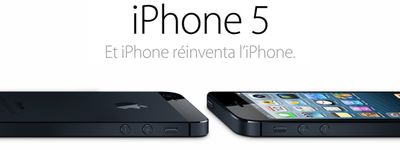
Carriers are of course not required to carry the iPhone, but customer demand for the device means that most carriers believe they have little choice and must agree to Apple's terms in order to remain competitive in the marketplace.
The European Commission has not yet launched a formal investigation of Apple over its contract terms, and it is unclear what its next steps will be, with spokesman Antoine Colombani simply noting that the competition regulators are "monitoring the situation". For its part, Apple says only that its contracts are compliant with all local laws.
Popular Stories
Apple today shared an ad that shows how the upgraded Center Stage front camera on the latest iPhones improves the process of taking a group selfie.
"Watch how the new front facing camera on iPhone 17 Pro takes group selfies that automatically expand and rotate as more people come into frame," says Apple. While the ad is focused on the iPhone 17 Pro and iPhone 17 Pro Max, the regular iPhone...
In select U.S. states, residents can add their driver's license or state ID to the Apple Wallet app on the iPhone and Apple Watch, and then use it to display proof of identity or age at select airports and businesses, and in select apps.
The feature is currently available in 13 U.S. states and Puerto Rico, and it is expected to launch in at least seven more in the future.
To set up the...
New MacBook Pro models with the M5 Pro and M5 Max chips could arrive as soon as Monday, March 2, according to Bloomberg's Mark Gurman.
In today's "Power On" newsletter, Gurman said that the release of new MacBook Pro models is tied to the release of macOS Tahoe 26.3. The launch is said to be slated for as early as the week of March 2. He added that the M4 Pro and M4 Max models on sale today...
It has been a slow start to 2026 for Apple product launches, with only a new AirTag and a special Apple Watch band released so far. We are still waiting for MacBook Pro models with M5 Pro and M5 Max chips, the iPhone 17e, a lower-cost MacBook with an iPhone chip, long-rumored updates to the Apple TV and HomePod mini, and much more.
Apple is expected to release/update the following products...
Apple plans to announce the iPhone 17e on Thursday, February 19, according to Macwelt, the German equivalent of Macworld.
The report, citing industry sources, is available in English on Macworld.
Apple announced the iPhone 16e on Wednesday, February 19 last year, so the iPhone 17e would be unveiled exactly one year later if this rumor is accurate. It is quite uncommon for Apple to unveil...