Toshiba Corporation today announced development of 0.85-inch hard disk drive (HDD), the first hard drive to deliver multi-gigabyte data storage to a sub-one-inch form factor. Toshiba expects to start sampling the new drive in summer 2004 and to start mass production in autumn 2004, at an initial monthly production capacity of two to three hundred thousand units.
The new 0.85" drives will come in 2GB and 4GB capacities and are due in August 2004. No word on pricing, however.
Toshiba's 1.8" Hard Drive technology has been used in the standard Apple iPod since its introduction in 2001. Meanwhile, Apple has gone with 1" Hitachi Hard Drives for the new iPod Mini.
MagicStor
Meanwhile, MagicStor announced a new series of 1" Hard Disk Drives with capacities up to 4.8GB and expect to release 0.8" drives in the future.
These tiny hard drives are one of the limiting factors in the ongoing miniaturization of high capacity MP3 players.
Tuesday September 15, 2026 1:43 am PDT by Tim Hardwick
Apple today announced a new subscription initiative that turns paid iCloud+ subscriptions into a broader services bundle in more than 100 countries.
In select countries, Apple says every paid iCloud+ plan, including the cheapest 50GB tier, now includes Apple TV and Apple Arcade "at no additional cost," while family sharing extends the storage, TV and Arcade access to up to five people....
Monday September 14, 2026 10:48 pm PDT by Tim Hardwick
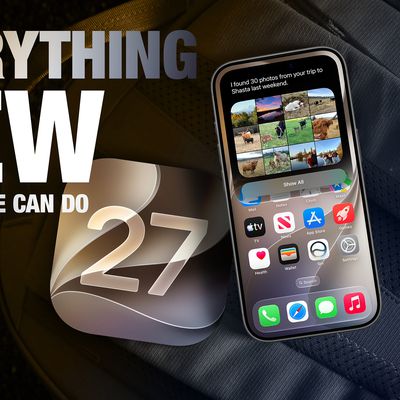
Apple released iOS 27 this week, and despite the company's focus this year on refining its flagship operating system and nixing bugs, there are still many additional features to explore, not least of which is Apple's new context-aware Siri, re-tooled for the generative AI era.
Which iPhones Support Every iOS 27 Feature?
This year's major iPhone software update isn't all about AI, though,...
Monday September 14, 2026 9:00 am PDT by Joe Rossignol
Update — 10 a.m. Pacific Time: Apple has released iOS 27.
During its iPhone 18 Pro and iPhone Duo event last week, Apple announced that iOS 27 will be released widely on Monday, September 14.
iOS 27 should be available around 10 a.m. Pacific Time / 1 p.m. Eastern Time today via the Settings app, under General → Software Update.
Below, we have highlighted eight new features and...