

Apple's control over the iPad's hardware and software gives it "design efficiencies" other tablet manufacturers can't match, says Wayne Lam, an analyst at iSuppli.
“These efficiencies become obvious in areas like the memory and the battery, where Apple maintains advantages in cost, space savings and performance compared with every competitor in the business.”
Other tablet makers employ operating systems from third-party firms—such as Google Inc., which provides the Android software used in most competitive products on the market today. Many of these tablet makers also outsource the blueprints of their products to third parties, employing reference designs and design services from contract manufacturers.
This contrasts with the model employed by Apple, which uses its own operating system and maintains tight control of its design, components and contract manufacturers.
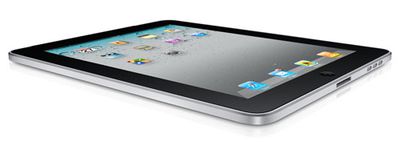
Lam argues that comparing the amount of RAM between the iPad and other manufacturers misses a key point: because Apple writes the software specifically for hardware they have custom built, it doesn't need as much horsepower as competing tablets.
In the current-generation iPad 2, the density of synchronous dynamic random access memory (SDRAM) is 512 megabytes—half that of the 1 gigabtye used in competitive designs... Likewise, the original iPad contained half as much SDRAM as comparable competitive devices with single-core applications processors.
“The iPad’s efficient memory usage stems from the fundamental difference in the architecture of the operating system,” Lam said. “Apple’s iOS handles multitasking differently than other tablet operating systems, allowing it to reduce the amount of memory required to support the microprocessor.”
It also helps that Apple has the cash to secure favorable terms from suppliers, like in 2010 when it spent $3.9 billion on LCD panels, most likely for the iPad.
Apple currently has the second highest market capitalization in the world, second only to ExxonMobil. Like XOM, Apple has grown its profits by controlling the entire pipeline, from conception to delivery.
ExxonMobil handles exploration, drilling, pumping, refining, and delivery of petroleum products, and captures profits at every step. ExxonMobil eliminates inefficiencies in the market by having one company handle everything instead of having four different companies combining forces to deliver a product -- like Google and the Android hardware manufacturers do.
Apple designs the software (iOS), the hardware (A4 and A5 chips), controls the sales channel (Apple Retail and Online Stores), and decides the fate of how buyers use the iPad via the App Store. The company streamlines pricing and the experience to such a degree that no other company can even come close.















Top Rated Comments
i.e the Playbook bragging about Flash technology. Wow...how cutting edge
Or the other tablet makers waxing on about USB ports, HDMI ports and other portage. Wow ..so it's a Netbook missing a keyboard.
If you're a company that thinks you're going to be Apple with a reference design hardware running run of the mill ARM chips and the same Android OS that your competitors offer then talking about USB or HDMI ports and how many megagigapixel your camera offers is about all you can do.
The installed base is growing, year after year; where have you been?
You're absolutely right, it's completely intentional. The main reason for such tight control is that Apple understands the idiosyncrasies of the average consumer.
The average consumer doesn't care about code, tech specs or anything else that goes on under the hood of the device. They just want it to work--all the time. If an app is written poorly, or in a format that doesn't play well with the OS or the hardware, the consumer doesn't blame the app developer, they blame the device. If an app causes major battery drain, they don't delete it and move on with life, they assume that Apple is just lying about battery life and may choose a different device the next time.
If the ecosystem is so clogged with varying code languages and unpredictably performing apps that it becomes overly complex to use, consumers don't blame themselves for not understanding how it all works. They blame the device and assume it is broken.
The endless accusation that Apple only does things the way it does to ensure that consumers have to buy from them is getting tired. To date, Apple has paid out just over $2 Billion to iOS developers. That means Apple has made just under $1 Billion in App Store revenue. (they keep 30%) When you factor in the cost of labor to keep it all running, the cost of hardware, maintenance, real estate to house it all etc...That $1 Billion is pretty much wiped out. It would certainly be easier for them to just let an open source App Store open up and walk away from it.
But that doesn't happen, because if it did, the end user experience would be crap and iOS devices wouldn't have the reputation for quality that they currently enjoy.
Thread title is too limited. It should read:
Apple's control over their products gives it "design efficiencies" competitors can't match.
Apple hardware + Apple software. Let's call a spade a spade and give credit to the totality of their platform.
I am sure you are a very bright individual, but your understanding of a monopoly is incomplete. :o
If you are thinking there is a monopoly because only Apple can manufacture the iPad, that is no different from only Motorola being able to manufacture the Xoom. If you are thinking they have a monopoly because only Apple can authorize applications to run on iOS, that is no different than only Sony being able to authorize applications to run on PlayStation, or MS certifying an App is Windows ME compatible.
This is not a monopoly situation and the consumer has at least a dozen manufacturers of tablets, and no less than three operating systems to choose from.
Apple currently enjoys no monopolies, right down to having Steve Jobs, as he serves on the boards of other corporations and organization simultaneously. ;)