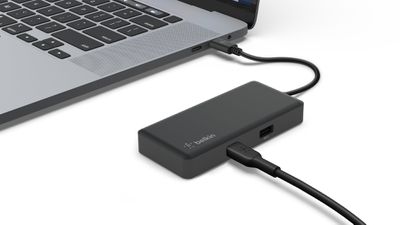
The Hub is designed to be mounted to the back of a monitor, computer stand, or monitor base, and tucked away from view. It features two USB-A ports, one USB-C port, one SD card slot, and a microSD card reader.
It mounts to the back of an iMac or other computer using two 3M Command strips, and there's a quick release button in case you need to use the hub on the go. It supports transfer speeds of up to 10Gb/s.
Belkin today also introduced the $80 USB-C 5-in-1 Multiport Adapter. Though designed for Chromebooks, the adapter is compatible with Macs, offering two USB-A ports, a Gigabit Ethernet port, an HDMI port that supports one 4K display at 60Hz, and an 86W USB-C power delivery port.
Friday October 23, 2026 11:05 am PDT by Juli Clover
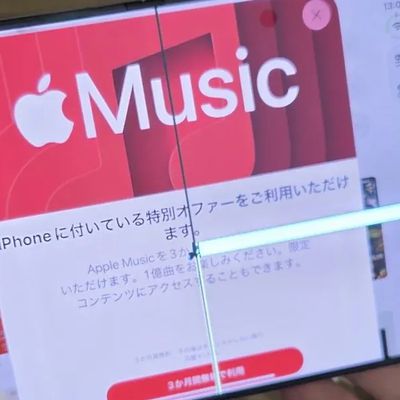
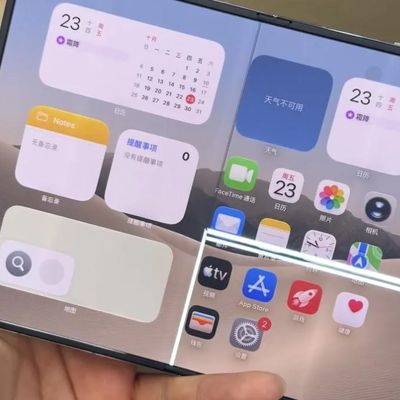
Some iPhone Duos are already experiencing hinge issues that cause display cracks, based on photos shared on Reddit and the MacRumors forums. Almost all of the display faults are right along the hinge, and most result in a line of bright pixels across one side of the screen.
An iPhone Duo owner in Australia said his device cracked after being opened fewer than 20 times, and there was no...
Monday October 26, 2026 10:20 am PDT by Juli Clover
Shortly after the iPhone Duo launched, a few users reported hinge issues that were causing cracks in the inner display. Apple has now responded to the reports in a statement to MacRumors, saying a small number of units are affected.
The response to iPhone Duo from early users has been incredibly positive, and we are seeing exciting things from developers who are rapidly updating their apps...
Saturday October 24, 2026 11:27 am PDT by Tim Hardwick
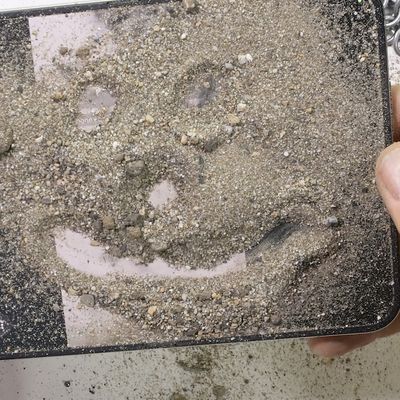
Apple's iPhone Duo has failed JerryRigEverything's latest durability test. Despite its IP68 dust-resistance rating, dust entered the hinge through several ingress points, overwhelming the magnets that hold the phone shut. The bend test then left a permanent green line across the inner display, before the screen became unresponsive.
The outer screen with Ceramic Shield 2 scratched at level 7...
I'm sure everybody wants to make their iMac as ugly as this by attaching one of these. Not me, I'll take a big pass.
I went with the USB-C Slim Dock by Satechi in June for $120. ('https://www.amazon.com/gp/product/B08V83JZH4/ref=ppx_od_dt_b_asin_title_s00?ie=UTF8&psc=1')
I also added the 1TB SAMSUNG 980 SSD 1TB M.2 NVMe Interface Internal Solid State Drive with V-NAND Technology for Gaming, Heavy Graphics, Full Power Mode, MZ-V8V1T0B/AM ('https://www.amazon.com/gp/product/B08V83JZH4/ref=ppx_od_dt_b_asin_title_s00?ie=UTF8&psc=1')
Modern technology is really odd. It seems obvious that all these hubs are the same boards repackaged because they always have the same spec. 1 usb c , 1 card reader etc.
So what is actually going on here? If you find a hub with more than 1 usb c it’s ridiculous money. And usb c doesn’t even mean thunderbolt 4. So how does all of this work? Is there only 1 company building the guts of these interfaces? Why is it so hard for someone to make multiple USB ports?
I’d love to know the story about this because it’s been going on for years now.